

Is the Copernican principle true?

Voting

The participant with the most points wins.

Voting stays open until 3 more votes are cast.

Like this debate? Score 0
···
X Facebook
Con Instigator Opens first
Instigator Avatar
0
Rating
1502
Debates
27
Win rate
51.85%

Match format

Type
Rated · 5 rounds
Time
One week
Limit
10,000
Vote
Two months · 3 votes to close
Pro Contender
Contender Avatar
0
Rating
1490
Debates
5
Win rate
50.00%

Philosophical debate. Pro argues yes, while con argues no.

Round 1

1 of 5

Thank you, SergeantLynch, for accepting this debate! This should be fun!


First, the Copernican Principle was thought of before there was any scientific proof for it at all. Copernicus simply used flawed philosophy at the time to argue for heliocentrism. He had absolutely no reason to prefer an Earth going around a motionless Sun vs. a Sun going around a motionless Earth. Tycho Brahe created a geocentric model in which the planets revolved around the Sun while the Sun went around the Earth.
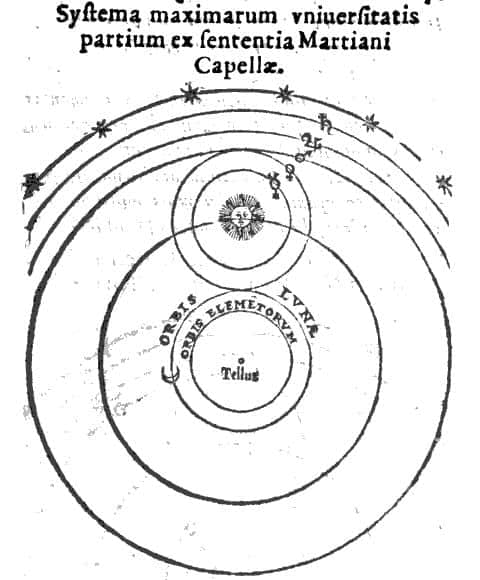
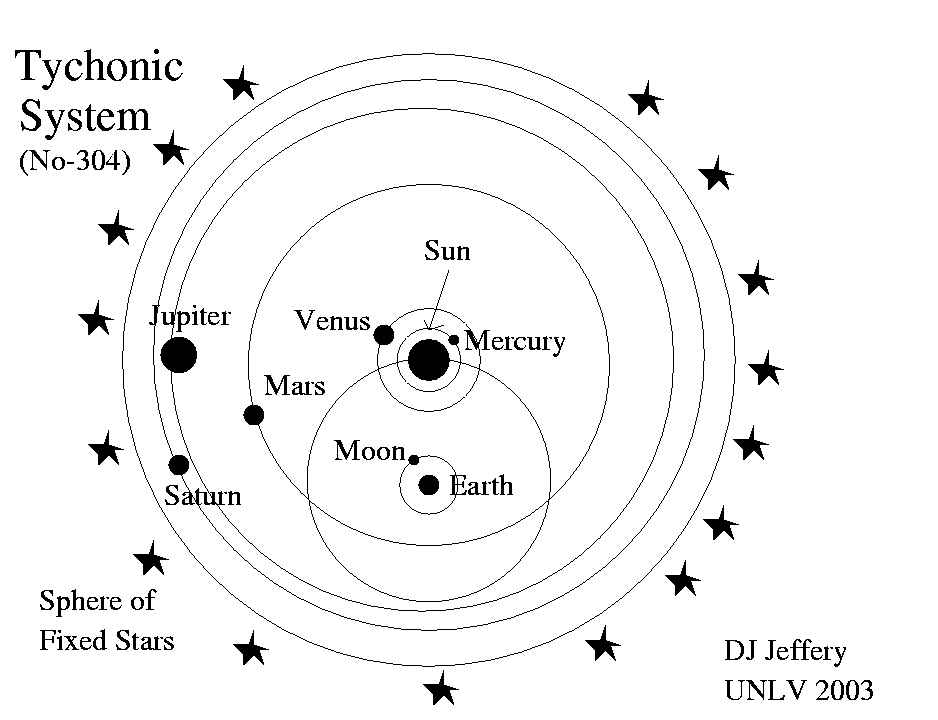
See articles here and here.


Tycho showed there was no geometric difference between heliocentrism and geocentrism. Copernicus only showed that some of the cosmology of his time was wrong. For example, most people thought all the planets went directly around the Earth. The Ptolemaic model had epicycles to explain the motion of the planets.
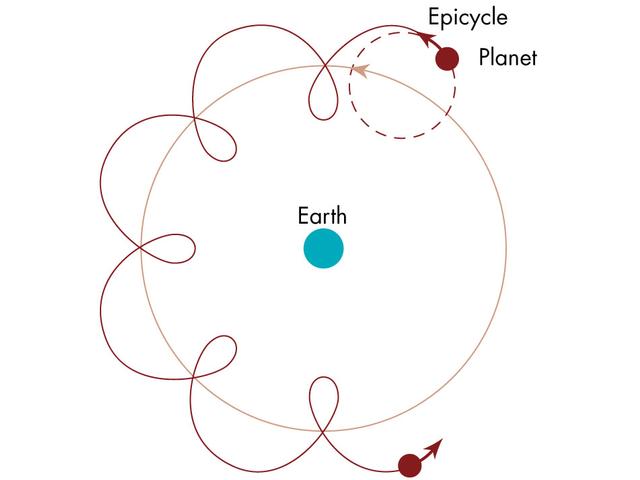


Modern science tells us these epicycles don't exist, yet Copernicus chose to add them in his system. He had 34 of them:

"Behold! Only 34 circles are required to explain the entire structure of the universe and the dance of the planets!” - Commentariolus


Whereas the old fashioned Ptolemaic system had 33:

Celestial Body & Number of EpicyclesSun1Moon3Venus6Mercury7Outer Planets (Mars, Jupiter, Saturn)4 each


Plus, all the top scientist agree that geocentrism is indeed possible.


Stephen Hawking in his book:

We now have a tendency to dismiss as primitive the earlier world picture of Aristotle and Ptolemy in which the Earth was at the center and the sun went around it. However we should not be too scornful of their model, which was anything but simple-minded. It incorporated Aristotle’s deduction that the Earth is a round ball rather than a flat plate and it was reasonably accurate in its main function, that of predicting the apparent positions of the heavenly bodies in the sky for astrological purposes. In fact, it was about as accurate as the heretical suggestion put forward in 1543 by Copernicus that the Earth and the planets moved in circular orbits around the sun. - On the Shoulders of Giants, ed., Stephen Hawking, Running Press Book Publishers, Phila., PA, 2002, pp. ix-x.

Einstein said:

I have come to believe that the motion of the Earth cannot be detected by any optical experiment. - "How I Created the Theory of Relativity" (This can be found on the second page of the PDF in paragraph 4.)

Numerous quotes of top scientists admitting the possibility or even probability of geocentrism can be found here.


Ultimately, the Copernican Principle assumes uniformity and cannot be proven.

"Contemporary cosmological models are based on the idea that the universe is pretty much the same everywhere - a stance sometimes known as the Copernican principle." - https://ned.ipac.caltech.edu/level5/March01/Carroll3/Carroll8.html

There is no way to prove the universe the same everywhere. It seems like a pretty big assumption, and that is what modern science is resting on.


I think it would be good to get Hubble's own words about what he saw when he looked through his telescope:

Such a condition would imply that we occupy a unique position in the universe, analogous, in a sense, to the ancient conception of a central earth. The hypothesis cannot be disproved but it is unwelcome and would be accepted only as a last resort in order to save the phenomena. Therefore, we disregard this possibility and consider the alternative, namely, a distribution which thins out with distance...But the unwelcome supposition of a favoured location must be avoided at all costs. Therefore, we accept the uniform distribution, and assume that space is sensibly transparent.

Now let's also get what Stephen Hawking commented on matter in his book, A Brief History of Time (found on the last two paragraphs of page 57 if you want to check):

At first sight, all this evidence that the universe appears the same whichever direction we look in might seem to suggest there is something distinctive about our place in the universe. In particular, it might seem that if we observe all other galaxies to be moving away from us, then we must be at the center of the universe. There is, however, an alternative explanation: the universe might look the same in every direction as seen from any other galaxy too. This, as we have seen, was Friedmann’s second assumption. We have no scientific evidence for or against that second assumption. Centuries ago, the church would have considered the assumption heresy, since church doctrine stated that we do occupy a special place at the center of the universe. But today we believe Friedmann’s assumption for almost the opposite reason, a kind of modesty: we feel it would be most remarkable if the universe looked the same in every direction around us but not around other points in the universe!

Notice how neither Hubble nor Hawking actually choose explanations based on the actual data but instead base it on their own philosophical views. Hubble admits the central Earth "cannot be disproved but it is unwelcome and would be accepted only as a last resort in order to save the phenomena." Hawking admits the non-central Earth explanation has "no scientific evidence for or against" it. He merely prefers it for "modesty" purposes. This is not how science should work. Science is supposed to be unbiased. He compares it to back it Galileo's day when it was heresy to say the Earth was not the center because a central Earth makes more sense for God to make since we are special. In our day, it is heresy to say the Earth is the center because that would imply there is a God, which they desperately are trying to avoid at all costs.


Another modern piece of evidence from a scientist who believes in the Copernican Principle:

The uniform distribution of burst arrival directions tells us that the distribution of gamma-ray-burst sources in space is a sphere or spherical shell, with us at the center (some other extremely contrived and implausible distributions are also possible). But Copernicus taught us that we are not in a special preferred position in the universe; Earth is not at the center of the solar system, the Sun is not at the center of the galaxy, and so forth. There is no reason to believe we are at the center of the distribution of gamma-ray bursts. If our instruments are sensitive enough to detect bursts at the edge of the spatial distribution, then they should not be isotropic on the sky, contrary to observation; if our instruments are less sensitive, then the N ∝ S-3/2 law should hold, also contrary to observation. That is the Copernican dilemma. - Jonathan Katz, The Biggest Bangs:The Mystery of Gamma-Ray Bursts, The Most Violent Explosions in the Universe, Oxford University Press, 2002, pp. 90-91.

A final challenge to the Copernican Principle is the Axis of Evil. It's funny that it even needs to be named that. It already shows a bias in modern science.


Science News Today says in the paragraph Why the Alignment Is So Disturbing:

The discomfort surrounding the Axis of Evil arises from several interconnected concerns. First, if the alignment is intrinsic to the universe, it challenges the assumption of isotropy. A preferred direction in the universe would undermine one of the foundational pillars of cosmology and suggest new physics beyond the standard model.


Why is there "discomfort" and why is it "disturbing"? The Axis of Evil challenges isotropy, which is fundamental to the Copernican Principle.

Hello SomeDebatePerson.


How do we apply the concept of truth to a radical proposition derived of fifteenth/sixteenth century scientific mind?


Well, I would say that we should apply it respectfully, and just as truthfully as Copernicus was attempting to be at the time.


Notwithstanding that the basic principle of heliocentrism, given the observational limitations of the pre-telescopic era of astronomy, challenged the previously well established theo-scientific certainty of creation and geocentrism.


Of course as we now know, Copernicus was actually correct with regard to his heliocentric observations, so in this respect we cannot deny the truth of his basic principle.


Further, I would suggest that judging Copernicus's broader ideas against those of later observations and ideas is a tad unjust way of elucidating untruth in Copernicus's original thoughts...Should we discredit Ptolemy in the same way?... Obviously not...We should have noting but respect for those who have contributed significantly to the furtherment of astronomical knowledge, irrespective of the inexactitude of their observations and consequent ideas.


So I will conclude this short introductory round, by asserting that at no time was Copernicus being anything less than truthful, both in terms of integrity and the correctness of the basic principle of heliocentrism.

Round 2

2 of 5

"How do we apply the concept of truth to a radical proposition derived of fifteenth/sixteenth century scientific mind?"


This is a very smart tactic pro is using. He is trying to bring into question what the definition of truth is and also push back into the time period, trying to make the Copernican principle true for the data that was available at the time.


First, this debate shouldn't be that hard grasp. Pro presents evidence for the Copernican principle being true, and con presents evidence for it being false. We can use philosophy, physics, metaphysics, science, cosmology, etc. There is no reason to question what truth even means. Truth isn't that hard to understand. Some people just want to make things more complex than they need to be. If you want to have a debate about truth, make a separate debate for that. Truth and logic are typically taken for granted unless the debate is about whether those topics exist. If truth doesn't exist, then the Copernican principle can't be true at all.


Second, trying to say the principle was good enough for it's time is problematic. As Wikipedia states:

"Hermann Bondi named the principle after Copernicus in the mid-20th century, although the principle itself dates back to the 16th–17th century paradigm shift away from the Ptolemaic system, which placed Earth at the center of the universe." (emphasis added)

The Copernican revolution wasn't really realized until the 20th century. It still look a while for people to accept it, and it took even longer for people to realize when this change really happened. You're not going to be able to say it was pretty good for what they had back in the 1500s. The idea is not bound to one time period, and many people still believe in it today despite all the evidence against it.


Third, using this same logic will seem to concede that geocentrism is also true since it was very accurate for its time period and the data available at the time. No one was being dishonest by assuming the Earth was the center of the universe. This will lead to contradictory hypotheses all being "true," which will end up leading to a contradiction. True doesn't mean good enough for its time period.


"Notwithstanding that the basic principle of heliocentrism, given the observational limitations of the pre-telescopic era of astronomy, challenged the previously well established theo-scientific certainty of creation and geocentrism."


It's funny that pro has brought up theism. Copernicus' heliocentrism can easily be proved to be linked to paganism and other religious ideas:

"In the middle of all sits the Sun enthroned. In this most beautiful temple could we place this luminary in any better position from which he can illuminate the whole at once? He is rightly called the Lamp, the Mind, the Ruler of the Universe; Hermes Trismegistus names him the Visible God, Sophocles’ Electra calls him the All-seeing. So the Sun sits as upon a royal throne ruling his children the planets which circle round him" - Nicolas Copernicus: De Revolutionibus, I, 10.

Copernicus' thoughts were kind of mixed from Christianity and Greek paganism and neo-Gnosticism. During this time, people liked to revisit Greek philosophers and try to work them into Christianity, and some deviated from Christian orthodoxy by doing this. This is what lead to the enlightenment.


Here's is an excellent long quote from Karl Popper's book Conjectures And Refutations: The Growth Of Scientific Knowledge:

"Copernicus studied in Bologna under the Platonist Novara; and Copernicus’ idea of placing the sun rather than the earth in the centre of the universe was not the result of new observations but of a new interpretation of old and well-known facts in the light of semi-religious Platonic and Neo-Platonic ideas. The crucial idea can be traced back to the sixth book of Plato Republic, where we can read that the sun plays the same role in the realm of visible things as does the idea of the good in the realm of ideas. Now the idea of the good is the highest in the hierarchy of Platonic ideas. Accordingly the sun, which endows visible things with their visibility, vitality, growth and progress, is the highest in the hierarchy of the visible things in nature.
"This passage in the Republic is of outstanding importance among the passages upon which Neo-Platonic philosophy and particularly Christian Neo-Platonic philosophy was based.
Now if the sun was to be given pride of place, if the sun merited a divine status in the hierarchy of visible things, then it was hardly possible for it to revolve about the earth. The only fitting place for so exalted a star was the centre of the universe. So the earth was bound to revolve about the sun.
"This Platonic idea, then, forms the historical background of the Copernican revolution. It does not start with observations, but with a religious or mythological idea. Such beautiful but wild ideas have often been put forward by great thinkers, and just as often by cranks. But Copernicus, for one, was not a crank. He was highly critical of his own mystical intuitions, which he rigorously examined in the light of astronomical observations reinterpreted with the aid of the new idea. He rightly considered these observations to be extremely important. Yet looked at from a historical or genetical point of view observations were not the source of his idea. The idea came first, and it was indispensable for the interpretation of the observations: they had to be interpreted in its light." (page 187, emphasis added)

Karl Popper was very critical of organized religion. This isn't just some misquotation or from some great supporter of theism and geocentrism. It's from the last person you'd expect to admit this.


"Of course as we now know, Copernicus was actually correct with regard to his heliocentric observations, so in this respect we cannot deny the truth of his basic principle."


Says who? Not scientists:

"So which is real? Although it is not uncommon for people to say Copernicus proved Ptolemy wrong, that is not true. As in the case of the goldfish, one can use either picture as a model of the universe." -"Stephen Hawking Asks, What Is Reality"? by Stephen Hawking and Leonard Mlodinow

Next quote:

"Thus we may return to Ptolemy’s point of view of a ‘motionless Earth.’ This would mean that we use a system of reference rigidly fixed to the Earth in which all stars are performing a rotational motion with the same angular velocity around the Earth’s axis." - Max Born, Einstein’s Theory of Relativity, 1962, 1965, p. 344

This Google preview even tried to block the next page in the preview. Do you think this was done on purpose to prevent people from seeing the full quote for free?


Final quote:

It makes no sense, accordingly, to speak of a difference in truth between Copernicus and Ptolemy: both conceptions are equally permissible descriptions. What has been considered as the greatest discovery of occidental wisdom, as opposed to that of antiquity, is questioned as to its truth value.” - Hans Reichenbach in From Copernicus to Einstein on page 82.

Copernicus did plenty of other dishonest things, some of which aren't even acceptable to mention on a site like this. (Kind of joking about how bad they are, no one cares about things like that anymore.)


Also, we don't say an idea is true just because the person who created it wasn't being dishonest. Sure, that might make it not a lie, but that doesn't make it the truth. Someone can unintentionally say something untrue, and it can still not be a lie, but it certainly would not be true. The definition of true isn't "anything that is not a lie."


Pro cannot prove that the Copernican principle is true, so he has resorted to asking what truth even is.


Finally, this isn't a debate about whether Copernicus was being truthful or not. It's about his principle that wasn't even named after him until the 20th century.

Firstly, let me praise my opponent for the quality of their debate and their depth of research, Which I do not have either the time nor the inclination to match; so well done...Nonetheless, I will put forward another point for my opponents diligent consideration.


A thought that occurred to me, is that Nicolaus Copernicus the person, is somewhat subsidiary to the plot here, therefore whensoever, or to whosoever the principle in question is attributed, is rendered irrelevant if the principle is in fact correct...And if the principle is correct, it is also true...Posthumous accreditation is the act of third parties and something that the accreditee has no direct influence over. So Copernicus was chosen and therefore neither by truth or falsehood we today regard the fact of heliocentrism as correct and true, and either by whimsy or by worthy recognition named as the Copernican Principle.

Round 3

3 of 5

"Firstly, let me praise my opponent for the quality of their debate and their depth of research, Which I do not have either the time nor the inclination to match; so well done...Nonetheless, I will put forward another point for my opponents diligent consideration."


Wow! We have my opponent praising me and telling me he doesn't have the time to work hard on this debate. That has got to give me plenty of points.


"A thought that occurred to me, is that Nicolaus Copernicus the person, is somewhat subsidiary to the plot here, therefore whensoever, or to whosoever the principle in question is attributed,"


That's literally what I brought up last round. Pro tried to make the argument that Copernicus did a pretty good job for the information he had and wasn't being dishonest. I was able to show that Copernicus merely reinterpreted the evidence at his time and was being dishonest by my citing of Karl Popper's book Conjectures And Refutations: The Growth Of Scientific Knowledge. I showed that more modern scientists, like Hubble and Hawking, are also being dishonest, but they still admit geocentrism not only possible but probably the easiest and simplest explanation. I provided plenty of sources to back this up. I told pro that the Copernican principle wasn't named until the mid 19th century, so why even try to defend Copernicus when he's not the problem? Pro tried to change the definition of truth, but it didn't work.


"we today regard the fact of heliocentrism as correct and true"


Not according to the top scientists. They say both models are valid and that we can indeed return to a motionless Earth. See the quotes from previous rounds I posted.

Okay, so heliocentrism was/is a principle derived from observational conclusions, relative to the earthbound human position within it's local cosmic sphere of interest...Basically how the Earth interacted with it's local star, namely the Sun...Later expanded thanks to developments and improvements in the science of telescopy, to encompass the broader solar system.


Further, we have established that Nicolaus Copernicus is only nominally relevant to the story...And nor can we honestly judge the truthfulness or credibility of his convictions.


Now, briefly researching the above, I cannot find any credible "top scientists" who would challenge the heliocentric basis of our local solar system, nor challenge the basic idea that the same principle would be universally relevant in regard to the formation and establishments of other solar systems.


Quite frankly, to challenge the established principles of our local solar system is something of a conspiracy theory, akin to the perpetuation of archaic flat earth ideas...Science and intellectual development allows us to progressively expand our knowledge of the universe in which we find ourselves, rather than regressively return to naive theological pseudoscientific assumptions.


So is my opponent alluding to a far broader philosophical idea of universal geocentricism?...I'm not sure...Though such a proposal is only philosophical and therefore cannot be judged in terms of correctness or truthfulness...Nonetheless, the basic principle of heliocentrism coupled with our broader understanding of galaxies, already tells us that within it's immediate solar and galactic locality the Earth is peripheral rather than centric.

Round 4

4 of 5

"Further, we have established that Nicolaus Copernicus is only nominally relevant to the story...And nor can we honestly judge the truthfulness or credibility of his convictions."


Pro changed his argument mid-debate. I don't blame him. Defend the concept, not the inventor.


"Now, briefly researching the above, I cannot find any credible "top scientists" who would challenge the heliocentric basis of our local solar system, nor challenge the basic idea that the same principle would be universally relevant in regard to the formation and establishments of other solar systems."


Did pro just ignore every quote I have shown him in this debate? I will now present Einstein, who is often considered the greatest scientist of all time:

"I have come to believe that the motion of the Earth cannot be detected by any optical experiment." - "How I Created the Theory of Relativity" (This can be found on the second page of the PDF in paragraph 4.)

And in another quote:

"...to the question whether or not the motion of the Earth in space can be made perceptible in terrestrial experiments. We have already remarked...that all attempts of this nature led to a negative result. Before the theory of relativity was put forward, it was difficult to become reconciled to this negative result." - (Here in paragraph 7)


Pro in Round 1: "Well, I would say that we should apply it respectfully, and just as truthfully as Copernicus was attempting to be at the time. Notwithstanding that the basic principle of heliocentrism, given the observational limitations of the pre-telescopic era of astronomy, challenged the previously well established theo-scientific certainty of creation and geocentrism."


Pro in Round 3: "Quite frankly, to challenge the established principles of our local solar system is something of a conspiracy theory, akin to the perpetuation of archaic flat earth ideas...Science and intellectual development allows us to progressively expand our knowledge of the universe in which we find ourselves, rather than regressively return to naive theological pseudoscientific assumptions."


Why can't we challenge the "established principles" of our own time? Isn't that what Copernicus did?


Pro believes Copernicus was correct to challenge geocentrism, the accepted principle of his own time. If it was fine to challenge science then, why is it suddenly wrong to challenge science now?


Also, I have already shown that Copernicus, the one who started the concept of the Copernican principle, didn't use actual science evidence to make his case.


Finally, pro tried to equate flat-Earth with geocentrism. This is ridiculous. We can do physical observations from Earth itself to prove its shape, but no observation (whether on Earth or off Earth), like Einstein said, could prove the Earth is in motion. According to historian Jeffrey Burton Russell, “no educated person in the history of Western Civilization from the third century B.C. onward believed that the Earth was flat.” Flat-Earth died way before geocentrism was "disproven." Only called "disproven," as I have shown many scientist who say it is not disproven.


"So is my opponent alluding to a far broader philosophical idea of universal geocentricism?...I'm not sure...Though such a proposal is only philosophical and therefore cannot be judged in terms of correctness or truthfulness...Nonetheless, the basic principle of heliocentrism coupled with our broader understanding of galaxies, already tells us that within it's immediate solar and galactic locality the Earth is peripheral rather than centric."


What makes you so sure heliocentrism is correct? It's only a philosophical proposal, just like geocentrism. I think the burden of proof is on pro, but pro can challenge this if he wants. We can't just assume the universe is essentially the same everywhere. That's a pretty big assumption, considering how big the universe is.


There's also evidence against heliocentism and the Copernican principle, as I showed in Round 1.


The Earth doesn't even have to be the center of the universe for the Copernican principle to be incorrect. Even if you don't think CMB and red-shift support geocentrism enough, they at least show the Earth is the general center and that not all the universe is the same from everywhere.


I challenge pro to name something physical that doesn't have a center. Why wouldn't the universe have a center? Is the universe the one exception? How could it be the one exception? The universe is everything that exists. All those thing that make up the universe have centers. If it has a center, there is one place that is different from the rest. This would dismantle the Copernican principle.

So:


Debates evolve and therefore one must evolve also.


And centrality can be established if it is possible to establish centrality...Though of course modern technological developments allow us to monitor constantly evolving structures...So for as long as there are constantly detectable boundaries centrality can be constantly updated.


Further:

If Flat Earth theory has been surpassed, the why should geocentric theory not also be surpassed?...Flat Earth theory was initially disproven not by observation but by calculation, the Earth was not observably proven to be spherical until 1959, and not directly observed until 1968...So notwithstanding that low orbit images were available from 1946, Einstein who died in 1955 would never have observed spherical Earth in it's entirety...Same principles apply to a heliocentric solar system (where direct observation is impossible even by Einsteinian and/or modern technological standards) where we rely upon astronomical observation and calculations to establish the function and motions of our immediate locality...Doesn't interplanetary travel depend upon a certain amount of calculated knowledge based upon the principle of a heliocentric system?...In fact, it wasn't until The Mariner spacecraft of the early 1960's, that we first achieved unmanned interplanetary travel, once again exceeding the life of Einstein...So as great a scientific mind that Albert Einstein was, he was ultimately limited by his mortality and therefore not so relative to this debate...Nonetheless a great name to drop in.


So, I challenge my opponent to unequivocally prove that Planet Earth does not function as per the scientifically established astronomical principle of a heliocentric system (nominally the Copernican Principle) where in simple terms, the Earth and it's immediate planetary neighbours orbit a central star, namely the Sun.


I would propose that a system wherein each planet functioned geocentrically would be to say the least, somewhat curious and rather more difficult to navigate than was first thought.


And a final thought for now:

Is it not the case, that such discussions and counterintuitive contentions are simply humancentric...But wasn't the Copernican Principle more about the ordinariness of the Planet Earth biosphere relative to the establishing principles of heliocentrism and a seemingly unbounded cosmos.


And there we are both stumped...By a lack of knowledge and observability and therefore the unknowability of where the centre of the Universe might be.


So what are we actually debating SomeDebatePerson?

Round 5

5 of 5

First, I want to make it clear that I do not believe in flat Earth, just as a reminder for my opponent or anyone watching. A motionless Earth is completely different from a flat one.


"Flat Earth theory was initially disproven not by observation but by calculation, the Earth was not observably proven to be spherical until 1959, and not directly observed until 1968"


Flat Earth can be disproven from observations from Earth and from space. My opponent tried to make the argument that Einstein was outdated. This is ridiculous. No scientist would immediately discard Einstein off the bat. Einstein's theory of Special Relativity plays a crucial role in modern physics. Throwing out Einstein throws out the basis of modern science. A lot of work to keep the Copernican principle alive.


Plus, I've shown more recent scientists who also agree with me, like Stephen Hawking and Max Born, who both died after the year of 1968. Also, flat Earth was already disproven way before 1968, probably from at least the 3rd century BC. View from space just gave us even more proof of a spherical Earth, but the Earth could already be definitively proven to be spherical regardless of if it could be viewed from space.


View from space cannot disprove geocentrism. If the Earth appears to be moving, it could simply be the universe moving. There is no way to prove whether one object is in motion or the other is in motion. This is because of Einstein's theory of General Relativity.


It is so funny that for my opponent to defend the principle of Copernicus, he had to make the argument that a flat Earth isn't as wrong as we think (but still wrong).


Enough assuming Earth moves. No assumptions. You can't use circular reasoning.


I have shown enough proof for the Copernican principle being wrong. A central Earth isn't even needed to disprove the principle. Any center, even a general center, challenges the isotropy of the universe, which the principle claims is true. My opponent never answered my philosophical and scientific reasoning for why the universe needs a least some center. This debate is over.


Vote con!

Firstly, two points for voter consideration.


A. I only ever used Flat Earth theory as a comparison...Though my opponent is happy to concede that Flat Earth was disproven long ago by scientific calculation, and yet for the sake of debate contends that even now that geocentricism could not have been similarly disproven, despite huge leaps in scientific knowledge, calculation and observability.


B. I simply pointed out that despite his scientific legacy, Albert Einstein was a man of his time, and therefore limited by his mortality.


So to sum up:

The Copernican Principle was nominally attributed to Nicolaus Copernicus by Hermann Bondi in 1952 and refers to the idea proposed by Nicolaus Copernicus that the Universe was not humancentric....The proposed and observable motions of our local solar system became the basis of his philosophy, and of course latter day knowledge and observations support his ideas.

At the end of Round 4. I did enquire of my opponent as to what we were actually discussing, but they failed to respond. In fact my opponent did not challenge the principle of a non-humancentric universe, but rather they seemed to support it...And who else other than the most ardent theistic creationists would today challenge Nicolaus Copernicus's principle?

So, we cannot pinpoint the centre of our universe, and therefore we choose to run with one of two options...

1.The Heavens and the Earth were created by a GOD with the Earth and humanity at it's centre...2. The Earth is one of many planets that orbits a star somewhere within an expansive Universe...(How life came to be is another issue).


I personally run with the idea, that my cosmic position and therefore the Earth's cosmic position are unknown, but I do support the scientifically established principle of a heliocentric solar system that is peripherally located within the Galaxy we refer to as the Milky Way...And this well established knowledge leaves little room for doubting the Copernican Principle.


Further I think that my opponent actually agrees with me, and that their argument actually supports the Copernican Principle, and does little to refute it.


What do you think voters?


Thank you to SomeDebatePerson for an interesting and amicable debate.


New comment