


Resolved: The African Union should grant diplomatic recognition to the Republic of Somaliland as an independent state.

Finished
Like this debate? Score 0
···
X Facebook
Pro Instigator Opens first Winner
Instigator Avatar
3
Rating
1500
Debates
2
Win rate
50.00%
Con Contender
Contender Avatar
0
Rating
1487
Debates
1
Win rate
0.00%
Verdict OranjeDisco wins · 3 points
OranjeDisco Pro
3
Shoresy Con
0

After 3 votes (0 ties) — 3 points ahead

Burden of proof

Pro

As Pro is arguing for a significant departure from a long-standing status quo, the burden of proof is mostly on Pro to show that their plan would be beneficial. Con carries only the burden of defending the status quo against Pro's arguments.

Definitions

diplomatic recognition
the act of fornally acknowledging the legitimacy of a state.
In 1991, Somaliland declared independence following a long conflict with Somalia. Since then, it has maintained its own democratic government that administers all aspects of the territory. However, due to lack of international recognition, it has faced both economic and geopolitical challenges. Though recognition would likely benefit Somaliland, it could also lead to regional instability, making the issue a contentious one to the present day.

Round 1

1 of 3
avatar Pro #1

Hello, Con!

Really excited to have this debate.


First i'd like to give a little context

Context:

The Somaliland declared independence from Somalia in 1991 after the collapse of the regime of Siad Barre.


This is an extremely important event that marked a singularization of Somaliland:


Somaliland now has its own government, its own military defense, its own currency, its own police, its own passeports, with stable elections and effective territorial control.


But nevertheless, it's still not recognized as a sovereign state.

What would be the framework? How could we evaluate properly?

Here, i want the framework to be very clear and well deffined so that both me and my opponent can accurately discuss of the topic.

What i propose is that, we base our framework on teleological legitimacy, or basicaly teleology. https://www.basicknowledge101.com/pdf/Teleology.pdf( the existence of a state should be judged by it's finality: protect itself, maintain order and govern properly.)


This implies that,

If Somaliland already fulfills these teleological requirements for a recognized State, refusing to recognize it as a State would be, by definition, arbirtrary.


1. Somaliland already fulfills the classical criterias of statehood?


A) on the regards of the Montevideo Criteria.


The Status Quo when it comes to a recognition of state is based on the Montevideo Criteria, ad hoc made for a proper understanding of how we recognize a state.

https://www.ilsa.org/Jessup/Jessup15/Montevideo%20Convention.pdf


To resume, it's based on Principles:


A1. A permanent population


A2. A defined territory


A3. A government


A4. The capacity to enter relations with other States.


Let's dive in there and see if Somaliland fits these.


A1) Does Somaliland have a permanant population ?

Short answer, yes.

(check the link)

https://www.deepgeo.earth/somaliland

About 6.2 million people call the region home. The people are primarily Muslim and have a rich poetry, music, and traditional arts heritage. Somalilanders are known for their resilience and entrepreneurial spirit


A2) Does Somaliland possess a defined territory?
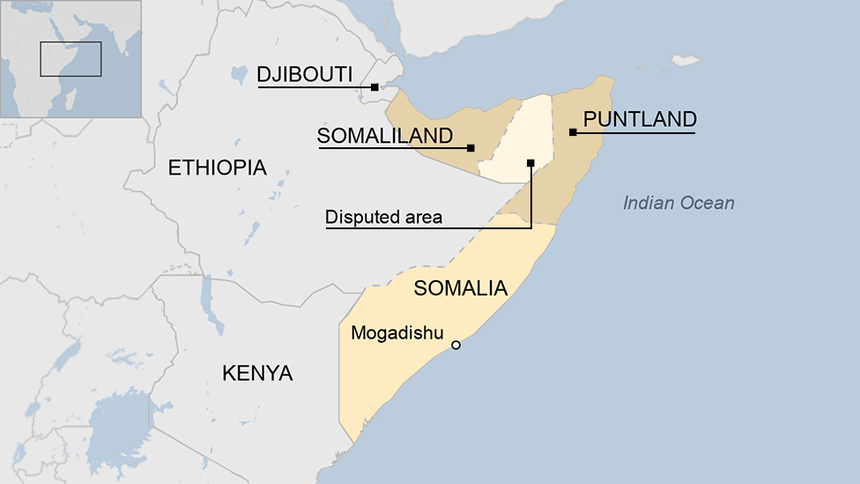
Short answer, yes.


A3) Does Somaliland possess a government ?

Short answer, yes.

https://www.govsomaliland.org/


A4) Is it in capacity to enter relations with other states?

https://www.govsomaliland.org/article/international-relationship


https://en.wikipedia.org/wiki/Foreign_relations_of_Somaliland


And here again, we are forced to admit that Somaliland is in capacity to enter relations with other States, with Israël even claiming Somaliland as a sovereign state.


2. Somaliland, is it stable and democratic?

On the contrary, currently, Somalia is a recognized State.


Is it actually more stable tho..?

If we try to get informed with honesty, let's do a quick comparison.


B1. Has multi-party elections, enabling a strong and democratic

https://www.slnec.net/election-results


B2. Considered more stable than Somalia

https://academy.unpo.org/somaliland-between-recognition-and-geopolitics-stability-without-sovereignty-in-the-horn-of-africa/


In 1991, as the Somali state collapsed entirely, Somaliland seized the opportunity to reassert its independence. Crucially, however, it did so without pursuing territorial expansion or attempting to annex areas beyond its historical boundaries. Instead, it confined its claim strictly to the borders of the former British Somaliland Protectorate, as defined by colonial-era agreements with the United Kingdom.

The resulting contradiction is striking. While Somalia has, since 1991, been engulfed in warlordism, jihadist insurgency led by Al-Shabaab, repeated foreign interventions, famine, and chronic institutional collapse, Somaliland has gradually built relatively robust political institutions and a cohesive sociopolitical order through locally driven, bottom-up processes. It has done so in the absence of international recognition and with minimal external assistance, challenging conventional assumptions about statehood, legitimacy, and post-conflict stability.

Far from representing a destabilizing factor, Somaliland’s trajectory demonstrates how locally anchored governance and peacefully negotiated political arrangements can strengthen regional steadiness rather than undermine it. In this sense, Somaliland’s experience reinforces a broader principle: the dignity and collective will of peoples should carry greater weight than shifting geopolitical interests, especially when communities have shown their capacity to govern themselves responsibly and peacefully.


B3. Higher safety, lower risks for inhabitants than Somalia
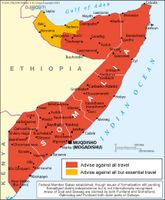
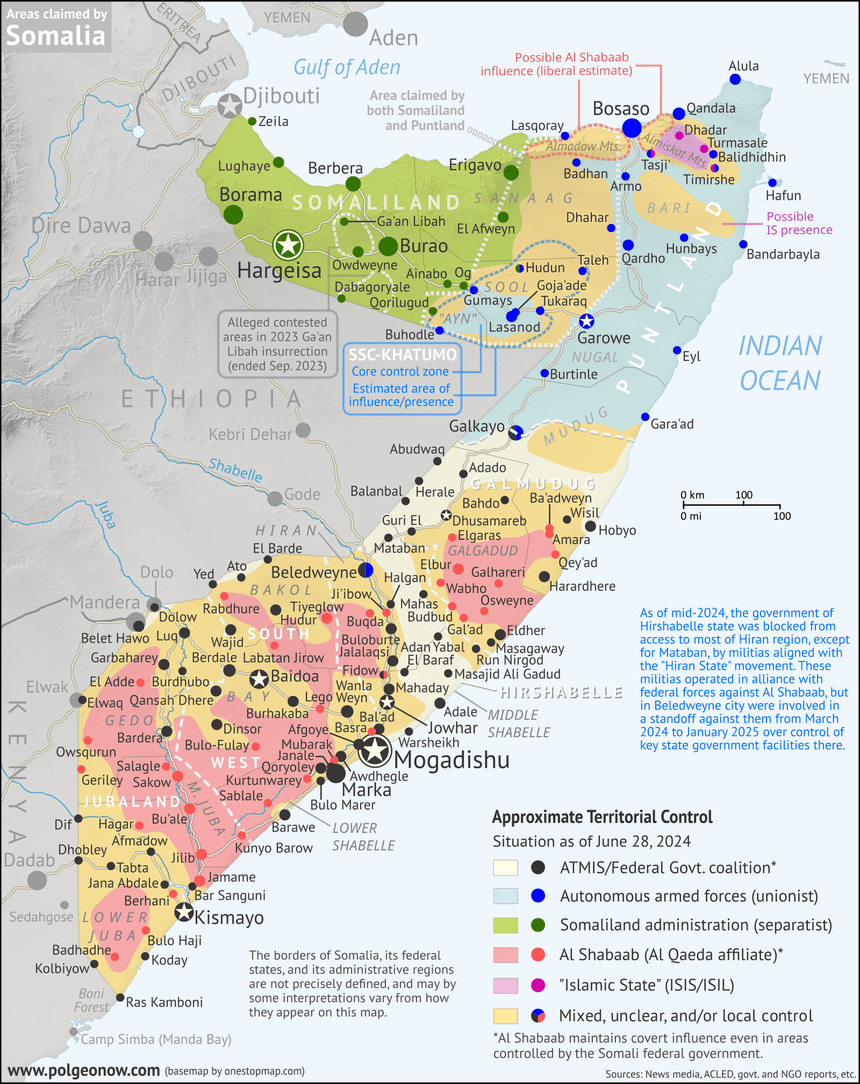
Little to no influence of Terrorism (Al-Shabaab).


Therefore, refusing recognition to a stable and functioning territory while recognizing a largely dysfunctional state appears inconsistent.


-

-


Here, we talked about the legitimacy of recognizing Somaliland as a State. Now we know it's feasible/viable.


Let's now see, if you followed me until now, why the recognition would not only be logical and accurate,


but also beneficial for Somaliland.


3. An even better security ?


https://www.somalilandchronicle.com/2024/12/20/the-strategic-implications-of-somalilands-recognition-a-comprehensive-analysis/


The security implications of recognition extend far beyond Somaliland’s borders. The territory’s proven track record in containing terrorist threats, particularly al-Shabaab, demonstrates its capability as a security partner. International recognition would significantly enhance these security capabilities through increased access to international support and resources. This would enable Somaliland to further develop its security infrastructure, participate in international security frameworks, and strengthen its intelligence-gathering capabilities. The resulting improvement in regional security would benefit not only Somaliland but the entire Horn of Africa, creating a more stable environment for economic development and social progress.

Indeed, international recognition also means

- larger scale security investments

- full security cooperation

- direct international aid

- normal diplomatic and trade agreements.


4. A stronger economy?

Despite operating without formal recognition, Somaliland has demonstrated remarkable economic resilience. The strategic port of Berbera exemplifies this potential, attracting substantial international investment and serving as a crucial gateway for regional trade. Recognition would unlock access to international financial institutions and development funding, enabling Somaliland to fully realize its economic potential. This would facilitate formal trade agreements and economic partnerships, attracting increased foreign direct investment while supporting broader regional economic integration initiatives. The economic benefits would extend throughout the region, creating new opportunities for trade and development that could help address the root causes of regional instability.

https://www.somalilandchronicle.com/2024/12/20/the-strategic-implications-of-somalilands-recognition-a-comprehensive-analysis/


5. Prior arguments cannot work for Con.

If you take a look at the origins of Somalia and Somaliland, you would notice that:

1. British Somaliland and Italian Somalia were originally two separate colonies


2. Both briefly became independent in 1960,


3. and later voluntarily united.


According to this, Somaliland is NOT destroying colonial borders: it is restoring a previously existing boundary. The prior argument cannot work.


6. CONCLUSION

We saw that Somaliland deserves to be recognized as a sovereign state, as it fulfills the requirments.

Therefore, only with this, we could already argue that it would be unfair and arbitrary not to grant Somalia international recognition as an independant state.


But furthermore, we came to the conclusion that it would also be beneficial.


All of the evidences point to the conclusion that, in a lot of points, Somaliland deserves to be recognized.


Good luck to my opponent ! :)


avatar Con #2

Thanks!


I read over Pro's points, and I don't really have any good arguments against any of his points. Instead, I will focus on whether or not the balkanization of an African country is beneficial in the long run for the people living in the region.


We know that Africa has a long history of tribal warfare and rule through violent warlords. Somalia is currently experiencing that type of internal strife. But let's take an example of the fall of the USSR and how all the satellite nations broke away. For some countries like Lithuania and Estonia, when they broke away from the USSR, they thrived quickly by integrating culturally and economically with the EU.

https://www.fraserinstitute.org/commentary/estonias-success-demonstrates-power-economic-freedom


But on the other hand, Ukraine has struggled far more after separating from the USSR. Unlike the Baltic states, Ukraine remained deeply divided culturally, politically, and geopolitically, with large ethnic Russian and Russian-speaking populations concentrated in the eastern parts of the country. Yes, countries like Estonia, Latvia, and Lithuania integrated more smoothly with Western Europe, but Ukraine became arguably inevitably caught between Russian influence and EU alignment, leading to long-term instability, territorial disputes, and eventually the current major war.

https://minorityrights.org/communities/russians-and-russian-speakers-2/


So the question we need to ask: is Somaliland ready to break away from Somalia without any fear that it might turn into an African version of Ukraine? Just because Somaliland is arguably more stable today does not mean all internal groups who live there permanently agree on separation. If recognition hardens borders before all tribal disputes are settled, it would likely create contested regions similar to eastern Ukraine or Crimea, where populations have divided loyalties.


Another thing to worry about is whether Somaliland will become a political pawn of larger neighboring countries, essentially becoming a pseudo-vassal through foreign influence. Given Somaliland’s location near major shipping routes and the Gulf of Aden, recognition could intensify competition among neighboring countries and outside powers seeking influence in the region. For example, Ethiopia has already shown strong interest in gaining greater access to Somaliland’s cheaper ports in order to reduce dependence on Djibouti for sea access. Gulf powers such as United Arab Emirates have already invested heavily in ports and infrastructure near the Horn of Africa to expand trade and military influence near the Red Sea. And of course, larger global powers such as China and the United States have strategic interests in the region because of its importance to global shipping, anti-piracy operations, and military positioning. A newly recognized Somaliland could therefore become heavily dependent on outside sponsors competing for influence, rather than developing as a fully independent and stable state. It wouldn't be a stretch to see foreign military bases cropping up in the region. That could undermine the sovereignty of Somaliland’s citizens if the government becomes pressured to adopt policies that primarily benefit the influencing foreign powers rather than the local population.

https://www.reuters.com/world/middle-east/why-is-somaliland-strategically-important-2026-01-06/


Anyways, that's my big ideas on the con side.


Your turn!

Round 2

2 of 3
avatar Pro #3

Nice work Con!


Redirecting the framework:

Pretty clever! Con is redirecting the debate in order not to have to deconstruct my arguments, which is fine to me, i don't mind, he conceded it. I think I can manage this too!


i'll go over these arguments of his ;

nice debating with Con by the way!


1. The Ukraine analogy: can be destroyed pretty simply

That is a very interesting point from my opponent, but I think he is missing a few key points here:


Ukraine was not a breakaway separatist region from Russia in the way Somaliland is from Somalia.


Indeed: Ukraine was a UN-recognized Soviet republic with internally divided populations.. and direct geopolitical competition with a revanchist nuclear superpower.


Somaliland is fundamentaly different from that:


KEY DIFFERENCES

A1. it has maintained de facto independence for over 30 years


A2. Somaliland built its own Institutions


A3. Somaliland experienced relatively cohesive political development


A4. Somalia has never exerciced meaningful control over Somaliland during that period.


To resume this distinction, Ukraine is a contested sphere between great powers.

Somaliland is a long-term de facto state abandoned by the parent state, not the same!


https://www.cfr.org/backgrounders/ukraine-conflict-crossroads-europe-and-russia


Ukraine is said to be a

Geopolitical Flashpoint

That is not the case of Somaliland.


2. Fear of instability, speculative? What do we actually see when we look at Somaliland and how it could project?


"What if recognition creates instability?"


What ifs are nice, but what does the 30 years of Empirical evidences and overall country's evolution shows us?


The problem lies here: Con is asking us to ignore the three decades of proven and demonstrated stability in favor of... hypothetical future instability.


Con is taking a huge leap.

What the empirical evidence shows us is:


B1. Peaceful elections


B2. Local gouvernance


B3. Functioning institutions


B4. Better security, lower violences than Somalia.


All this despite not even being recognized.

All of these are points that i proved in my R1. Con has to adress these if they want to show a hypothetical future instability, instead of taking example on unsimilar situations like Ukraine.


My point here is: We should judge states based on observable political reality, not speculative worst-case scenarios.


3. In reality, non-recognition is what is most likely to be a factor of instability.


https://globaljournals.org/GJHSS_Volume22/7-International-Law-and-the-Politics.pdf

Page 10.

Somaliland is therefore not secession, but a return to sovereignty

Somaliland is not attempting to create a new colonial border. It is restoring a previously recognized sovereign boundary that existed before the voluntary union with Somalia.


We can also agree that, without recognition:


C1. Investment is weaker


C2. International aid is indirect


C3. Security cooperation is limited


C4. Border disputes become harder to formalize legally


C5. Institutions remain economically constrained

(Check https://globaljournals.org/GJHSS_Volume22/7-International-Law-and-the-Politics.pdf)

What non-recognition is doing is that it traps Somaliland in a gray zone where it carries the responsibilities of a state without the protections and opportunities of one.


4. On the subject of foreign influence, not that scary ?


"UAE, Ethiopia, US, China may influence Somaliland."


That is true of almost.. every strategically located small state on Earth?


Take a look at Djibouti, Qatar, Bahrain,Singapore, Baltic states..


Foreign influence is not an argument against sovereignty. If it were, many internationally recognized successful states would fail the same standard.


5. Diplomatic recognition would likely reduce the need for Somaliland to disproportionately rely on external sponsors.


But why is that? Because a recognized State can sign normal agreements, access international institutions, diversify partners, obtain legal investments, negotiate openly, et caetera.


While an unrecognized state on the other hand:

Often relies on opaque agreements, regional supperiors, informal support.


So yes, i'm insisting on this, isolation increases dependency, and recognition increases autonomy.


6. On the tribal division argument

Probably one of your most interesting points, Con.


But let's have a look:


You're basicaly saying

"What if tribal divisions émerge later?"


But again, No state is required to possess perfect internal unity before recognition.


Or else Belgium, Nigeria, Irak and Lebanon shouldn't be recognized.


The worry isn't on Total absence of internal division, but on effective governance.

And as shown in R1, Somaliland fits this requirment.


7. The Con side’s strongest argument is clearly the fear of creating a dangerous separatist precedent across Africa.

Somaliland is historically exceptional and fundamentally different from ordinary separatist movements.


Let's not forget that Somaliland was formerly the British Somaliland Protectorate, while Somalia originated from Italian Somaliland.. These were two distinct colonial entities with separate administrative histories and recognized colonial borders.


Somaliland briefly existed as an independent sovereign state in 1960 before voluntarily entering into union with Somalia. This means the union itself was a political choice, not an irreversible historical inevitability.


Somaliland reasserted its autonomy (1991) and has now maintained de facto independence for more than thirty years.


Yet during this period, Somalia has exercised little to no meaningful authority over Somaliland’s territory.

It is very important to note this.


AND, Somaliland has developed functioning institutions, conducted elections, maintained relative stability, and demonstrated effective governance over a sustained period of time.


This shows us that, recognizing Somaliland would actually NOT establish a general principle that any dissatisfied region may secede at will.

Somaliland is not an ordinary separatist case.

It is a historically unique situation involving the restoration of a previously distinct political entity that has already functioned independently for decades.

https://www.republicofsomaliland.com/somaliland-vs-somalia


https://en.wikipedia.org/wiki/History_of_Somaliland


8. CONCLUSION


Very interesting start from my opponent!

I can't wait to see more. I tried, as best as i can, to deconstruct some incoherences in your argument Con. I noticed a few hypotheticals, slippery slope, fear projection, future instability, stuff like that.


Your turn, have fun! ^^


avatar Con #4

Alright, just gonna come straight out and say point 7 is a straight-up manufactured strawman. At no point in my arguments did I bring up "a dangerous separatist precedent across Africa." as an argument. This was never one of my arguments, and pro may have had some improper prompting to even frame this as one of my arguments.


I hope the judges see this action and treat it fairly.


Additionally, Pro's point with number 1, it wasn't nearly a "simple destruction" as was presented. Hyperbole aside, Pro still did not reconcile the fact that tribal divisions within Somaliland persist. Particularly in contested regions such as Sool and Sanaag, where clashes between Isaaq and Dhulbahante groups have repeatedly undermined claims of long-term political unity and stability.

https://newlinesmag.com/reportage/inside-the-newest-conflict-in-somalias-long-civil-war


Pro's point 5 is also very weak. "5. Diplomatic recognition would likely reduce the need for Somaliland to disproportionately rely on external sponsors." In strategically valuable regions, formal statehood typically does the opposite in practice. Once recognized, states automatically gain the legal ability to host formal alliances, military bases, and large-scale foreign investment, which then intensifies competition among external actors rather than eliminating it. For example, in the Horn of Africa, neighboring Djibouti is already hosting military bases from multiple foreign powers, including the United States and China, precisely because of its recognized sovereignty and strategic location near major shipping routes. (A point I brought up before.) Formal statehood in practice accelerates this exploitation, and it's not a curative shield.

https://en.wikipedia.org/wiki/Foreign_military_bases_in_Djibouti


I'll go more into depth about the general tribal dysfunction of Somaliland and the general malaise of a less-than-homogeneous society in the next round.


Your turn! :D

Round 3

3 of 3
avatar Pro #5

Regarding the accusation of a "manufactured strawman"

I would respectfully disagree.

Yes, while Con may not have explicitly used the phrase "dangerous separatist precedent", the underlying logic of his argument still clearly revolves around the fear that recognizing Somaliland could produce long-term fragmentation, instability, and regional consequences similar to other geopolitical bad cases. My response to you was in order to address the implications of that logic, not necessarily a fabricated position.

You are the one forcing my position here.


Tribal Division: misunderstanding of Con

Now, on the issue of tribal divisions in regions such as Sool and Sanaag as you quoted:

I would never claim Somaliland is perfectly homogeneous or entirely free from internal disputes. I actually even mentionned that Somaliland did not need to be perfect, and pointed that, just like Belgium and many others, it was not..


Again, this feels very repetitive: the relevant standard for recognition is not the TOTAL absence of internal tensions; if it was, many internationally recognized states would legitimately fail that standard immediately, let's be intellectualy honest.


Moreover, countries across Africa, Europe and Middle East still continue to experience ethnic, tribal, linguistic, regional tensions.... while remaining fully recognized sovereign states.


So to answer to you Con, i do not have to prove to you that tribal divisions exist within Somaliland, because despite existing, they are not a problem in the recognition of the state.

It is on your behalf to show me how tribal division would divide (which you most likely couldn't ; as it would negate the recognition of Belgium etc.. (check R2))

https://www.britannica.com/place/Belgium

That is what you failed to demonstrate twice.


No hypotheticals, a necessity to assert reflexion on Somaliland properly (can it work as a recognized State) and be intellectualy honest (not to compare it with situations that heavily differ (Con quoted Ukraine et caetera)).

So, to be precise: the question is whether Somaliland has demonstrated sustained political viability and effective governance overall.


And for more than three decades, Somaliland has maintained functioning institutions, internal administration, elections, security structures, and relative stability compared to Somalia .

https://www.bbc.com/news/world-africa-14094503


Isolated regional disputes do not negate the broader reality of long term de facto governance.


In fact, the existence of disputed regions is not unique to Somaliland at all. Territorial disputes exist in many recognized states:

India and Pakistan, Serbia and Kosovo ; Morocco and Western Sahara


(Check)

https://www.britannica.com/place/Kashmir-region-Indian-subcontinent


https://www.britannica.com/place/Kosovo


https://www.britannica.com/place/Western-Sahara


Recognition has never historically required perfect territorial consensus.

If you don't concede that it would be intellectualy dishonest.


Additionally, Con’s argument unintentionally strengthens my broader point: unresolved territorial and political ambiguity are often WORSENED by non-recognition. You are unconsciously making me right, as you should check on https://globaljournals.org/GJHSS_Volume22/7-International-Law-and-the-Politics.pdf


This makes border clarification, institutional mediation, and formal dispute resolution significantly more difficult.


A fear of.. banality ?

Now, to go on with the foreign influence and Djibouti:


Con argues that recognition would intensify foreign involvement because recognized states may host military bases or formal alliances. However, this does not demonstrate that recognition itself is harmful or illegitimate, and that the implications would be negative. Nearly every strategically located small state engages with larger powers to some degree.

Like, Djibouti, Bahrain, Singapore, Qatar, and many Baltic states all maintain strategic partnerships with major powers while retaining international sovereignty.


More importantly, Con’s own example undermines his conclusion. Djibouti’s recognized sovereignty gives it the legal authority to negotiate openly, diversify partnerships, collect revenue, and maintain internationally protected diplomatic agency.


It's a huge contrast when we come to the realization that unrecognized entities are often forced into informal dependency relationships PRECISELY because they lack full access to international institutions and legal diplomatic channels.


Recognition does not magically eliminate geopolitics.. that was never my point in the first place.


But, it does provide legal legitimacy, diplomatic flexibility, and broader international engagement. What isolation and ambiguity tend to increase is vulnerability ; not reduce it.


Finally, i'd like the judges to really take into consideration the fact that despite the attempts, Con repeatedly focuses on hypothetical future instability, while my case remains grounded in observable political reality.


My previous statement remains: Somaliland has already demonstrated more than thirty years of sustained de facto autonomy, institutional continuity, and comparative stability.


Unrealistic demand from my opponent: No internal problems?

The burden cannot reasonably be shifted toward proving that Somaliland will become perfectly stable forever, because no state on Earth could satisfy such a standard in the first place.


IN FINE 1 (Synthesis 1)


In order to properly judge, we have to


(i) not look at fear-driven hypothesis based on states with different situations than the one we are studying

(ii) rather focus on how stable it already is before even being recognized as a State

(iii) See the effects that a recognition would imply according to the situation of the State studied

(iiii) conclude if it is doable.

(iiiii) If it is, then in order to not be arbitrary (check the first argument of R1), it would be moraly and legally the only correct outcome.


Now let's look.

S=Situation


S(ii): Somaliland is proven to be stable (according to Montevideo)


S(iii): The effects of recognition would be, as shown in R2, to improve international relations, increase the pre-existing stability and lower the already low crime situation.


S(iiii) It is doable (as we checked in R1, Somaliland fits the Montevideo requirments).


S(iiiii) The legally correct outcome would be to recognize Somaliland.


IN FINE 2 (Synthesis 2)


1. No recognized state is free from internal divisions or territorial conflicts. Con dishonestly ignored this.


2. the institutional continuity of Somaliland since 1991 and it's electoral and democratic stability is empiricaly heavily point to a pre-existing stability, despite not being recognized.


3. Despite similar internal conflicts that Con quoted as an argument, Kosovo etc.. many other states have been recognized. It is not an argument, it is actualy just a fact that most, recognized or not, face.


4. High juridicial ambiguïty and diplomatic difficulty are problems that could be solved through recognition (check R1)


IN FINE 3 (Synthesis 3)

To conclude, my opponent failed at deconstructing my arguments ; he instead chose to argue on future hypothetical worst-case scenarios, and used examples of situations that are not similar to Somaliland's, offering a very limited perspective on the topic. I want the judges to keep that in mind.


To go out of character, this was a really fun and interesting debate Con! Looking forward to do this again with you sometimes, good luck!

avatar Con #6

Ok, I was hoping this would be an engaging debate; however, my opponent doubled down with this:


 My response to you was in order to address the implications of that logic, not necessarily a fabricated position.
You are the one forcing my position here.


Respectfully, the accusation that I forced you to create a strawman in this debate is beyond absurd, and I hope the judges will respond accordingly. And instead of addressing my points, you addressed fabricated implications.


Vote con.


New comment

avatar
•••
#9
--> @Shoresy

Wanted to thank you for the debate, it was rlly fun and looking forward to doing that again!! Nice work from both of us

avatar
•••
#8
--> @Ultracrepidarian

Pro establishes a teleological framework, and this framework is not disputed by Con.

Pro's arguments sufficiently uphold their teleological framework by establishing that Somaliland fits all four criterion of the Montevideo standard. (Permanent population, defined territory, functioning government, foreign relations) None of these pillar are taken down by or even attacked by Con during the debate. Con even says he has no rebuttals against them. Thus, Pro's case upholds their burden of proof and wins the debate.

Additionally, Con effectively drops the entirety of the debate in the last round, solidifying Pro's victory, even if we were to weigh this debate under the framework of utilitarianism, which seems to be what Con was using. The only utilitarian arguments left standing at the end of the debate were that made by Pro in their constructive. (Security and economy)

avatar
Kohai Administrator
•••
#7
--> @Kohai, @Shoresy, @OranjeDisco

<p>>Reported Vote: Kohai // Mod action: Removed</p>
<p>>Voting Policy: https://www.debatecraft.com/debates/vote-rubric</p>
<p>>Voted for: pro</p>
<p>>Reason for Decision: fails-to-analyze</p>
<p>>Reason for Mod Action:</p>
<p>Voter failed to analyze arguments and thus is removed </p>

avatar
Kohai Administrator
•••
#6

<p>---Kohai's former vote---</p>
<p>Voted for: pro</p>
<p> This is a test vote for a new moderation system. This will be removed once I test it on the local back end. </p>

avatar
Savant Administrator
•••
#5
--> @Ultracrepidarian

On a normal debate your vote might be sufficient, but because this is UltraRated the mods are requesting that you add a bit more detail to your vote in the comments. If you could specify/justify how the args and framework weren't disputed in the debate, that would help.

avatar
•••
#4

Alrighty

avatar
whiteflame Global Moderator
•••
#3

I'll see what I can do about getting a vote up on this one, might be a bit.

avatar
•••
#2

In my conclusion, I said "Somalia" instead of "Somaliland", please don't take this into account :')
I just noticed it

avatar
•••
#1

Nice!

whiteflame
whiteflame Global Moderator
#3
Criterion Pro Tie Con
Winner
Pro sets up a pretty strong case, providing a clear framework of teleological legitimacy and establishing what that legitimacy looks like as applied to this case. This could, perhaps, have been applied more discretely to the African Union, but it nonetheless establishes why entities outside of a given territory should recognize said territory as a state. And Pro lays out all the criteria required for fulfilling the standard, proceeding to detail the benefits to Somaliland and its neighbors that would result from recognizing its statehood. There's a bit of pre-rebuttal thrown in for good measure (though generally speaking, I don't usually think much of pre-rebuttal even if it does apply well to what the opponent says), so it's a clear net benefits advantage and is consistent with existing standards for state recognition.

Con's biggest mistake starts in his first paragraph, basically just conceding the entirety of Pro's argument. I don't see a competing framework, which means Pro's framework is automatically adopted for the purposes of evaluating this debate, and I don't see arguments on the framework for why Con is winning it, so Con has a lot of work ahead of him to present points that would obviously win him credit on teleological legitimacy.

Unfortunately, Con's points accomplish neither. Instead, Con presents a series of net benefits-based arguments about how this can go wrong. This cedes the framework entirely, basically granting Pro the win on that front, and instead establishes that there's a potential future danger to recognition of Somaliland's statehood that should override it. Even if I assume that that is Con's framework (a focus on long-term impacts as most important) and assume that that overrides teleological legitimacy, Con just isn't doing the work he needs to do here. Comparisons to the USSR just don't stand up to Pro's detailed responses, so while tribal warfare might be a problem, Con doesn't do enough to show that this is likely to happen with Somaliland, much less that creating a state is similar to carving out Ukraine from its constituent nations.

The point about Somaliland becoming a pawn of larger countries is a stronger point, but still gets largely turned since, as Pro points out, Somaliland can only grow in power and become a meaningful counter balance to the weight of these external forces if it has the means to enhance itself economically and politically. The country may be opened up to some other means of exploitation, but that comes with the means to escape exploitation as well.

And the only point of Con's that survives to the end is an argument that Pro was engaging in a strawman. Worst case scenario for Pro, that means I throw out the argument. It doesn't give me any reason to vote Con. You need to tell me why you're still winning the debate at that point, not get caught up in what you see as a fallacious response. Absent that, whether I'm focused on Pro's framework or on the net benefits of Somaliland's recognition as a state, Pro's points outweigh Con's. There's simply too much here that Con concedes from Pro and not enough strength to Con's points lasting through to the end.
Criterion Pro Tie Con
Winner
Pro establishes a teleological framework, and this framework is not disputed by Con.

Pro's arguments sufficiently uphold their teleological framework, and neither the arguments made nor the framework itself was brought into question by Con. Thus, pro wins this debate.

Con effectively drops the entirety of the debate in the last round, solidifying Pro's victory, regardless of the framework used.


Savant
Savant Administrator
#1
Criterion Pro Tie Con
Winner
The framework proposed by Pro is teleological legitimacy, which they basically summarize by saying “If Somaliland already fulfills these teleological requirements for a recognized State, refusing to recognize it as a State would be, by definition, arbirtrary.” That’s a pretty clear set of goalposts. Con doesn’t provide an alternative framework—they say they will focus on “whether or not the balkanization of an African country is beneficial in the long run for the people living in the region”—but that’s not the same thing. There’s no argument for why these should be the goalposts for how the debate is measured (Pro at least provides a single sentence), and recall from the vote rubric that to count as a framework, it must be presented as one or something synonymous (e.g. “goalposts for this debate,” etc.). Pro presents a framework; Con does not. So I defer to Pro’s framework.

That makes this debate a bit lopsided, because there’s no significant dispute from Con that Somaliland already fulfills the classical criterias of statehood. Con even states outright, “I don't really have any good arguments against any of his points.”

And even if Con had provided a framework like utilitarianism or something, and the debate were being measured under that framework, the whole discussion becomes a bit lopsided after the first round. Pro gives 7 points disputing Con’s argument about instability, and Con only responds to 1 and 5. Con promises to expand in the last round but then doesn’t, instead accusing Pro of intellectual dishonesty. Even if Pro was being intellectually dishonest in the sentence Con is referencing, Con is just dropping way too many of their points to effectively dispute their case. Hence, I vote Pro.

Removed Votes

Kohai
Kohai Administrator
This is a test vote for a new moderation system. This will be removed once I test it on the local back end.