


On balance, the benefits of genetically modified foods outweigh the harms

Finished
Like this debate? Score +1
···
X Facebook
Pro Instigator Opens first Winner
Instigator Avatar
3
Rating
1491
Debates
3
Win rate
33.33%
Con Contender
Contender Avatar
0
Rating
1487
Debates
3
Win rate
33.33%
Verdict Kohai wins · 3 points
Kohai Pro
3
Leaning Con
0

After 3 votes (0 ties) — 3 points ahead

Burden of proof

Shared

Both sides are tasked with weighing the benefits and harms of GMO foods against one another.

Definitions

Genetically modified foods
an animal, plant, or microorganism whose genetic material has been altered using genetic engineering techniques, which are technologies that change an organism's DNA in a way that doesn't occur naturally. This can involve adding, deleting, or enhancing genes to change an organism's characteristics for purposes like creating pest-resistant crops or producing medicine.
There are many countries in which GMO foods are allowed, and many where they are substantially regulated or even banned. While the debaters may discuss regulation or banning these foods as a means of responding to the harms they present, the focus of this debate should be on existing benefits and harms in the countries where they are present and sold.

Round 1

1 of 3
avatar
Kohai Administrator
Pro #1

I would like to thank my opponent for joining me in this debate. I wish him the best of luck. With that said, let’s get straight to it. 


Introduction


I affirm the resolution: on balance, the benefits of genetically modified foods outweigh the harms. In this debate, I will prove that GMOs have been beneficial in three specific areas: health, economic, and ecological. 


Observation 1: Everything is a GMO


The first thing I want to point out is that everything we eat is genetically modified. This is simply how evolution works. For thousands of years, humans have been artificially breeding animals and plants to select the traits that they want to improve and pass down. Let's take a look at the banana, for example:
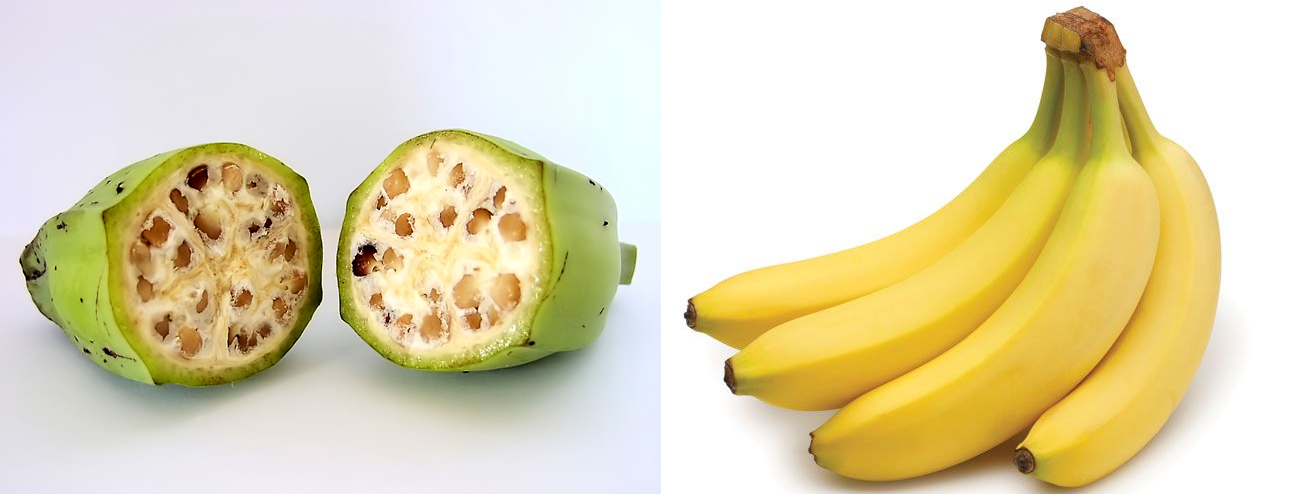


If you enjoy fresh bananas, then you can thank genetic modification via artificial selection.


Genetic modification works the same way except that we can make the traits we want much faster. Let's now look at the three areas which GMOs have improved our lives.


Area 1: Health


A) GMOs are safe


The scientific evience overwhelmingly states that GMOs are safe to eat. More than 3,000 studies came to the same conclusion. GMOs do not negatively impact our health. In fact:


B) GMOs improve health


GMOs can help improve the nutritional value of foods. "An example is GMO soybeans with healthier oils that can be used to replace oils that contain trans fats." - Source.


Another example is golden rice which has signiifcantly increased the nutritional value. The PNAS writes: "The consumption of the genetically modified rice variety known as Golden Rice (GR) offers a potent and cost-effective strategy to combat VAD. But this innovation has been cast aside owing to fear or false accusations, resulting in numerous lives needlessly lost (1–3). With the recent exception of the Philippines, governments have not approved the cultivation of GR (5). We believe it should be broadly approved and given the opportunity to save and improve lives."


Area 2: Economic


Because GMOs can singiicantly increase the produciton yield this has translated to a signiciant economic benefit for farmers. PG Economics notes:


"Crop biotechnology helps farmers earn more secure incomes due mainly to improved control of pests and weeds. The net farm level economic benefit in 2014 was $17.7 billion, equal to an average increase in income of $101/hectare. For the 19 years (1996-2014), the global farm income gain has been $150.3 billion;
The total farm income benefit of $150.3 billion was divided almost equally between farmers in developing (51%) and developed countries (49%)..."


This has lead to a noticable reduciton in suicide among farmers. The genetic literacy project demolishes the false claim that GMOs have increased suicide rates:


We find that the suicide rate for male Indian farmers is slightly lower than the non-farmer rate. And Indian suicide rates as a whole are not notably high in a global context. The pattern of changes in suicide rates over the last 15 years is consistent with a beneficial effect of Bt cotton, albeit not in every cotton-growing state.


The Conversation noted:


the available data does not support the view that farmer suicides have increased following the introduction of Bt cotton. Taking all states together, there is evidence to support the hypothesis that the reverse is true: male farmer suicide rates have actually declined after 2005 having been increasing before then.


Finally, Stuart J Smyth noted:


Research examining the relationship between farm suicide and Bt cotton adoption revealed a plateauing of the suicide rate following the commercialization of Bt cotton (Gruère and Sengupta, 2011). Farmer suicides were trending upward from 15 000 per year, peaking in 2004, the year after Bt cotton was first commercialized in India. By 2007, the actual suicide rate was 25% below the extrapolated suicide rate. Cumulatively, the reduced rate of suicide associated with the adoption of Bt cotton represents the prevention of a minimum of 75 000 farmer suicides.


Area 3: Ecological


The final area I will look at is the ecological impact of GMOs. The FDA notes:


Overall, studies have shown GMOs can have positive environmental impacts and can be important tools for addressing the causes and effects of climate change...
When farmers grow Bt crop varieties, they can apply less insecticide while still preventing insect damage to their crops. This in turn allows for a higher diversity of beneficial insects. For example, insecticide application among U.S. corn and cotton farmers decreased by over 80% from 1996 to 2017


The GMO answer project noted:
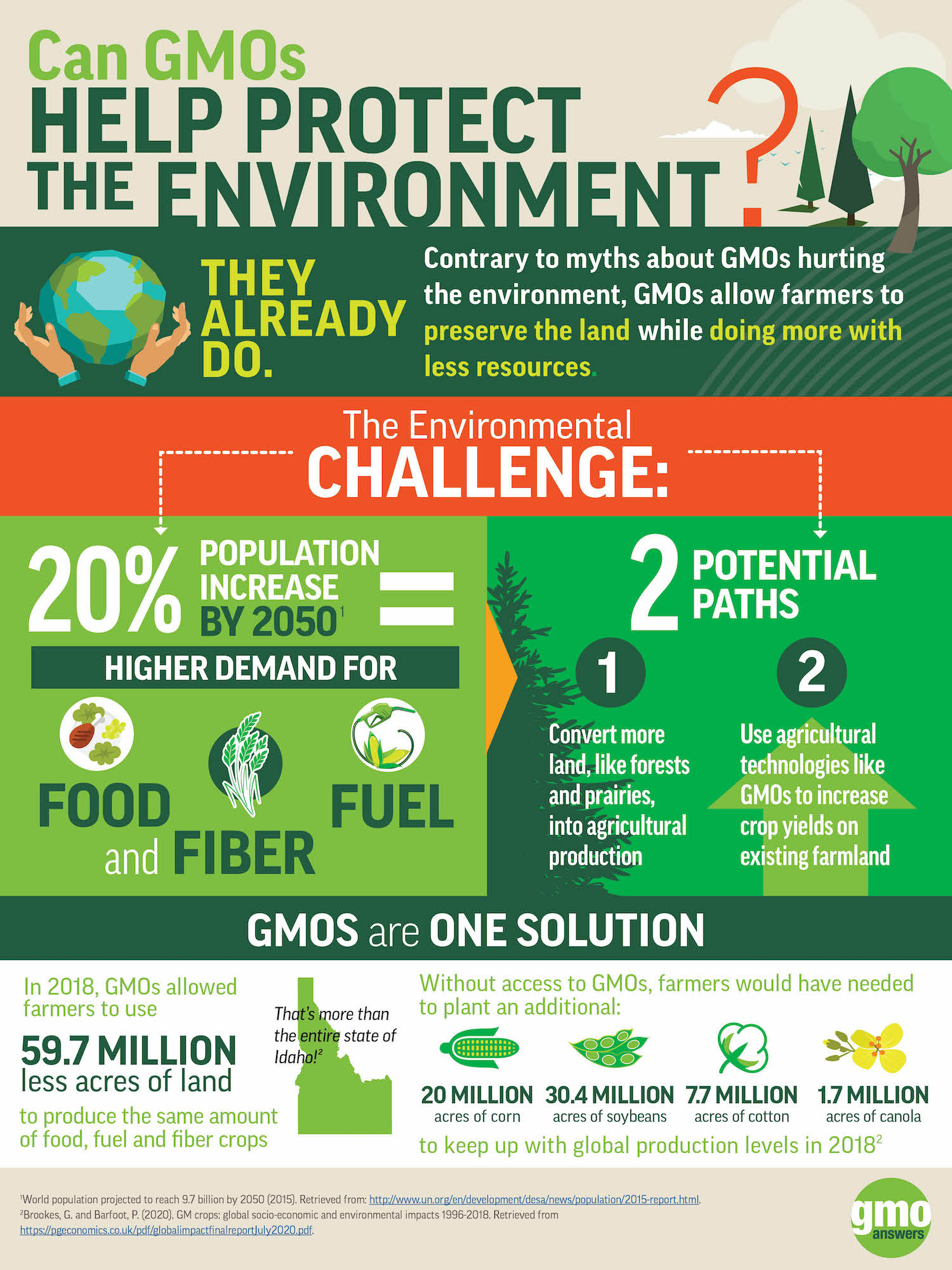

Herbicide-tolerant crops help farmers control weeds more effectively, and in turn farmers plow fields less frequently if at all, to manage weeds. Because the soil isn’t turned, the carbon naturally stored in soil stays there (soil carbon sequestration). Because machinery isn't used to plow fields, less gasoline is needed, resulting in fewer CO2 emissions from engines.
These benefits add up: In 2020 alone, the GM crop-related CO2 emission savings from reduced fuel use and additional soil carbon sequestration were equal to the removal of 15.6 million cars from the road3 - two million more than all the cars registered in California!4


Conclusion


GMOS have had significant benefits in multiple areas. The resolution is affirmed. Please vote PRO



avatar
Leaning Global Moderator
Con #2

I shall argue, on balance, the harms of genetically modified foods outweigh the benefits.

Shall argue the areas of health, economic, and ecological, while linking them to The People in weighing the harms and benefits of GMOs.


Observation 1: Everything is NOT a GMO

"The National Bioengineered Food Disclosure Standard defines bioengineered foods as those that contain detectable genetic material that has been modified through certain lab techniques and cannot be created through conventional breeding or found in nature."

https://www.fda.gov/food/agricultural-biotechnology/how-gmos-are-regulated-united-states


The debate description states,

"There are many countries in which GMO foods are allowed, and many where they are substantially regulated or even banned."

Countries are not banning foods which are naturally cultivated. But GMO lab foods.


One is not going to get a GloFish by standard breeding techniques.

It required the "adding a variant of the jellyfish gene."

https://en.wikipedia.org/wiki/GloFish


Little glowing fish, seems harmless enough.

But it's the implications see.

Ecosystems can be surprisingly delicate, when certain additions or subtractions are made.

We 'had food before GMOs,

Now, we 'still have food.

But what is worse, we have people able to 'quickly and near invisibly damage ecosystems.

There is 'much legislation on GMOs, in 'some countries.

There is much legislation on 'nukes, in 'some countries.

It's not necessarily 'great that nukes exist and it's constant apocalypse threat exists.


Area 1: Health

GMOs have exhibited and possess potential for a great deal of harm


Nutrition,

"most of the comparative analyses (275; 41.9%) showed no significant difference between organic and conventional foods. "

https://pmc.ncbi.nlm.nih.gov/articles/PMC10987935/


GMOs can contain nutrition, or they can not.


Pesticides, Safe? Unsafe?

Consider this, leaded water can safely be drunk once, maybe twice, but over months or years, deadly effects stack up.

GMOs are tightly under the grasp of corporations.


"Since the mid‑1990s, Monsanto has filed suit against 145 individual U.S. farmers for patent infringement and/or breach of contract in connection with its genetically engineered seed"

https://en.wikipedia.org/wiki/Monsanto_legal_cases


What do companies like?

Profit.

What do consumers eat? Whatever is available.

We 'already have nutrient rich foods that people could buy. But people are often drawn to what is cheap, tasty, or available.

https://news.yale.edu/2008/09/10/healthy-foods-scarce-poor-neighborhoods-yale-researchers-find

Is a lack of nutrition safe?

Not over time I'd say.

And that is something to fear of 'companies with monopolies.


"In the United States, monopolies and monopolistic behavior are highly criticized. Monopolies remove consumer choice, and often lead to higher prices for lower quality goods and services."

https://www.debatecraft.com/debates/d/9k/on-balance-the-benefits-of-genetically-modified-foods-outweigh-the-harms


Pesticides

"Mexico’s report presents dozens of studies from peer-reviewed scientific journals that link a wide range health effects to consumption of GM corn and exposure to glyphosate residues that often come with it – since 80% of U.S. corn is sprayed with glyphosate-based herbicides."

https://usrtk.org/gmo/new-scientific-analyses-mexicos-restrictions-on-gm-corn-glyphosate-health-risks/


Imagine the groundwater from all those pesticides.


Area 2: Economic

Are 'farmers making money, or are corporations?


Recall the court cases earlier

Here is another from Australia.

https://www.farminstitute.org.au/getting-the-story-right-on-the-marsh-baxter-gm-case/

Much of a farmers livelihood was 'ruined by the wind, and a corporations 'patent on said wind blown seeds.


And frankly, the economic benefits are little to no benefit.

"The Top 10 Percent Own 70 Percent of U.S. Wealth"

https://www.statista.com/chart/19635/wealth-distribution-percentiles-in-the-us/?srsltid=AfmBOoom-ovCrtrxvLph-8OXxO9-_9MOJkgNOW3Y38xdzGL2O6EYfBQ-


The economic benefit to The People is little, yet the people are the majority.


What average farmer anywhere has a lab by which to Frankenstein GMO their crops?

What average farmer has the funds or lawyers to finance and copyright their crops to 'such a degree as large companies are?


Make America 10 times as rich, but if all the added bounty goes to the companies, and the rest of us are left serfs.

I ask you, what type of economic improvement is 'that?


Area 3: Ecological

Below I shall argue frequent examples of GMOs gone astray.


PESTS

"It is also possible that if insect-resistant plants cause increased death in one particular pest, it may decrease competition and invite minor pests to become a major problem. In addition, it could cause the pest population to shift to another plant population that was once unthreatened."

https://pmc.ncbi.nlm.nih.gov/articles/PMC3791249/


Here again we see the monopoly of companies, and the destruction of any who will not rent from them their seeds.


"These effects can branch out much further. A study of Bt crops showed that “beneficial insects, so named because they prey on crop pests, were also exposed to harmful quantities of Bt.” It was stated that it is possible for the effects to reach further up the food web to effect plants and animals consumed by humans"

https://pmc.ncbi.nlm.nih.gov/articles/PMC3791249/


Safe in the lab is one thing, safe deployed into various ecosystems, is another.


DAMAGES TO HUMANS

And what happens when crops are made so strongly pest resistant, other than diverting and killing bits of the ecosystem.


"Court documents filed by attorneys for Waimea homeowners who successfully sued DuPont for pesticide and dust impacts to their homes show the company sprayed ten times the mainland average, based on internal pesticide records obtained from DuPont."

https://theecologist.org/2015/nov/04/hawaii-anger-rises-over-health-impacts-pesticides-used-gmo-crops


Can apply less pesticides, does not mean that is standard practice.

Not to mention the insecticide 'corn some companies grow.


"engineered to resist weedkillers and produce its own insecticide."

https://www.nongmoproject.org/blog/the-gmo-high-risk-list-corn/

Healthy?


ESCAPES

"For years, some farmers in central and eastern Oregon have been battling an unexpected new pest: a genetically modified strain of the soft, lush grass you’d commonly see on a golf course.

In 2003, a botched experiment by agribusiness giants Scotts Miracle-Gro and Monsanto unleashed a mutant strain of creeping bent grass across the state."

https://www.opb.org/news/article/gmo-grass-oregon-creeping-bent-scotts-monsanto/


We also might worry of

https://en.wikipedia.org/wiki/Horizontal_gene_transfer


"Imagine a pest resistance gene jumping to a native plant that is the main food source for an ecologically important caterpillar."

- Some Guy Off Reddit


Pesticide

"In 1999, a paper stated that, in a laboratory environment, pollen from Bt maize dusted onto milkweed could harm the monarch butterfly.[293] A collaborative research exercise over the following two years by several groups of scientists in the US and Canada studied the effects of Bt pollen in both the field and the laboratory. The study resulted in a risk assessment concluding that any risk posed to butterfly populations was negligible.[294] A 2002 review of the scientific literature concluded that "the commercial large-scale cultivation of current Bt–maize hybrids did not pose a significant risk to the monarch population" and noted that despite large-scale planting of genetically modified crops, the butterfly's population was increasing.[295] However, the herbicide glyphosate used to grow GMOs kills milkweed, the only food source of monarch butterflies, and by 2015 about 90% of the U.S. population has declined."

https://en.wikipedia.org/wiki/Genetically_modified_food_controversies


"A 2010 study showed that about 83 percent of wild or weedy canola tested contained genetically modified herbicide resistance genes.[335][336][337] According to the researchers, the lack of reports in the United States suggested that oversight and monitoring were inadequate.[338] A 2010 report stated that the advent of glyphosate-resistant weeds could cause GM crops to lose their effectiveness unless farmers combined glyphosate with other weed-management strategies.[339][340]"

https://en.wikipedia.org/wiki/Genetically_modified_food_controversies


Some Final thoughts R1

Consider Thomas Midgley Jr. and his creation unleashed upon the world.

"In 2011, researchers retroactively estimated the annual impact of tetraethyl lead worldwide to be 1.1 million excess deaths"

https://en.wikipedia.org/wiki/Tetraethyllead


People 'want and require the GMO sticker on foods, 'because they are worried.

A sticker that 'companies (No surprise) are eager to remove.

https://www.ewg.org/research/big-food-companies-spend-millions-defeat-gmo-labeling


My opponent is quick to notice 'lab safety, and controlled environment safety.

But they ignore the effects that GMOs can have when applied in the real world.

They ignore the soulless money grubbing companies whose first focus is 'not safety.

They ignore the wideness of the world, even 'if first world companies manage to rein in GMOs to be farmed a 'bit more safely (While often failing), what of the world at large?

What of third world farmers and sweatshops, what 'safety will be found there?


The US government could not force China to not kill all the sparrows,

And the US government cannot force China to follow US safety regulations on GMOs.


On balance, the benefits of genetically modified foods outweigh the harms.

Because we don't need 'more food, we need more infrastructure, planning, and safety nets for the people we have 'now.

We 'have the food and money, it just needs to be 'applied to the people.

There are little to no benefits, GMOs are rather additions of risks and downsides.

Round 2

2 of 3
avatar
Kohai Administrator
Pro #3

Thank you, Leaning, for your arguments. I am sorry I had very little time over the past few days so I may not get to everyhting. I want to at least touch on the major points.

Area 1: Health

GMOs have exhibited and possess potential for a great deal of harm

Nutrition,

My opponent completely misrepresents their first source. The source was not comparing GMOs to non GMOs but rather comparing organic farming to conventional farming. This is evidence by the title of the paper: "Are organics more nutritious than conventional foods?..." The paper dealt with the hypothesis that organic foods are healthier than conventional foods. The paper itself concludes:

Therefore, if a belief in the nutritional superiority of organic foods over conventional foods is established among consumers, such a belief can only be grounded in subjective knowledge.

GMOs are only one part of conventional foods and conventional farming. This is not a comprehensive study showing that GMOs are nutritionally equivalent to non-GMOs.

Pesticides, Safe? Unsafe?

My opponent griped about corporatoins and also blatantly cherry picked their own source:

Since the mid‑1990s, Monsanto has filed suit against 145 individual U.S. farmers for patent infringement and/or breach of contract in connection with its genetically engineered seed but has proceeded through trial against only eleven farmers, all of which Monsanto has won

So in the past 30 years Monsanto (which no longer exists as a company) only took 11 individuals to trial. Further, from the same source:

As Monsanto argued, the principle behind a farmer’s seed contract is simple: a business must be paid for its product, but that a very small percentage of farmers do not honor this agreement. While many lawsuits involve breach of Monsanto's Technology Agreement, farmers who have not signed this type of contract, but do use the patented seed, can also be found liable for violating Monsanto's patent.[11][10]: 581  That said, Monsanto stated it will not "exercise its patent rights where trace amounts of our patented seed or traits are present in farmer's fields as a result of inadvertent means."[12] The Federal Circuit found that this assurance is binding on Monsanto, so that farmers who don’t harvest more than a trace amount of Monsanto's patented crops "lack an essential element of standing" to challenge Monsanto's patents.[13]

What do companies like?

Oh no, not the profits! God forbid if a company actually makes a dollar. The horror!

Corproations will always try and make a profit whether it is with GMOs or non GMOs. The fear mongerring of ProFiTs are not relevent ot the scientific data. Going off of my opponent's own standards they would be forced to reject non-GMO products:

Labeling Food GMO-Free Is Now A Multi-Billion Dollar Business
To receive the label, a product has to be certified as containing ingredients with less than 1 percent genetic modification. Westgate says that’s a realistic standard, while totally GMO-free is not. She says natural foods stores began the process of defining a standard, involving other interested players along the way, including consumers. Now, General Mills is just one of the big food companies selling non-GMO products.
Sales of food labeled as “Non-GMO” ballooned to over $3 billion in 2013, according to the Wall Street Journal.

Companies chase profits. If they can gain a profit by selling non-GMO products then they will. Profits =/= GMOs are dangerous and not beneficial. Cross-examination for con: Are companies not allowed to make a profit? What is the maximum profit a company should be permitted to make and why? If you don't explain this then your entire argument about profits collapses.

Pesticides

First, my opponent's source is highly questionable. The site promotes a lot of pseudoscience nonsense and even has an entire section promoting COVID conspiracy theories. Second, the article overstates the dangers of glyphosate.

1) It is listed as an IARC group 2A carciogenic "This designation is applied when there is limited evidence of carcinogenicity in humans, as well as sufficient evidence of carcinogenicity in experimental animals." To compare night shift work is listed in the same category of carciogenic as glyphosate.

2) The EPA found:

In February 2020, after receiving and considering public comments on the glyphosate proposed interim decision, EPA published the interim decision registration review decision (ID) for glyphosate. As part of this action, EPA found that there are no risks of concern to human health when glyphosate is used in accordance with its current label. EPA also found that glyphosate is unlikely to be a human carcinogen. The ID also identified potential ecological risks to non-target organisms, primarily non-target plants through spray drift. The ID identified interim risk mitigation measures in the form of label changes, including spray drift management language, herbicide resistance management language, a non-target organism advisory, and certain label consistency measures. It concluded that the benefits of glyphosate outweigh the potential ecological risks when glyphosate is used in accordance with labels.

Area 2: Economic

Are 'farmers making money, or are corporations?

The question that I ask to my opponent once again: Are corporations not allowed to make money? If not, why not? Is there a maximum profit dollar that they should make? What's that standard and why?

Once again, my opponent blatantly misrepresents his first source:


https://www.farminstitute.org.au/getting-the-story-right-on-the-marsh-baxter-gm-case/

The picture that emerges from the published findings of the judges is one where, instead of the normal situation where the offending canola stalks would have been quickly collected up and removed, or the neighbour asked to collect them and remove them, the situation was escalated all the way to the courts as a consequence of actions by the organic farmer, the over-zealous and incorrect actions of his organic certifier NASAA, and ultimately a band of anti-GM campaigners who saw the case as an opportunity to inflict some damage on those supporting GM crops.
The case has backfired on the anti-GM campaigners rather spectacularly. First, the judges have pointed out that merely having some GM crop plants present on a farm does not constitute ‘contamination’; that in any event contamination implies harm or damage and there is no available evidence that GM crops have ever caused harm or damage; and finally that as a consequence of losing the case, it is possible that all the costs of the case will have to be borne by Steve Marsh.
As noted in relation to the first court decision, it seems that the Judges are hinting quite strongly that the party most to blame in this situation was the organic certifier NASAA, and the organic standard which sets a zero tolerance requirement, contrary to the more realistic and practical standards that apply everywhere else in the world.
All those anti-GM campaigners who so willingly jumped on the bandwagon now face the difficult moral decision about whether they are prepared to open their wallets and help pay for Steve Marsh’s likely costs.
There is still the possibility that this case might be appealed to the High Court, but it appears this would simply be inflicting more stress and uncertainty on the two protagonists and further fattening the pockets of lawyers. The reality is that neighbouring farmers have dealt with these sorts of problems in a practical and cooperative manner for generations, and resorting to the courts every time a sheep strays or weeds appear will never be a solution.

My opponent blatantly is lying through their teeth.

My opponent then cites the statistic that The Top 10 Percent Own 70 Percent of U.S. Wealth. While this is true this is completely irrelevent and actually strengthens mine. If there's positive economic benefit for farmers then that bolsters my case.

Area 3: Ecological

PESTS

DAMAGES TO HUMANS

My opponent cites the GMO project: "engineered to resist weedkillers and produce its own insecticide." but fails to actually prove why this is bad or what the harms could be. This is an unproven point.


ESCAPES

My opponent cites horizontal gene transfer but doesn't explain what that is, how it works, or the connection on GMOS.

Some guy off redit - sounds quite reliable (not).

Pesticide

A 2019 paper noted that the decline of the butterflies far predated the use of GMOs:

The recent decline of the monarch butterfly has attracted a great deal of attention. One of the leading hypotheses blames genetically modified (GM) crops, ostensibly because of the impact of GM-related herbicide use on the monarch’s food plants, milkweeds. Here, we use museum specimen records to chart monarch and milkweed occurrence over the past century (1900 to 2016), dating well before previous datasets begin (in 1993). We show that monarch and milkweed declines begin around 1950 and continue until the present day. Whatever factors caused milkweed and monarch declines prior to the introduction of GM crops may still be at play, and, hence, laying the blame so heavily on GM crops is neither parsimonious nor well supported by data.
Herbicide-resistant crops, therefore, are clearly not the only culprit and, likely, not even the primary culprit

Conclusion

I'm low on time and space so whatever I didn't address in this round I will try to addrss in the next round. My opponent's case is weak. They've repeatedly misrepresented their own sources.

avatar
Leaning Global Moderator
Con #4

Area 1: Health

GMOs have exhibited and possess potential for a great deal of harm


Nutrition, Organics, GMOs

Among how organic foods are defined, is by their 'not being GMOs.


"The use of genetic engineering, or genetically modified organisms (GMOs), is prohibited in organic products. This means an organic farmer can’t plant GMO seeds, an organic cow can’t eat GMO alfalfa or corn, and an organic soup producer can’t use any GMO ingredients. To meet the USDA organic regulations, farmers and processors must show they aren’t using GMOs and that they are protecting their products from contact with prohibited substances, such as GMOs, from farm to table."

https://www.usda.gov/about-usda/news/blog/organic-101-can-gmos-be-used-organic-products


Organic farmers don't use:

human-made pesticides, with a few exceptions

fertilizer prepared with human-made ingredients or sewage sludge

genetically engineered plants and animals

https://npic.orst.edu/faq/organic.html


Food in general, whether GMO or organic is an 'incredibly wide umbrella.

Empty of near anything Rice cakes could be GMO or organic.

What matters is what selective breeding or genetic manipulations have been employed.

Either method can increase or decrease the nutrition.


Monsanto

"Since the mid‑1990s, Monsanto has filed suit against 145 individual U.S. farmers for patent infringement and/or breach of contract in connection with its genetically engineered seed"

https://en.wikipedia.org/wiki/Monsanto_legal_cases


Do poor working class farmers have the same resources or lawyers as big time corporations?

All a company needs to do is 'threaten them with the stick of legal fees.

I would not say the Monsanto was 'dissolved, so much as under new management.


"In September 2016, Monsanto agreed to be acquired by Bayer for US$66 billion.[98][99] In an effort to receive regulatory clearance for the deal, Bayer announced the sale of significant portions of its current agriculture businesses, including its seed and herbicide businesses, to BASF."

https://en.wikipedia.org/wiki/Monsanto


"In 1954, Monsanto partnered with German chemical giant Bayer to form Mobay and market polyurethanes in the United States.

Monsanto began manufacturing DDT in 1944, along with some 15 other companies. This insecticide was used to kill malaria-transmitting mosquitoes, but it was banned in the United States in 1972 due to its harmful environmental impacts."

https://en.wikipedia.org/wiki/Monsanto


Of course, Monsanto has a long history with Bayer, all seems to stay in the family, so to speak. New clothes, new name, same person.


Glyphosate

Questioning the origins of Covid is not a questionable activity.


"Common weed killer glyphosate increases cancer risk by 41%, study says"

https://www.cnn.com/2019/02/14/health/us-glyphosate-cancer-study-scli-intl/index.html


"Glyphosate and GBHs at exposure levels corresponding to the EU ADI and the EU NOAEL caused dose-related increases in incidence of multiple benign and malignant tumors in SD rats of both sexes. Early-life onset and mortality were observed for multiple tumors. These results provide robust evidence supporting IARC's conclusion that there is "sufficient evidence of carcinogenicity [of glyphosate] in experimental animals". Furthermore, our data are consistent with epidemiological evidence on the carcinogenicity of glyphosate and GBHs."

https://pubmed.ncbi.nlm.nih.gov/40490737/


"The U.S. Environmental Protection Agency (EPA) is failing to put warnings on pesticides linked to cancer — even when the agency itself determined a product’s ingredients are carcinogenic, according to two new analyses of federal data."

https://truthout.org/articles/the-epa-is-routinely-failing-to-require-warnings-on-cancer-linked-pesticides/


THE EPA

Has often failed to update the public, or been slow to oppose corporations.

"In 1998, EPA officials were first notified by 3M that PFAS were toxic. In 2001 the agency received internal company studies documenting PFAS’ health risks, and two years later received more animal studies.

But under pressure from industry, in 2006, EPA said the agency was “not aware of any studies specifically relating current levels of [the PFAS chemical] PFOA exposure to human health effects.” The EPA made the ludicrous claim, even though in 2005 the agency had fined DuPont for failing to report PFOA’s health effects, and in 2006, EPA’s own Science Advisory Board found that PFOA was a likely human carcinogen.

Not until 2009 did the EPA issue its first PFAS Action Plan and establish a non-enforceable provisional health advisory for PFOA and its close chemical cousin PFOS – more than a decade after 3M shared studies showing PFAS chemicals were toxic. "

https://www.ewg.org/news-insights/news/its-time-end-epas-long-history-failing-act-forever-chemicals


Area 2: Economic

Companies

Companies are allowed to make money, but it's not 'ideal or 'good to give them a monopoly on power or to expect them to have motives other than money.


The Top 10 Percent Own 70 Percent of U.S. Wealth,

If the rich are made richer, and they convolute methods to patent general goods such as crop seeds. I don't see how this is good for The People.


Lying Claim

I don't see how my having a different interpretation of the source than Pro, is lying through my teeth.

If those seeds 'hadn't been a corporations patented GMO crops, then his farm 'wouldn't have been decertified.

Companies, unbothered by GMOs, are free to spread them as much as they like, while independent farmers crops can be contaminated and lose their GMO status.


Consider what happens when a farmer attempts to replant crop infected by GMOs.

They get sued by the companies, which have patented life itself.

If a quarter of one's crop is contaminated, is that then a quarter of their crop they can't replant? A quarter lost in profit?

Why 'shouldn't they be able to plant something that was forced onto their property, that puts on the individual farmer the onus of dealing with the problem.


"As established in the original Federal Court trial decision, Percy Schmeiser, a canola breeder and grower in Bruno, Saskatchewan, first discovered Roundup-resistant canola in his crops in 1997.[4] He had used Roundup herbicide to clear weeds around power poles and in ditches adjacent to a public road running beside one of his fields, and noticed that some of the canola which had been sprayed had survived. Schmeiser then performed a test by applying Roundup to an additional 3 acres (12,000 m2) to 4 acres (16,000 m2) of the same field. He found that 60% of the canola plants survived. At harvest time, Schmeiser instructed a farmhand to harvest the test field. That seed was stored separately from the rest of the harvest, and used the next year to seed approximately 1,000 acres (4 km²) of canola.

At the time, Roundup Ready canola was in use by several farmers in the area. Schmeiser claimed that he did not plant the initial Roundup Ready canola in 1997, and that his field of custom-bred canola had been accidentally contaminated."

https://web.archive.org/web/20150201052457/https://en.wikipedia.org/wiki/Monsanto_Canada_Inc_v_Schmeiser


Area 3: Ecological


"produce its own insecticide." - the GMO project

"but fails to actually prove why this is bad or what the harms could be" - Pro

Well, who wants to eat insecticide, ya know?

If I offered to spray a can of DMT on someone's food to keep bugs away from it, who would take me up on that?

https://en.wikipedia.org/wiki/DDT


"Horizontal gene transfer

(HGT) is the transfer of genetic material between distinct species, a process that plays a major role in the evolution of a genome."

https://link.springer.com/article/10.1186/gb-spotlight-20030710-01


"Horizontal gene transfer of pesticide, herbicide, or antibiotic resistance to other organisms would not only put humans at risk, but it would also cause ecological imbalances, allowing previously innocuous plants to grow uncontrolled, thus promoting the spread of disease among both plants and animals."

https://www.nature.com/scitable/topicpage/genetically-modified-organisms-gmos-transgenic-crops-and-732/


Monarchs,

Well, I have a newer study. While pesticides may not be the 'only reason, it seems hard to deny that they have a large effect.

"In 2024, a mass die-off of western monarchs occurred at an overwintering site in Pacific Grove, California. When researchers visited the site, they found pesticides in all of the dead butterflies they studied. Every single one."

https://environmentamerica.org/articles/study-documents-monarch-butterflies-exposure-to-deadly-pesticides/

https://www.ecowatch.com/monarch-butterflies-deaths-pesticides.html


Pesticide Groundwater

"it has been estimated that less than 0.1% of the pesticide applied to crops actually reaches the target pest and the remaining enters the environment unreasonably and thus contaminates soil, water, and air, in which it can poison or adversely affect nontarget organisms."

https://pmc.ncbi.nlm.nih.gov/articles/PMC4300446/


Some Final Thoughts R2

Population,

More people means more pollution.

Even if GMOs 'did feed more people, why would that be good?


To Gain, To Lose,

Think of Midgley, with the knowledge we currently have of GMOs, we have a lot we could lose, possible health risks, company monopolies, environmental hazards.

It would be foolish to go all in on GMOs currently before we have ascertained risk.

Be like speeding a car at night with no headlights.


Seeking Clarifications

Is everything a GMO?


Are laws on GMOs and pesticides internationally followed?


What do GMOs give us that we cannot already acquire with non GMOs? Sure they may increase vitamins some in a crop, but those vitamins are accessible through other sources.


Pesticides upsetting ecosystems by killing too many of a pest type. Think of China and the sparrows.


What if GMOs escape, such as the Oregon grass?

Round 3

3 of 3
avatar
Kohai Administrator
Pro #5

Thank you, Leaning, for a great debate.

Area 1: Health

Nutrition, Organics, GMOs

My opponent is correct that by definition organic is not GMO. However, my opponent has failed to prove their central hypothesis that organic is inherently healthier than GMO. Con's own source proved that

"most of the comparative analyses (275; 41.9%) showed no significant difference between organic and conventional foods. "

As a reminder: Conventional foods =/= GMO.

My opponent needs to do more than say "Organics don't use GMOs, pesticides, herbicides, etc." If my opponent wishes to win on this point then my opponent needs to prove that organic foods are significantly healther than conventional foods which they have not done. All what con did in this section was assert a fact but failed to tie this to the resolution of the debate.

Monsanto

As a company Monsanto leaglly does not exist any more. Moreover, my opponent failed to tie this to the resolution as a whole. If I conceded this entire point all what con managed to prove is that the corporatoins themselves are bad and need reformed - not that GMO themselves are bad. This is, yet again, another point that my opponent failed to tie to the resolution.

Again, why are corporations not allowed to make contracts and enforce those contracts in court? Why are corporations not allowed to make profit? Why is it bad when conventional companeis make a dollar but good when organic companies do? I asked this central question in the last round which they failed to reply to.

Glyphosate

Questioning the origins of COVID and spewing well-known debunked conspiracy theories seriously damages the credibility of the source.

My opponent's first source from CNN was reporting on this source. A few things to note:

The paper says:

"Using the highest exposure groups when available in each study, we report the overall meta-relative risk (meta-RR) of NHL in GBH-exposed individuals was increased by 41% (meta-RR = 1.41, 95% confidence interval, CI: 1.13–1.75).

In other words, this paper was comparing those with the absolute highest exposure groups and not to the general public as a whole.

When reporting on the known limitations, the paper notes:

There are several possible mechanistic explanations for the increased NHL risk in humans and lymphomas in animals. The etiology of NHL remains largely unknown; however, potential risk factors include autoimmune diseases, infection with viruses and/or bacteria, immunosuppressant medications, and exposures to some pesticides [83,84]. Although not a formally recognized risk factor for NHL, endocrine disruptors have been associated recently with risk of B-cell neoplasms [85], most of which are NHL

Finally, the 41% figure isn't as terrifying as the claim appears. 41% does not mean that 41% of the highest exposed individuals would get cancer. Essentially this is like going from 2 in 100 people vs 2.8 in 100 people.

THE EPA

Once again their source had nothing to do with the resolution. The article was about PFAS. Glyphosate is NOT as PFAS.

Area 2: Economic

Companies

I agree that monopolies are bad. But once again, I fail to see how my opponent's case connects to the resolution of the debate. How do the profits made by corporations make GMOs inherently dangerous?

In the previous round I emphasized that organics and non GMO is also a big busniess and makes profits. By my opponent's own standard they woud be forced to reject organic / non GMO. As I mentioned in the last round organic / non GMO is a $1 billion + business. Why is one bad but the other good? Why should we believe organic / non GMO business has our own interest at heart?

Lying Claim

It is lying when your soures claim the opposite of what you are claiming.

Again, let's look critically at the Monsanto Canada Inc v Schmeiser case cited by my opponent. In their own source:

Monsanto Canada Inc v Schmeiser [2004] 1 S.C.R. 902, 2004 SCC 34 is a leading Supreme Court of Canada case on patent rights for biotechnology, between a Canadian canola farmer, Percy Schmeiser, and the agricultural biotechnology company Monsanto. The court heard the question of whether Schmeiser's intentionally growing genetically modified plants constituted "use" of Monsanto's patented genetically modified plant cells. By a 5-4 majority, the court ruled that it did.[1] The case drew worldwide attention and is widely misunderstood to concern what happens when farmers' fields are accidentally contaminated with patented seed. However by the time the case went to trial, all claims had been dropped that related to patented seed in the field that was contaminated in 1997; the court only considered the GM canola in Schmeiser's 1998 fields, which Schmeiser had intentionally concentrated and planted from his 1997 harvest. Regarding his 1998 crop, Schmeiser did not put forward any defence of accidental contamination.[2]
At the time, Roundup Ready canola was in use by several farmers in the area. Schmeiser claimed that he did not plant the initial Roundup Ready canola in 1997, and that his field of custom-bred canola had been accidentally contaminated. While the origin of the plants on Schmeiser's farm in 1997 remains unclear, the trial judge found that with respect to the 1998 crop, "none of the suggested sources [proposed by Schmeiser] could reasonably explain the concentration or extent of Roundup Ready canola of a commercial quality" ultimately present in Schmeiser's 1998 crop.[5]
The issues of patent infringement and "farmer's rights" were settled, in Monsanto's favour, at the trial before the Federal Court of Canada[4] and upheld at the appeal level before the Federal Court of Appeal. Both courts found that a key element in Mr. Schmeiser's patent infringement in his 1998 crop was that he knew or ought to have known the nature of the gylphosate-resistant seed he saved and planted.
... on the balance of probabilities, the defendants infringed a number of the claims under the plaintiffs’ Canadian patent number 1,313,830 by planting, in 1998, without leave or licence by the plaintiffs, canola fields with seed saved from the 1997 crop which seed was known, or ought to have been known by the defendants to be Roundup tolerant and when tested was found to contain the gene and cells claimed under the plaintiffs’ patent. By selling the seed harvested in 1998 the defendants further infringed the plaintiffs’ patent."[4]
The courts at all three levels noted that the case of accidental contamination beyond the farmer's control was not under consideration but rather that Mr. Schmeiser's action of having identified, isolated and saved the Roundup-resistant seed placed the case in a different category. The appellate court also discussed a possible intermediate scenario, in which a farmer is aware of contamination of his crop by genetically modified seed, but tolerates its presence and takes no action to increase its abundance in his crop. The court held that whether such a case would constitute patent infringement remains an open question but that it was a question that did not need to be decided in the Schmeiser case

This case was a pretty blatant violation and infringement of Monsanot's IP. Monsanto actually had a real case. This is not a case of corporate lawfare to inflict pain on a small town farmer. Monsanto had a real legal case and the court decided the case correctly.

Area 3: Ecological

"Horizontal gene transfer

I'll let my opponent's source speak for itself:

GMOs benefit mankind when used for purposes such as increasing the availability and quality of food and medical care, and contributing to a cleaner environment. If used wisely, they could result in an improved economy without doing more harm than good, and they could also make the most of their potential to alleviate hunger and disease worldwide. However, the full potential of GMOs cannot be realized without due diligence and thorough attention to the risks associated with each new GMO on a case-by-case basis.

Monarchs,

First my opponent completely ignored the key finding of my main source that the monarch's decline started long before GMOs and glyphosate. Again, let's look critically at my con's sources. Their source states:

In the last three decades, monarch butterfly populations have declined by 80- 95% due to drought, loss of milkweed and native habitat, loss of breeding grounds and climate change.

In other words, the source verifies my other source that the monarch's decline started long before GMOs and glyphosate, and it ackowledges other contributing factors. But if we follow the source my opponent's source cited this paper. A few things to note: This paper was about pesticicdes. Glyphosate is a herbicide.Interesting, the paper does not mention glyhposate but does mention two other herbicides: dacthal (DCPA) and diuron as potential contributing factors. Glyphosate was not found in any of them.

None of the chemicals listed are directly related to GMOs as a whole because they are used in both GMO and non-GMO conventional practices.

Pesticide Groundwater

Again, this fails to connect to the resolution as a whole. These chemicals are used in both GMO and non-GMO conventional practices.Conclusion / Voting issues

The debate resolution is "On balance, the benefits of genetically modified foods outweigh the harms. Per the BOP note: "Both sides are tasked with weighing the benefits and harms of GMO foods against one another"

The biggest weakness with my opponent's case is that they did not actually tie their arguments to the resolution. How would removing GMOs from the food supply be better than the status quo? Even more damaging to their case is that every single criticism is not unique to GMOs. If my opponent wants to win on the pesticides and herbicides claim then they need to show how they are unique to GMOs and how removing them is better than status quo.

With that I am out of space. Please vote pro!

avatar
Leaning Global Moderator
Con #6

Area 1: Health

Nutrition, Organics, GMOs

My source stated

"The organic food production system avoids using synthetic fertilizers, pesticides, and genetically modified organisms"

https://pmc.ncbi.nlm.nih.gov/articles/PMC10987935/


Therefore GMO food was included with the conventional foods.

Which my source argues has little nutritional differences with organics.


And 'again, organic 'or GMO, either one can be cultivated for more or less nutrition.


Monsanto

The company that 'bought Monsanto was already heavily involved 'with them and many of their earlier controversies.

Even after Disney bought Star Wars, Star Wars still produces Star Wars content.


Who is expected to 'hold an item, effects how we rate that items danger.

The perception of items depends on expected context. And currently the expectation of context.

What worries me and what my opponent has not denied, is the extreme amount and degree of control private corporations would have.


Glyphosate

Covid, that governments lie at times, is as true as water being wet.

Various lies come out often decades after being covered up for the time being.


"2 in 100 people vs 2.8 in 100 people."

Is nearly a one percent increase. What if it builds up like lead does, or consider other factors adding to the danger.

Ah it's just one percent more you might say, but then you have percent here there so on, could get higher than 10%,

Heck even 1% isn't something I'd 'want.


Pesticide resistant crops encourages people to use 'more insecticide.

That 'matters for the farming communities and communities 'near farms. It matters for the groundwater and rivers.


THE EPA

Link matters, as I am circling back around to the amount of trust that many companies have broken.

And how wary we should be of them over using pesticides when out of oversight. Or perhaps when they 'fund politicians to effect laws.


Area 2: Economic

Companies

GMOs become dangerous, due to the copyright.

Something that 'was everyone's, simple crops such as corn, suddenly become illegal to possess if GMO.

And as GMO crops can have more pesticides in and upon them, costs are cut, making the unhealthy GMOs economically more feasible. Further decreasing the free use corn on the market. Further eliminating individual private farmers and replacing them with corporations.


Companies are happy to box up chickens and fatten them up, no exercise, bad living conditions.

Companies are happy to hire sweat shops.

Companies have high chance of unethical practices.

Just because a company makes money, does not mean the people are making money.


Lying Claim

The sources 'interpretation of events is different from mine.

The decisions of the 'courts is in alignment with the money grubbing company.

That doesn't mean I need share the same interpretation of events, or think the court decisions were just.


Area 3: Ecological

Horizontal gene transfer

What Pro cites is an IF and opinion. What matters to me in that source is the chance of pesticide resistance or worse characteristics spreading to unwanted wild plants or animals.


Hydrogen 'seemed a great lifter until the Hindenburg tragedy.

GMOs could be a worldwide disaster, consider diseases spread from animal to animal, once they're 'there, they're hard to get out.


Monarchs,

Just because a decline 'starts, doesn't mean the decline cannot be greatly decreased by new factors.


" the herbicide glyphosate used to grow GMOs kills milkweed"

https://en.wikipedia.org/wiki/Genetically_modified_food_controversies


The chemicals are directly related to GMOs because of GMO resistance to various pesticides, herbicides, and the effect on the nearby ecosystems.


I already had an earlier sources showing a high use of pesticides,

I've brought up we shouldn't trust companies with too much power,

I've brought up the worry of laws not being enforced equally in all countries.


Summing up some of my debate points.


Area 1: Health

GMOs are not inherently healthier.

Like organics they can be selected for health or instead size.

Companies should be distrusted to prioritize health for the people.

Pesticides and Herbicides are a health concern.

Area 2: Economic

Companies making money does not mean the people will.

Companies copyright their GMOs.

Companies corner the market.

Area 3: Ecological

Pesticides and Herbicides have high chance of over use.

GMOs can and 'have escaped.

GMO characteristics can transfer to non GMO plants and animals.

Pesticides and Herbicides have damaged certain ecosystems.

New comment

avatar
Leaning Global Moderator
•••
#12
--> @SatanLucy

Thanks for voting.
I thought it a good vote.

avatar
Kohai Administrator
•••
#11
--> @SatanLucy

Thanks for the vote

avatar
Leaning Global Moderator
•••
#10
--> @whiteflame

Good points.

avatar
whiteflame Global Moderator
•••
#9
--> @Leaning

GUIDING PRINCIPLE

I think it's always useful to just clarify from the start what you think is the most important issue in the debate and why. You can always continue to work on a variety of points that aren't that, but you want some point or set of points that you feel is your wheelhouse that you can always point back to. Otherwise, it just becomes who won the most points, which is always going to be iffy.

GMO DEFINITION

I don't think you have to challenge that there's functionally little difference between GMO and cross breeding. I think Kohai inadvertently gave you an opportunity with this one. There are actually good breeding programs out there that could substitute for genetic engineering, just on a longer time scale. And what you lose in time, you gain in adoption. You recognized that GMO crops are outright banned in many countries. They're not beneficial in those places if they're banned. Kohai could always have argued that that's an issue of legislation and not with the GMOs themselves, but you can't really engage with GMOs independent of their perception. You could always go to the mat on the differences (GMOs are targeted and cross breeding involves a lot more genes and a lot more randomness), but the definition's a given in this debate. If Kohai wants to treat them as similar, use it.

GMO HEALTHINESS

You don't have to hit back on Kohai's examples, specifically. He outright admitted that Golden Rice is barely in circulation and it's unclear what the oil change in the soybeans has changed for the better. It's a decent point, but largely theoretical in terms of active benefit to given populations. You could argue that the efforts to do so require massive roll-outs in countries that will become dependent upon those GMO crops, which may make them dependent on single companies to ensure an entire population's health, which can lead to its own problems of economic control. It also doesn't solve for the lack of diversity in their diet, it's just a stopgap to address a deficit that countries may see no incentive to fill with these crops on the table.

PESTICIDES/HERBICIDES

It was definitely important to make the distinction. Pesticides are a big win for GMO foods and that's pretty much a given. They are just far more targeted than a spray, which is the only real alternative in most places. You can argue that it generates resistance in pests, but no more so than the sprays necessarily. Herbicides are a huge loss for GMO foods. I know Kohai tried to sell carbon sequestration in soils as a benefit, but herbicide overuse is basically a given. That breeds herbicide resistant weeds, which mean they have to spray with more herbicides, creating a cycle that's ever escalating.

SUICIDE RATES

The way I read this point was that GMO crops have made farmers more stable economically, which decreases their likelihood of pursuing suicide. I get how that's what you'd take away from it, but it looked like a pretty serious point. You could have argued that farmers are only better off perceptually or that this is just a short-term benefit that's going to go away over time. I could see how you'd get to either one, and I think you're on the right track for how companies can overwhelm small businesses. There are lots of tactics they use to bleed farmers dry, would've been worth exploring that a bit.

avatar
Leaning Global Moderator
•••
#8
--> @whiteflame

THANKS FOR VOTING
Your vote does make me think that the debate had a lot more fertile ground for Con than I managed.

GUIDING PRINCIPLE
I figured the guiding principle was roughly the three areas we kept coming back to, best 2 of 3 so to speak.
Though I suppose their can be some vagueness in whose Economic Benefit matters. I tried to steer it towards meaning the common peoples Economic Benefit.
Health and Ecological had slight connection,

GMO DEFINITION
I still think GMOs are so obviously different from science lab modifications, that I ought not even have to argue against not everything being a GMO.

GMO HEALTHYNESS
I might have failed my research roll,
But I'm not sure the healthiness of 'some GMOs 'can be argued against.
When scientific authorities mostly say something is healthy and safe (When used correctly).
Seemed a waste of word space for me.
Better off arguing against who controls the GMOs.
WHAT an item is, is partially discerned by who holds said item (In my view).
. . . I probably could have made more of an effort to argue healthy non GMO sources of food. . . But the point seems to end up with the GMOs in the end anyhow.

PESTACIDE
I 'think I raised the pesticides being sprayed on crops too much in 'Every round.
. . . But, I did brush past the differences between pesticides, herbicides, and insecticides throughout the debate.

SUICIDE RATE AND GMO COMPANIES
I didn't think the suicide rate was worth discussing, as I assumed Pro's use of it was more about denying the internet claim that GMOs and companies have caused higher suicide rates.
At a glance online, I 'think most people claim GMOs causing suicides is false.
Didn't seem worth disputing.
. . . Though, I probably could have disputed it 'some.
. . . I also probably could have given more concrete proofs of how companies often overwhelm small or individual businesses. But I assumed such was already accepted as a common fact by most people.

WIND BLOWN SEEDS
Yeah, I probably should have used a different source.

avatar
Leaning Global Moderator
•••
#7
--> @Kohai, @Savant

@Kohai
Same.

@Savant
Thanks for voting.

Yeah, I'd say I was a bit careless about my sources.
I did think about using some anti GMO ones, but they looked 'real partisan and not necessarily too sciencey.

I did make a mental note to address Pro's sources and arguments from round 1 in my round 2,
But I think I quoted from my sources too much and ate up my word count too much.

I'm also not sure 'how objectionable his sources were, at a research glance, lot of internet results seem to like GMOs and their nutritional benefit.
Arguably if used carefully lot of the stuff that kills farmers or ecosystems 'can be managed.
So I figured, if I'm not sure how to attack the GMOs, I'm better off attacking who controls the GMOs.

GMOs then become neutral, same as a knife might be.
People might say knives are good, but arguably dependent on context.
Most schools don't like their students carrying knives.

I do think Kohai did a good job in attacking my sources and arguments.

avatar
Kohai Administrator
•••
#6
--> @Leaning

Thanks for the debate

avatar
whiteflame Global Moderator
•••
#5

Yup, I'll get on this soon enough.

avatar
Kohai Administrator
•••
#4
--> @Savant, @whiteflame

Please vote

avatar
Kohai Administrator
•••
#3
--> @Kohai

Thanks for the debate!

avatar
Leaning Global Moderator
•••
#2
--> @Kohai

Personally,
I don't like GMOs because all the genetic modification creeps me out.
I don't understand it, and I worry about them unknowingly ruining entire species by their mad scientist tinkering.

Not that I found much any of a leg to stand on for that point of view in the debate.
But I'm bad at research.

avatar
whiteflame Global Moderator
•••
#1

Solid topic, lot of fertile ground here.

Criterion Pro Tie Con
Winner
this is my first vote on an ultrarated debate, so sorry if I mess something up.

No weighting system was proposed by any debater, so I guess as a voter, I have to weight points myself.

So I will simply divide weighting in:
1. Economic
2. Ecological
3. Health
4. Everything is a GMO?
5. We have enough food
6. Damage to farmers

Lets start with easiest one.

"Everything is a GMO" (all plant food is genetically modified by humans) - As a voter on ultrarated debate where topics are supposed to be well balanced, I cannot accept this argument. If it wasnt for Con's response to this, if this argument were true, it would make topic overwhelmingly favoring Pro to the point that debate itself would lose meaning. Luckly, Con responds by clarifying that GMO is indeed "genetic material that has been modified through certain lab techniques and cannot be created through conventional breeding or found in nature.". Con's response aligns with description better than Pro's argument, because obviously countries which ban GMO arent banning all food.

Health

Both debaters agree that health counts as one of "benefits", and harm to health as one of "harms".

So Pro needs to show harm to health is lower or same as in regular foods, while Con needs to show its not.

Pro starts by mentioning 3000 studies, which is a lot more than Con can actually address if he were even addressing one by one, but it does show plenty of studies favoring Pro.

Pro also adds that GMO can also be used to improve health benefits of food.

Con responds by citing mass studies of comparisons between organic and conventional food, showing no significant difference in nutrition.

Pro responds to this by saying comparison not only defeats that organic are more nutritious, but doesnt actually compare GMO but conventional to organic.

Con mentions pesticides, which I assume is point that GMO have pesticides, while organic have less of harmful ones?

Mentions exposure to glyphosate being linked to harmful effects by studies.

Pro responds that Con's own source says "limited evidence of causing cancer in humans", adds another source which questions greatly the claims of glyphosate causing cancer in humans.


Con makes it clear that organic food contains less pesticides, so should pesticides be proved harmful, it would be a significant point for Con.

Con cites study that glyphosate causes cancer in animals. this also counts as harm. Attacks Pro's source as outdated.

Pro seems to concede that risk of cancer is increased in individuals with highest exposure to GBH, but argues that even there, the increase risk is by 41%, not 41% of all individuals.

Still, this seems to be saying to me that risk of cancer with GBH increases, and that exposure, if consistent enough as Con argues, does increase risk of cancer.

Con further argues damage to ground waters, and encouraging the use of more insecticides. Where organic food doesnt use same type of pesticides, herbicides...ect.

So Con's angle seems to be organic > GMO. And as Pro conceded the increased cancer risk in GBH exposed individuals, and with possible build up of it in rivers and ground waters, I have to give point when it comes to cancer to Con.

Pro's point which wasnt addressed by Con at all was GMO being used to fight VAD. Now, pro didnt mention how many lives were lost which could have been saved by GMO specifically.

the problem here is that I have to weight increase in cancer rate which is unknown against an unknown number of lives saved by GMO.

Any weighting here for me without severe bias is impossible, as no debater presented any numbers of "GMO kills this much, GMO saves this much".

So I will leave this point as a tie for now.


Economics

Pro says GMO greatly increase yield, and thus less land needed for farming, which in turn translates to less environment being harmed by farming practices. (this relates to a different point).

the point of greatly increased yield seems to be entirely conceded by Con, so as an economic impact of production efficiency for society as a whole, that is important point to be conceded.

What Con challenges is that increased yield results in economic benefit for farmers, because average farmer has no lab to make these genetic modifications, resulting in GMO being concentrated in hands of few. Pro doesnt challenge this point ever.

the remaining arguments here are about court cases, and even if I were to accept Con's argument here, the cases as Pro says are only in most obvious violations of copyright.

So point here is copyright and GMO concentration in few hands vs. increased yield from GMO.

Because copyright was in some cases where farmers did indeed try to steal the GMO seed which was copyrighted, which shows those farmers actually wanted to use GMO, it is a bit self defeating point. As for GMO concentrated in hands of few, that isnt on its own any big economic loss given that other farmers can still use non-GMO because I dont really see where Con argued that they cant.

So increased yield from GMO is an obvious economic benefit on a large scale, where copyrights and concentration of GMO in few hands arent really big economic losses. So on economic point, I will give point to Pro.

Ecological

Pro shows studies which say GMO can even have positive ecological effects. Reduced need for used land likewise is ecological benefit, as well reduced need for insecticide.

Mainly mentions 59 million less acres of land needed. that is a huge number.

As well as hugely reduced Co2 emmisions.

Con responds by saying insect-resistant plants also harm beneficial insects.

Damages to humans from over-spraying pesticides.

Mentions argument of gene escape.

GMO kills milkweed, and with it, monarch butterfly.

Pro responds by saying monarch butterfly was declining long before GMO.

Escape argument is not clear or what level of threat it poses.

Con asks "who wants to eat insecticide?" ( talking about plants which produce their own insecticide).

Con shows study saying each monarch butterfly dead which was studied had pesticide in it.

So here I am weighing a potentially much higher loss of monarch butterflies due to loss of milkweed and due to pesticides, against much less land needed for farming.

I am slightly favoring Pro here, because while organic farming does use less pesticides and less ecological damage per same amount of land, it uses much more land as a whole, causing in turn to have more land needed for farming and as result, less for nature, animals, insects...

However, I will leave this as tie just for potential harms of GMO to ecology, which are unexpected. I have no way to clearly weight the effects here, other than Con's own sources saying GMO is beneficial for environment (But environment isnt just Co2 emissions), and saying damage to insects seems to be quite obvious from GMO, but no way to say how much insects are saved by reduced land use.


Because Pro won on economy, even with other points tied, I have to give win to Pro, even tho I greatly disagree with his position.
whiteflame
whiteflame Global Moderator
#2
Criterion Pro Tie Con
Winner
The main thing missing from this debate on both sides of the flow is a clear guiding principle. What is the most important impact in this debate? Is it human health? The rich-poor gap? Preserving the environment? Those are all individual points presented in this debate, but neither side really makes an effort to weigh them against one another. In general, the lack of weight to these arguments makes them all weaker, though I'll get down to the why of that on each individual point. I can see potential frameworks that might have encompassed every impact for each side, but it needs to be stated and each impact needs to be evaluated under it.

Onto the arguments.

Pro mentions initially that "everything is GMO," which is technically correct, even if it's not in line with the definitions of the debate. The observation aims to knock down a wall between the GMO foods discussed in this debate and all other foods by establishing that, yes, all foods have been selected for certain traits over time, it's just a matter of whether we're inserting genes to actively make certain changes or cross-breeding to ensure certain traits become more prominent. That is still a difference, but I don't see Con pointing to why that matters beyond saying countries don't ban cross-breeding. Sure, but these are still genetic changes, ones that can potentially be passed to natural populations. It's up to Con to explain why there's this difference and, honestly, I don't see much of it. This doesn't automatically end the debate because Con can make an distinction without justification and still prove that GMOs are bad, but it places him in a more precarious position.

Health is probably the most straightforward impact, since it's about adding more nutritious options to the pool of available foods. Pro largely leans on large bodies of evidence to establish that they are safe to eat (it's a bit of an appeal to authority, one that Pro could have easily warranted, but Con doesn't challenge it) and points to the value of certain crops like GMO soybeans for healthier oils and Golden Rice, both of which largely vanish from the debate after the first round. Still, Con basically drops these examples, just pointing out that there are other nutrient rich foods people could buy. That's decent mitigation, mainly because Pro doesn't lay out the case for why soybeans or GR should have more nutrients (answer: not everyone in the world has access to a variety of nutritious options), but the point is still taken that adding more nutrition to widespread foodstuffs is good, albeit a nonunique good.

Con's offense here is unfortunately weak. He points to a lack of difference between organic and conventional foods, the latter of which includes GMOs, but all that does is take all the foods in both groups in aggregate and compare them. Con doesn't challenge Pro's examples. Pesticides can indeed be unsafe, though as Pro points out, that's a nonunique problem. Con later argues that farmers are allowed to use more pesticides on crops with pesticide resistance... which is wrong. I'd accept this point if it was brought up earlier, but it's a final round argument and it's just straight up incorrect (crops don't need pesticide resistance, since pesticides don't affect crops - I can get more into this in the comments if desired). I think Con meant to say that herbicide resistance in crops encourages farmers to use more herbicide, which is true and that is an issue, but Con only mentioned it in a passing quote in R2 and didn't impact it at all there. Con's arguments for why companies have a vested interest in selling us lower nutrition goods is also nonunique.

On economic impacts, Pro establishes that farmers can and do earn more from using GMO crops, even preventing suicide among this vulnerable population. This is probably the strongest impact in this debate and Con doesn't really address it. What's missing from Pro's argument is the "how," since he largely builds that on a few sentences from a single source (PG Economics). This could have used more detail, and I probably would have bought a response that GMO crops weren't solely responsible for these gains if Con had given it, but Con largely concedes this point. Instead, Con argues that corporations make money and that the rich get richer. Fine, but it's clearly benefiting small farmers too when their suicide rates are in decline. If Con wanted to build an argument for why the rich-poor gap widening is a bigger harm, then this might have had more merit, but the widening gap is largely nonunique. It's never attributed directly to GMO crops. The point about Monsanto using GMO crops and wind-blown seeds as a basis for suing farmers is a better point, since it shows corporations having a negative impact on small farmers, but that impact is too minor to matter given the small number of lawsuits, especially the successful ones. Pro does also show that Con's own sources demonstrate why these lawsuits are successful and that it's not just meant to slap down farmers who are doing their best. Con says he doesn't agree with his own sources, but he doesn't provide any alternative framing of those events in a different source, so I only have his personal disagreement to go on. Best not to give sources that run counter to your own points.

Finally, on ecological issues, Pro focuses on a lower usage of insecticide. I think Pro's case could have benefited from explaining why this is the case: Bt crop varieties produce their own Bt, and since it's concentrated in the plant, pests that eat it get exposed without having to spray the plant. That means all of Con's arguments about pesticides leeching into the groundwater are technically points for Pro, since the Bt in the crops doesn't leech into the environment and pesticides are only required when the crops don't produce them themselves. So farmers save on costs to purchase insecticides and the environment is better off. The point on herbicides is the opposite, that we can use more to get rid of weeds since crops will be protected, but the point largely stands that this results in less CO2 emissions. Con's responses do counter these a bit. The possibility that Bt crops could harm beneficial insects is meaningful, though it's unclear how bad these are compared with the pesticide sprays they're replacing. Pro's point that there are other causes of the decline of these insects doesn't do much to counter this. Con pointing to the negative impact of pesticide sprays on humans is, again, a point in Pro's favor since he's reducing the need for those sprays. Escapes are an important issue and Con does mention a few ways it could happen, but there's very little established impact to this beyond the aforementioned capacity of weeds to develop herbicide resistance.

So Pro is winning a bit of ground on health, though it's unclear how important it is to add more nutrition into soybeans and rice, he demonstrates a clear benefit to farmers in terms of suicide reduction, he gains some ground on CO2 emissions (unclear what the terminal impact of all that released CO2 is) and Con ends up giving him most of the ecological impacts of lower pesticide use.

Con points to a widening rich-poor gap, a suite of nonunique harms that may be a little worse on his side of the debate, points to abuse of the legal system to harm farmers and the issue of genetic escape and its impacts on ecology.

In the end, Pro has the stronger impacts, mainly through suicide and lower pesticide usage. Effects on the rich-poor gap are too vague and generalized, and while lawsuits and genetic escape could have been big impacts, Con doesn't do the work to increase their weight, so they end up feeling pretty insignificant.
Savant
Savant Administrator
#1
Criterion Pro Tie Con
Winner
Neither side proposes a framework, although that’s not too big a deal in this debate, since at face value the resolution seems to be implying something along the lines of utilitarianism with weighing harms against benefits. And there’s no real philosophical or value quibbling about what counts as a harm vs what doesn’t. Both sides are pretty much focusing on the same areas.

Where it does get to be an issue is weighing each of these areas against each other, since debaters never really make clear how much the economy matters vs. health. So I kind of have to look at the numbers and guess how big a deal each impact is based on what’s being implied by each debater. There is some overlap with recurring themes between the sections, which does tie things together a bit.

I’ll look at this one category at a time. (“Everything is/is not a GMO” isn’t really impacted out and is a bit tangential/semantic, so I’m not really counting it as an argument.) Pro says GMOs are safe and improve health and nutritional value, then backs it up with a few pretty good sources. Con’s response doesn’t really address Pro’s sources and the impacts seem not directly related to GMOs. Glyphosate isn’t even a GMO as Pro points out, and even if it were, Pro is winning on source credibility and relevance in this section. The negative effects of glyphosate get attacked as exaggerated, which is significant mitigation, and Con’s source being unreliable in other ways doesn’t help them. Golden rice, by comparison, gets pretty much entirely dropped by Con. Organic foods and non organic foods having no measurable difference in Con’s study doesn’t really help either side. So I’m giving Pro the point on health.

Economic benefits get largely conceded, which is a benefit to someone even though Con argues it’s an uneven one. If a large portion of wealth is going to corporations, that seems like at most mitigation. Decreased suicide rates also gets dropped by Con (although it seems like this should go under the heath section). But it also seems like significant evidence that farmers are getting some benefit and not just corporations. There are some vague criticisms of corporations, but this has a pretty tenuous connection to harm from GMOs. If I’m steelmanning Con’s argument, then I think it might be that GMOs are good for corporations, and corporations are immoral, so anything that helps them is bad. But this really needs to be impacted out more for me to give it significant weight. (And suicide rates are even going down, which seems like a measurable positive effect!) And also, as Pro points out, the fact that corporations own most of the wealth doesn’t really relate to GMOs and might increase Pro’s benefits. The links here for Con’s case are also severely weakened by Pro pointing out the justification for the lawsuit regarding Monsanto’s IP. Overall, I think Pro has a stronger case here.

That leaves ecological effects. Pro’s sources on higher diversity, crop yields, and saving land, all basically get dropped (which happens a lot in this debate). Con’s sources get largely mitigated, since Pro shows they acknowledge benefits of GMOs and that the negative ecological effects he’s discussing are caused by things other than GMOs, such as chemicals used in both GMOs and non-GMOs, or problems that started well before GMOs. While both sides have some potential impacts, the big asymmetry here is that Con’s links are being hit with a lot of uncertainty and mitigation, which means I’m weighing tangible benefits against harms that might not even exist. Once again, Pro comes out ahead.

I think Con’s responses in the last round could have had more weight if they were seeded more and impacted out more, but it comes across as too little too late; they largely reiterate the impacts they’ve stated that Pro has already mitigated. It’s not enough that a potential impact exists when Pro has given multiple strong impacts, almost all of which went dropped by Con. If the topic had been tied more to corporations or technology in general, Con’s arguments might have had more relevance, but overall Pro does a better job of sticking to the resolution.

Pro is right that most of Con’s criticisms are not really unique to GMOs. I think that was the biggest deciding factor in this debate, as well as Con not really attacking Pro’s sources. If a source is reliable I get not wanting to attack its credibility necessarily, but I think Con could have at least pushed back on or tried to mitigate some of Pro’s claims, or at least tried to find some pretty big potential harms that were more clearly tied to GMOs. Attacking something tangential like corporations or pesticides can easily be pointed out as nontopical, or in some cases even flipped.