The Drawbacks Of Investing In and Owning Physical Gold Outweigh The Benefits

Voting finance

The participant with the most points wins.

Voting stays open until 3 more votes are cast.

Like this debate? Score 0
···
X Facebook
Pro Instigator Opens first
Instigator Avatar
0
Rating
1507
Debates
43
Win rate
53.49%

Match format

Type
Rated · 3 rounds
Time
Two days
Limit
10,000
Vote
One week · 3 votes to close
Con Contender
Contender Avatar
0
Rating
1365
Debates
464
Win rate
40.19%

Reasonable people genuinely disagree.

Round 1

1 of 3
avatar Pro #1

Physical gold fails the most fundamental test of a sound investment: it produces nothing. Unlike stocks, which represent ownership in businesses that generate revenue, hire employees, and compound earnings over time, or bonds and real estate that produce regular income, gold simply sits inert. It does not manufacture products, pay dividends, generate interest, or create any economic value whatsoever. Warren Buffett captured this precisely when he noted that all the gold in the world could be melted into a cube sitting in a field — and a century later that cube would be unchanged, still producing nothing. The entire return from owning gold depends exclusively on finding a future buyer willing to pay more than you did — a dynamic that more closely resembles speculation than investment. When measured against the compounding engine of productive assets over decades, the opportunity cost of holding gold is staggering: a dollar invested in a broad equity index fund thirty years ago has grown many times over; the same dollar in gold has barely kept pace with inflation.


Beyond its failure to generate returns, physical gold carries a punishing array of practical burdens that further erode its appeal. Every ounce must be stored securely, insured against theft, and eventually sold through dealers who extract meaningful premiums on both ends of the transaction. The US tax code treats gold as a collectible, subjecting gains to a maximum 28% rate — higher than the preferential rates applied to most long-term investments. Liquidity, which investors tend to take for granted until they need it, requires locating a buyer, authenticating the metal, and accepting whatever spread the market imposes that day. Gold's defenders argue it protects against catastrophe and currency collapse — but these scenarios are rare, unpredictable, and in a true civilizational collapse, far more practical assets hold value. For the vast majority of investors building wealth over a lifetime, physical gold is an expensive, unproductive, and inefficient way to store capital when better alternatives exist in abundance.


avatar Con #2

In order to understand why one should invest in gold, two economic principles must be understood.


  1. Return of investments long term
  2. Diversity of investments


Return of investments long term


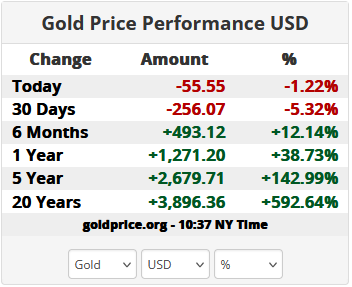
As we can see, gold gained 592% of value in past 20 years. this means if someone invested in gold 20 years ago, return of investments would be 592%, which is almost 30% per year. And as we see from data of 1 year, return of investments was 38% in past year alone. If someone invested 500$ in gold 20 years ago, today he would have over 4300$. this beats inflation as well.


Long term investment is generally more beneficial than short term.


Diversity of investments


My opponent is essentially creating false dichotomy, by saying "you shouldnt invest in gold because this is better".


thats not how investments work.


Gold often outperforms stock market on average.


Also, diversity of investments is a risk managing method.


Consider this:


Invest in A, and A has 50% chance of failure and 50% chance to return 3x.


Expected value is 1.5 of investment, but risk failure is huge.


But what if person invests in 10 independent different things of same EV (expected value) and same individual risk?


EV stays same, but risk of complete failure falls below 1%, compared to 50% in first example.


So diversity of investments, and investing in more than one thing, manages risks much better while keeping same EV.


So some small investment in gold is still logically justified along with investing in other things my opponent suggested.

Round 2

2 of 3
avatar Pro #3

Physical gold is not an investment — it is an expensive, tax-disadvantaged, emotionally marketed speculation that underperforms virtually every alternative over meaningful time horizons, fails as crisis insurance when crises actually occur, and costs money simply to hold. For every legitimate purpose gold's advocates claim it serves, a better, cheaper, and more liquid alternative exists. The burden of proof lies entirely with SatanLucy, who would choose gold over these alternatives — and that burden has not been met.


The opportunity cost argument deepens under scrutiny:

  1. A $10,000 investment in the S&P 500 in 1995 would be worth approximately $200,000 today. The same amount in gold would be worth roughly $60,000 — a gap that represents hundreds of thousands of dollars in lost compounding
  2. Every year you hold gold instead of productive assets, you are not merely missing returns — you are missing returns on returns, which is the engine that builds real wealth over decades
  3. The longer the time horizon, the more devastating the opportunity cost becomes — gold is mathematically punishing for long-term investors


The "inflation hedge" argument is weaker than advertised:

  1. Gold failed to protect investors during the high inflation of the 1980s — it actually lost significant value during one of the worst inflationary periods in modern American history
  2. Between 1980 and 2000, gold lost approximately 70% of its real value while inflation ran consistently positive — a catastrophic performance for an asset sold primarily as inflation protection
  3. Treasury Inflation-Protected Securities (TIPS) and real estate provide far more reliable, mathematically guaranteed inflation protection than gold


SatanLucy's crisis insurance argument has a fatal flaw:

  1. In actual financial crises — 2008, 2020 — gold initially fell alongside equities before recovering. It failed at precisely the moment investors needed it most
  2. In a true civilizational collapse scenario where financial systems fail entirely, gold's value depends on other people still agreeing it has value — a social consensus that is itself fragile
  3. Practical survival assets — food, water, fuel, medicine, land — hold far more utility than gold bars in genuine catastrophic scenarios
  4. For more realistic crisis scenarios like job loss, medical emergency, or recession, a cash emergency fund outperforms gold because it requires no liquidation, no authentication, and no dealer


The practical carrying costs are systematically underestimated:

  1. Dealer premiums of 3–8% on purchase mean you start every gold investment already behind
  2. Secure storage, insurance, and periodic assaying costs quietly erode returns year after year
  3. Bid-ask spreads when selling mean you lose again on the exit — you pay retail and sell wholesale
  4. These costs compound over time just like returns compound — but in the wrong direction


Tax treatment is structurally disadvantageous:

  1. The 28% collectibles tax rate on physical gold gains is significantly higher than the 15–20% long-term capital gains rate on stocks and ETFs
  2. Gold held in a standard brokerage account cannot benefit from tax-loss harvesting strategies available with other assets
  3. Gold cannot be held in a Roth IRA in physical form — eliminating one of the most powerful tax-advantaged vehicles available to American investors


Better alternatives exist for every argument SatanLucy makes:

  1. Want inflation protection? → TIPS bonds provide mathematically guaranteed real returns
  2. Want portfolio diversification? → International equities, commodities ETFs, and real estate provide lower correlation to US stocks without gold's carrying costs
  3. Want crisis insurance? → A 6-month cash emergency fund is more liquid, more practical, and costs nothing to maintain
  4. Want commodity exposure? → Commodity ETFs provide broad exposure without storage, insurance, or dealer premiums
  5. Want to own gold specifically? → Gold ETFs like GLD or IAU track gold prices precisely, cost fractions of a percent annually, and are as liquid as any stock


The behavioral economics case against it:

  1. Gold's narrative appeal — ancient, tangible, universally recognized — triggers emotional rather than rational decision-making
  2. Investors consistently buy gold at peaks driven by fear and sell at troughs when calm returns — the exact opposite of sound investing behavior
  3. The gold industry is sophisticated at marketing fear, uncertainty, and distrust of financial institutions — targeting precisely the emotional vulnerabilities that produce poor investment decisions
  4. Studies consistently show retail gold investors underperform even gold's modest returns because of poorly timed entry and exit driven by emotion


avatar Con #4

Because these arguments were not denied, I will expand on them


  1. Return of investments long term - expanded
  2. Diversity of investments - expanded


Opponent's logic:


My opponent is essentially using:


Best investment = maximal return of investment.


And I agree for that premise to be basis for this debate, and next I will cover why diversity of investments and return of investments long term actually result in maximum return of investments.


But for that, I need to add one third point.


III. Market unpredictability favors diversity of investments


Because market is by its nature, unpredictable, nothing you invest in is "guaranteed to work". If you invest based on merely getting more money in return, inflation of money which rises could defeat your return of investments after you get them. If you invest by buying something physical, it could lose value.


However, market unpredictability goes both ways. things can also surprisingly rise in value.
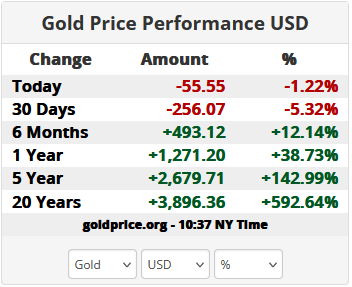


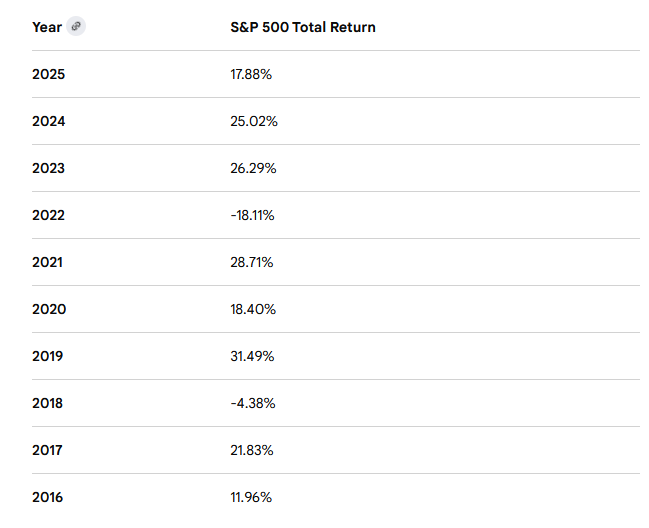
As we can see here, gold in 1 year gained 38% of value. My opponent mentioned S&P, and as we can see, S&P was outperformed by gold for past 5 years. Gold in 1 past year outperformed any year of S&P from 2016 to 2026.


Because what will grow in value is essentially unknown, and depends on demand. If suppose, demand for gold skyrockets more in next 40 years, gold will outperform S&P again.


In 1970, price of gold was about 40$. If someone invested 10,000$ in gold in 1970, today, he would have millions, because today price is over 100x higher.


My opponent correctly mentioned that price of gold tends to drop and rise, but conclusion he makes from it is incorrect. When price of gold drops, that is not time to sell gold, but to buy gold so when price rises again, profit is made.


But market unpredictability principle is best described by example of most obvious but unpredictable rise: Bitcoin.


Suppose that someone in year 2009 chose to invest 100$ in bitcoin. My opponent would tell him that its a bad idea with no guaranteed results, and that safer and guaranteed options exist. But today, that person would be a billionaire. Which moves us to next point: Diversity of investments expanded.


II. Diversity of investments expanded


My opponent didnt challenge that diversity of investments reduces risks significantly, and greater diversity reduces risk more, thus reducing diversity by not including gold logically increases risk.


But what diversity of investments also does is, maximize potential for "skyrocket value".


Because you cant predict what will skyrocket in future, investing in more than one thing increases chance of hitting exactly the thing which does skyrocket.


Consider again, example.


Lets say risks are 50%, and chance to skyrocket is 10%.


Investing in only one thing keeps risk of full failure at 50%, and chance to skyrocket at 10%.


But investing in 10 things, reduces risk of full failure to under 1%, while increasing chance of one of them to skyrocket in value to over 90% chance.


Gold, as demonstrated before, has a chance to skyrocket. Demand for gold could indeed increase suddenly, causing sharp price rise.


So investing 200$ in gold, (to buy 1 gram of 99.9 purity gold) is not any expensive investment. But if gold rises in price 100x like it did in past 50 years, that 200$ becomes 20.000$. If it skyrockets, which is possible, the return of investments could be even greater.


So logical deduction naturally follows:


Greater diversity of investments (where each has chance to skyrocket) = Greater chance for one investment to skyrocket

Adding gold as one of things to invest in = Greater diversity of investments

Adding gold as one of things to invest in = Greater chance for one investment to skyrocket.


this is only proved false if my opponent proves gold has no chance to skyrocket. But such thing cannot be proved, because it is easily possible gold skyrockets due to rise in demand.


Because my opponent is making false dichotomy between S&P and gold. One should invest in both, and in crypto, and in land. there is no "this or that" for anyone with sufficient amount of money. People with sufficient amount of money should always logically perfer greater diversity of investments where each investment has chance of skyrocket.


Its why I dont own merely gold, but land and crypto, and silver, and business, and jewelry. My position here isnt "invest all money in gold" - I dont do that. But my position is "invest some money in gold".


III. Return of investments long term - expanded


My opponent didnt deny that gold indeed did saw 10x rise in price in past 20 years, and I added also 100x rise in price in past 50 years as expanded argument.


But because world governments keep printing money on mass scale, and US government prints trillions per year, the value of money compared to gold must fall by mere great increase of ratio of amount of money to amount of gold, because money supply is increased faster than gold supply is increased. Even if demand stays same (same amount of people want to buy same amount of gold every year), the change in gold supply to money supply affects price irrelevant of demand staying same. But if demand increases on top of that, the chance for gold skyrocketing likewise increases.


Because government today prints more money than ever before, gold in next 50 years could likely see greater increase than in past 50 years, so likely an increase of over 100x in price, compared to 100x in past 50 years.


Gold is essentially a long term investment, and historically, long term investment in gold would have payed off, because price of gold, even if it drops at some point, eventually recovers and increases more.


Because my opponent didnt deny that long term investments are superior to short term investments, in case of gold, we must logically default to long term investment in gold when investing in gold.


And long term investment in gold shows that gold indeed did pay off.


Conclusion:

Diversity of investments, market unpredictability and long term investments show that investing 200$ in gold and also investing in many other things alongside that maximizes chance of skyrocket value of one option invested in, while greatly reducing risks.


Round 3

3 of 3
avatar Pro #5

My opponent is asking us to believe that a shiny rock is the ultimate answer to an infinitely complex global economy. That isn’t confidence; that’s arrogance wrapped in a bullion bar.


SatanLucy is doing a lot of hand-waving and calling it logic. Saying gold has historically recovered does not prove it must recover again, and it certainly does not prove that gold is a good long-term investment. That is a leap, not a conclusion.


They also rely on a non-argument: ‘my opponent didn’t deny it.’ That is not evidence. That is rhetorical padding. A claim does not become true because nobody immediately tackled it with a flamethrower.


And SatanLucy's conclusion doesn’t actually save their argument. Diversification may be sensible, but that supports spreading risk — not buying a shiny metal like it’s some magical exception to market reality.


avatar Con #6

"Greater diversity of investments (where each has chance to skyrocket) = Greater chance for one investment to skyrocket


Adding gold as one of things to invest in = Greater diversity of investments


Adding gold as one of things to invest in = Greater chance for one investment to skyrocket."


No reply to this, other than "not engaging with claim doesn't make it true", yet same applies to all claims made by my opponent. However, text above is basic deductive reasoning.


Conclusion:

My opponent never argued why diversity of investments is a bad idea, while I showed math to explain why it is a good idea.


And greater diversity of good investments by definition means investing in more of different things which have chance to skyrocket.


So basic conclusion remains:

Adding gold on list of things you invest in = greater diversity of investments

Greater diversity of investments where each investment has certain failure rate and chance to skyrocket = failure of whole investment becomes conditioned by failure of each individual investment = failure risk of all investments is lower than failure risk of individual investment in same way casting two dice has lower chance to get both have "1" than casting an individual dice = lower risk of failure of whole investment and higher chance of getting some investment to skyrocket.

New comment