
⚠️ This post has been marked as offensive.
these countries need refugees because their own population cannot reproduce. Japan is excellent example of what happens when local population fails to reproduce due to anime, and government refuses to import migrants. So I wouldnt blame the Jews here. Australia just wants to avoid future of Japan.
japan is doing great
I mean, average woman in Japan has like 0.7 children, not even one whole child. So Japan faces population collapse and old people growing in number, which is bad because old people are a burden to society.
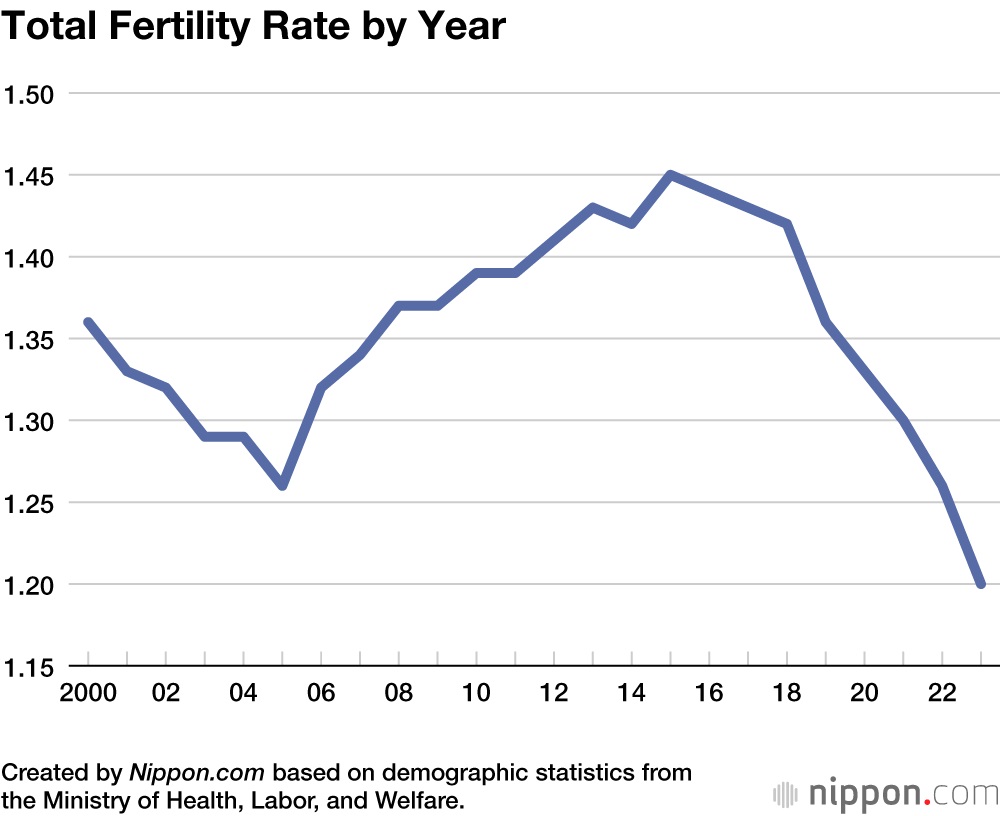
South Korea and Japan race to who will set record for lowest birth rates in history.
South Korea has the world's lowest birth rate, with its total fertility rate (TFR) hovering around 0.75 in 2024, a slight increase from the record low of 0.72 in 2023, marking the first rise in nine years, driven by a post-pandemic surge in marriages and international marriages. Despite this small uptick, the rate remains far below the 2.1 needed for population stability, with more deaths than births annually, indicating a significant demographic crisis and population decline.
So by getting rid of both sides of this problem, you prevent it from happening again.
Any suggestions as to how we get rid of them, gas chambers perhaps?
it's probably just better to be predominantly Japanese and keep the good things about Japan

Nature has a mechanism to lower reproduction rates in times of anxiety and stress, and that applies to all species, not just people.
Scarcity and abundance describe these external conditions. Stress describes how those conditions are experienced. Biology responds far more to perceived stability than to observable material wealth. You can have plenty of food, money, health, and technology, but if daily life feels pressured, competitive, and unforgiving, the body chemically reads that as risk, and cortisone levels rise (cortisone, cortisol, I forget which one it is.) Japan is abundant in resources, but high in social pressure, time scarcity, and fear of failure. That fear tells people, at a gut level, that adding children is dangerous, even when practical material needs are easily met.
Reproduction chemicals switch on when the future feels predictable and survivable. Abundance helps, but it’s not enough. Stress, uncertainty, and social pressures shut the system down. Biology doesn’t care whether the stress comes from actual death and famine or from relentless social expectations and zero margin for error. The body chemistry signal is the same... now is not the time to invest in the next generation.
Gratitude psychology vs resentment psychology also matters to body chemistry more than people like to admit. Grateful societies tend to see the future as something worth continuing. They feel anchored, supported, and confident that effort will be rewarded. That psychological safety makes reproduction feel natural rather than reckless. This is why people in poor countries reproduce, because they feel opportunity in the future and feel increasing hope for abundance, whereas ironically, the people who already have abundance won't feel much of an increase from their already high levels, and that's what really drives reproduction chemistry, the hope for more abundance, regardless of the existing level of abundance. I remember listening to a DART YouTube yesterday where one of the head guys of this site was claiming that a person working minimum wage would "have his life ruined" if he had a child. Forget the realities that a child born to a minimum wage parent in the most abundant nation ever to exist on the planet ever would be miles and away extremely lucky, the gratitude level of a minimum wage parent in America is ridiculously out of kilter from the gratitude levels of a typical new parent in India. And that was reflected in the premise that a new poor parent in America would "have his life ruined" by having a child.
Abundance helps
I think it doesnt. Many poor shitholes are reproducing like rabbits, and world's richest people claim they cant afford children. But this isnt any mystery. Japan puts a lot of pressure on people to pursue education and career. Education and career take a lot of individual's time, so much that individual barely has any free time left. then individual is encouraged to commit a classical mistake "career first, then family". So individual who barely has any free time, has much less motivation to have kids because kids would take what little free time is left for individual.
tao predicted this. Overworking a population means ruining a population. Governing a country is like frying a fish. You ruin it by frying(governing) too much. Japan has highest IQ in the world, yet they cant figure out what desert people with 50 IQ figured out. Even highest IQ is useless if person has no free time to think.
Abundance helps insofar as reducing infant mortality rates, but it seems to have an opposite psychological effect if the new parent feels that the future holds decreasing abundance, regardless of the practical levels of abundance. Reproduction is never a function of objective wealth, regardless of what the "experts" say. You will wait around your entire life and hit the biological wall of infertility if you delay reproduction to accumulate some ethereal amount of "optimal wealth to raise a child."
It's 100% psychological in today's modern world of abundance.
Abundance helps insofar as reducing infant mortality rates
Abundance seems to consistently reduce birth rates. Infant mortality rates are never a problem in any poor country, because their birth rates are usually 3 to 4 per woman, so infant mortality rate has little effect and population still reproduces. But in rich countries, birth rates are so low that any infant mortality rate is a problem.
And it is like tao said, advanced countries demand too much of their population.
No, you cannot wait to have kids. Woman has what is usually called "expiration date". Most men prefer younger women, and this isnt any "disorder" in those men, but younger woman can give birth to more kids. this is because giving birth to kids takes time, and sooner you start, the more kids you can give birth to. So naturally, a man who biologically wants to have plenty of offspring biologically prefers younger women.
So when woman waits till she is 25 to start giving birth, in a lot of cases she is already too late. If you do basic, math, from 18 to 25 is 7 years, and in that time, woman could give birth to 2 to 3 kids. But if woman doesnt, but starts at 25, she will be less able to give birth in terms of numbers.
It is sort of like machine which produces a kid every 2 years. the sooner you start machine, the more kids you will have. And this machine has expiration date, so choosing to delay start means reducing output.
No, Jews aren't universally safe anywhere due to rising global
antisemitism, but safety varies significantly, with the US, Canada, Australia, and some parts of Europe seen as relatively safe due to strong communities and legal protections, while Israel provides state security but faces regional conflict; many Jews feel insecure globally and move towards these safer havens or Israel. Anti-Jewish sentiment, often fueled by extremist ideologies, targets Jewish people in diverse ways, from online hate to physical attacks on synagogues, making even traditionally secure places feel less so.
Factors Influencing Jewish Safety:
Perceived Safer Areas:
Less Safe/Higher Risk Areas:
Ultimately, safety is complex, with many Jews feeling vulnerable globally and seeking security in strong diaspora communities or Israel, while acknowledging threats exist everywhere, says World Jewish Congress.
How many times have you whacked off over the Bondi Beach shooting?
Yes, Jews are considered God's "chosen people" in Judaism, meaning
they were selected for a special covenant to receive the Torah, worship God, and exemplify His ways as a "light to the nations," not implying inherent superiority but special obligations like observing Mitzvot (commandments) and following the Noahide Laws for all righteous people. This concept stems from biblical passages where God chose Israel to be His treasured people, linking their identity to a mission and relationship with the divine.
Meaning of "Chosen"
Biblical Basis
Jewish Perspectives
For Non-Jews
some interpret this as Jewish world domination.
how do you think of these thoughts exactly
The Jews believed they were the chosen people by God to lead and dominate the world. What saved the world from the Jews?
Jews have faced numerous, repeated displacements and expulsions from their homeland (Israel/Judea) and various countries over millennia, starting with the Assyrians and Babylonians, then the Romans (leading to the major diaspora), followed by numerous European nations like England (1290), Spain (1492), and Portugal (1497), and more recently from Arab lands post-1948, a history often referred to as galut (exile). These expulsions, driven by empires, religious persecution, economic factors, and nationalism, forced Jews to wander globally, yet they maintained a strong connection to their ancestral land, culminating in the Zionist movement and modern Israel.
Key Periods of Displacement:
Reasons for Displacement:
This long history of displacement, while devastating, reinforced the Jewish people's unique connection to Israel, fueling the desire for self-determination and the modern Zionist movement.
Most people are surplus to requirement.
And if one was a conspiracy theorist, one might suggest that there is a global conspiracy.
Though I still prefer to run with the Clever Stupid Gene theory....Which if you think about it, is perhaps the same as a global conspiracy, or more so, a greater universal evolutionary conspiracy...Wherein everything is dictated and irresistible.
Why are Jews hated?
The hatred of Jews, known as
antisemitism, is a multifaceted and ancient phenomenon rooted in historical, religious, economic, and political factors that have evolved over millennia. It is not caused by the actions of Jewish people, but rather by the prejudices, delusions, and scapegoating by those who carry out the hatred.
Key factors contributing to antisemitism throughout history include:
Antisemitism endures by morphing and adapting its justifications to fit new historical and social circumstances, continuing to pose a threat to Jewish individuals and communities worldwide. Resources on understanding the history and forms of this prejudice are available from institutions like the United States Holocaust Memorial Museum and the American Jewish Committee.
What do you personally think?
I don't know if you have a good definition of Zionism
It's the 1-week Anniversary of the Bondi Beach Massacre, what will you be doing to celebrate?
At the end of the day, thoughts and prayers are worth fu*k all.
A person who suppresses their thoughts and prayers, particularly in a religious or moral context, is often experiencing
scrupulosity, a form of Obsessive-Compulsive Disorder (OCD). This condition involves unwanted, intrusive, and distressing thoughts (obsessions) that the individual attempts to neutralize through compulsive, often repetitive, prayers or mental rituals.
Key aspects of this behavior include:
Potential Consequences
Treatment
Effective treatment often includes Cognitive Behavioral Therapy (CBT) with an emphasis on Exposure and Response Prevention (ERP), which helps individuals learn to tolerate the anxiety caused by the thoughts without engaging in rituals.
Thought is various data output relative to a process.
There is no such thing as a suppressed thought, as one either has a thought or one doesn't have a thought.
A prayer can be the same as a thought, but perhaps with a more specific content.
Or a prayer might be a repeated narrative.
But if one isn't prone to prayer thoughts, then one isn't
Though if one one were to read to much into the idea of non-thought or non-prayer, then one would, and it would be at this point that such thoughts might become worrisome...As it is I care not about not praying, but think regularly...In fact, not thinking is not easy.
The problem isn't the number of people who reproduce, its who reproduces.
I didnt reproduce yet, but maybe its best that I dont reproduce at all, given my disorders. I would hate if my offspring inherited my disorders. And inheriting my intelligence is unlikely.