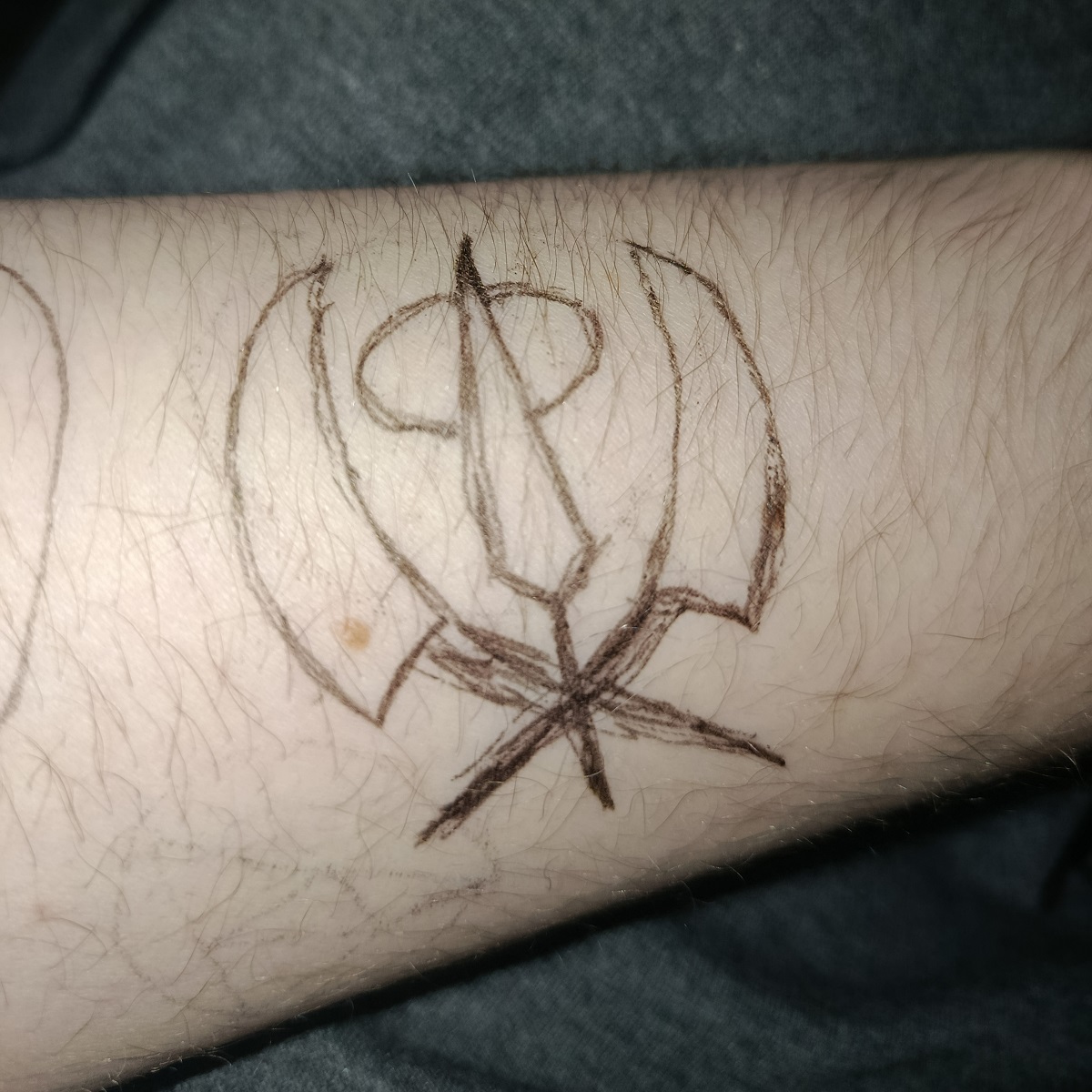
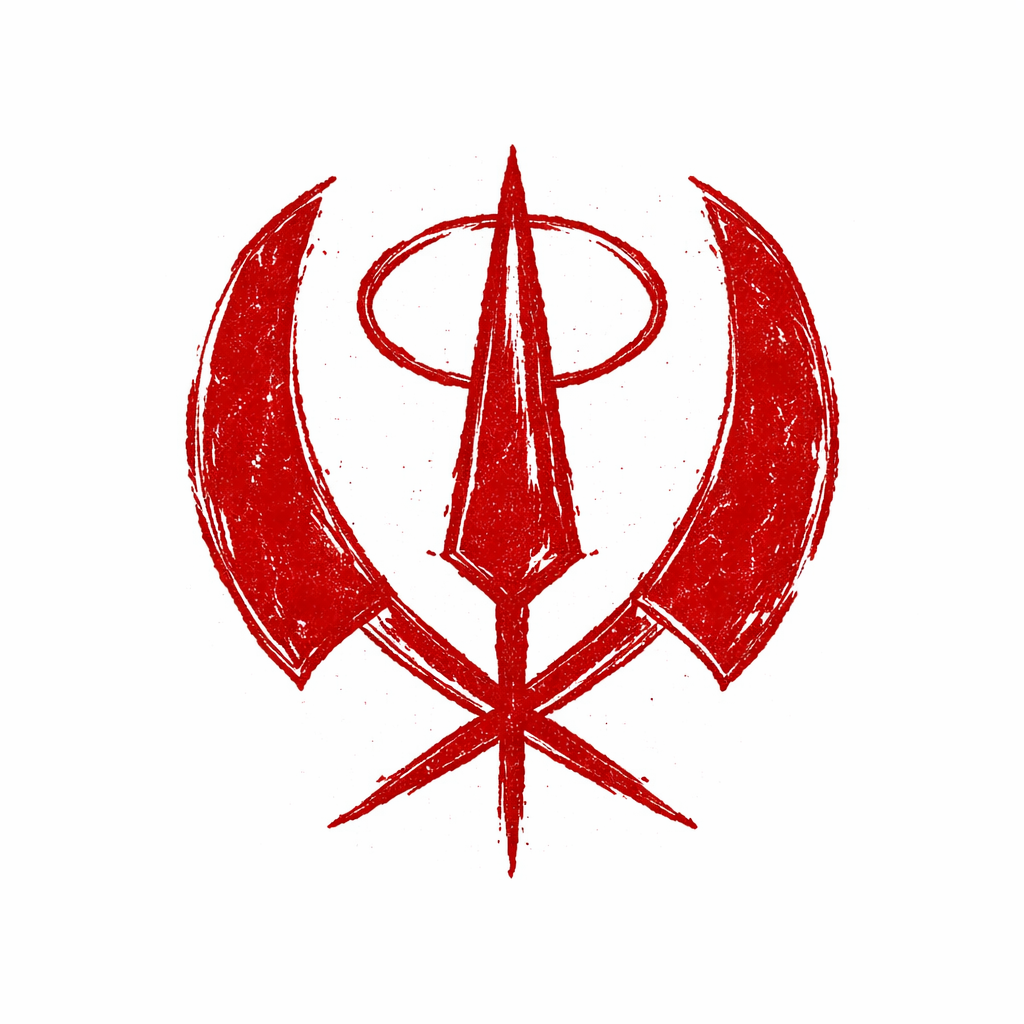
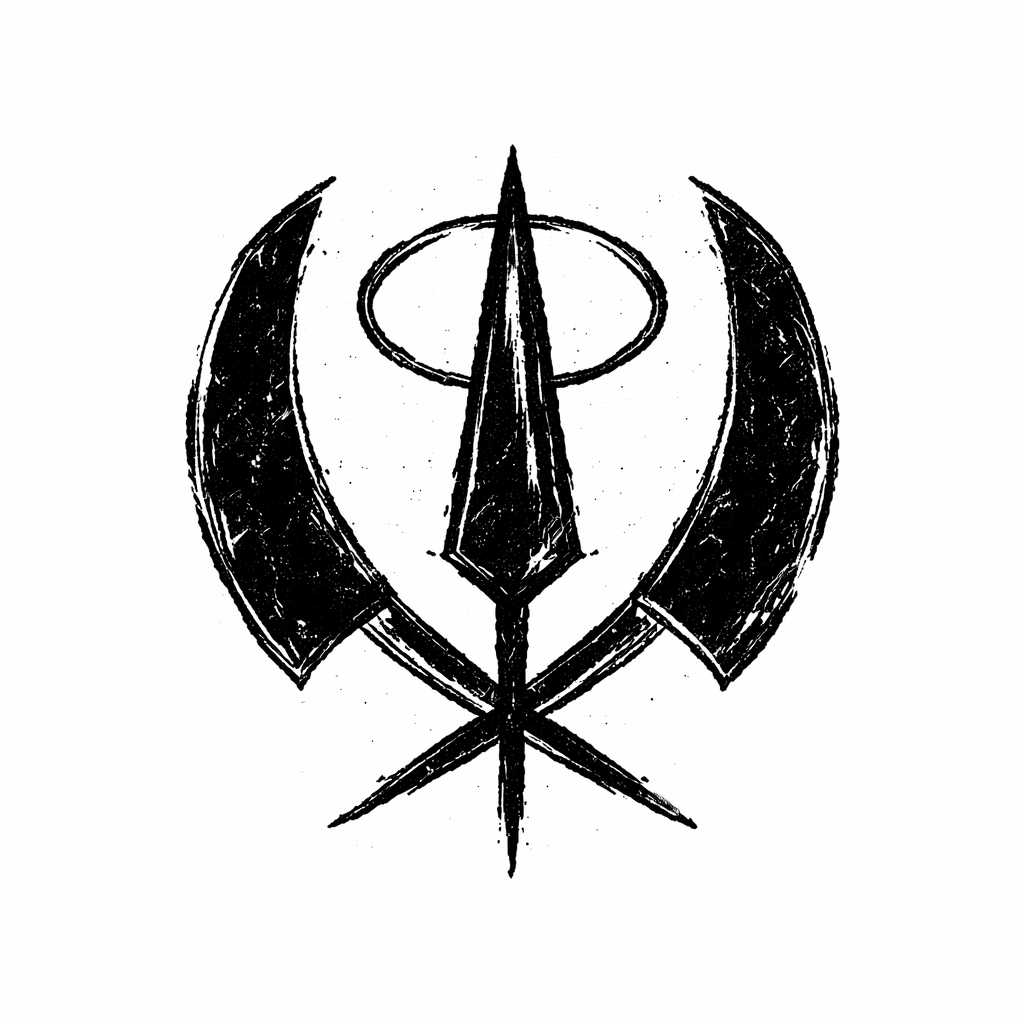
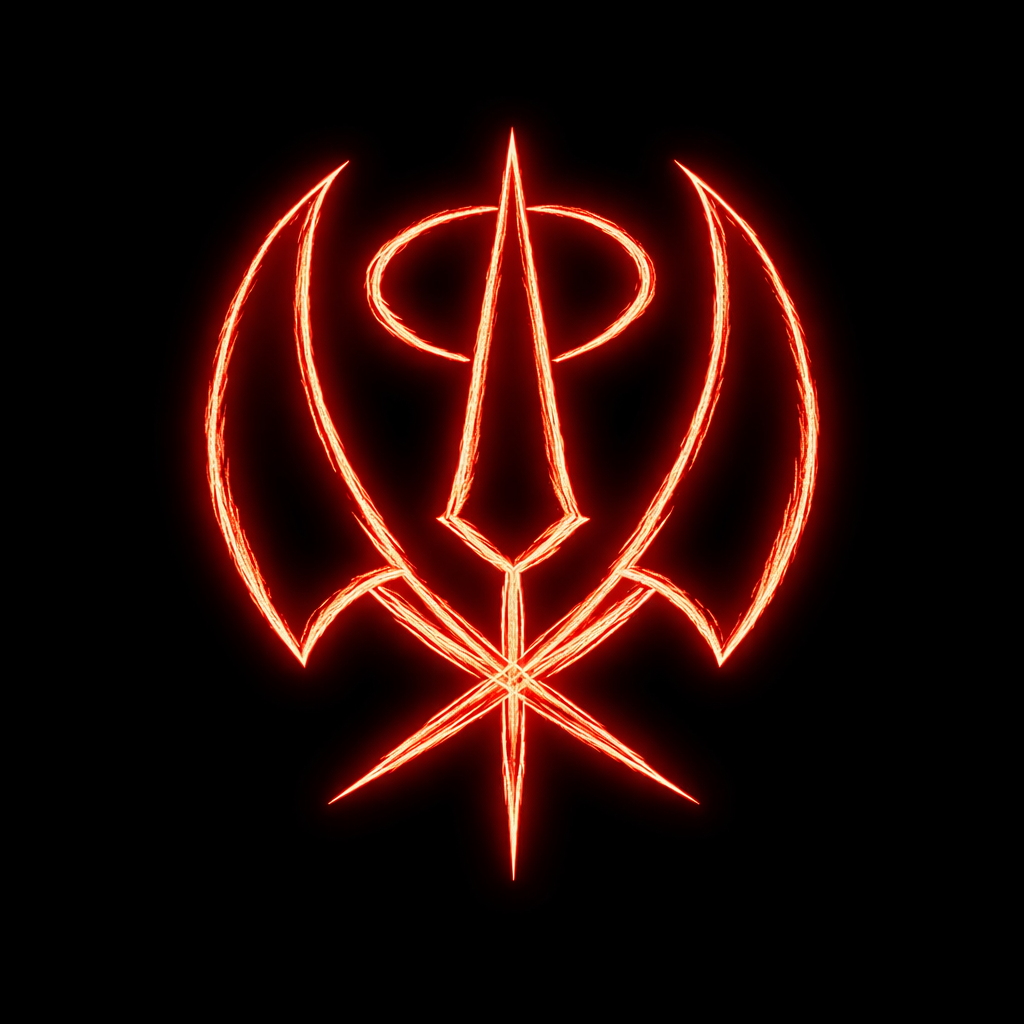
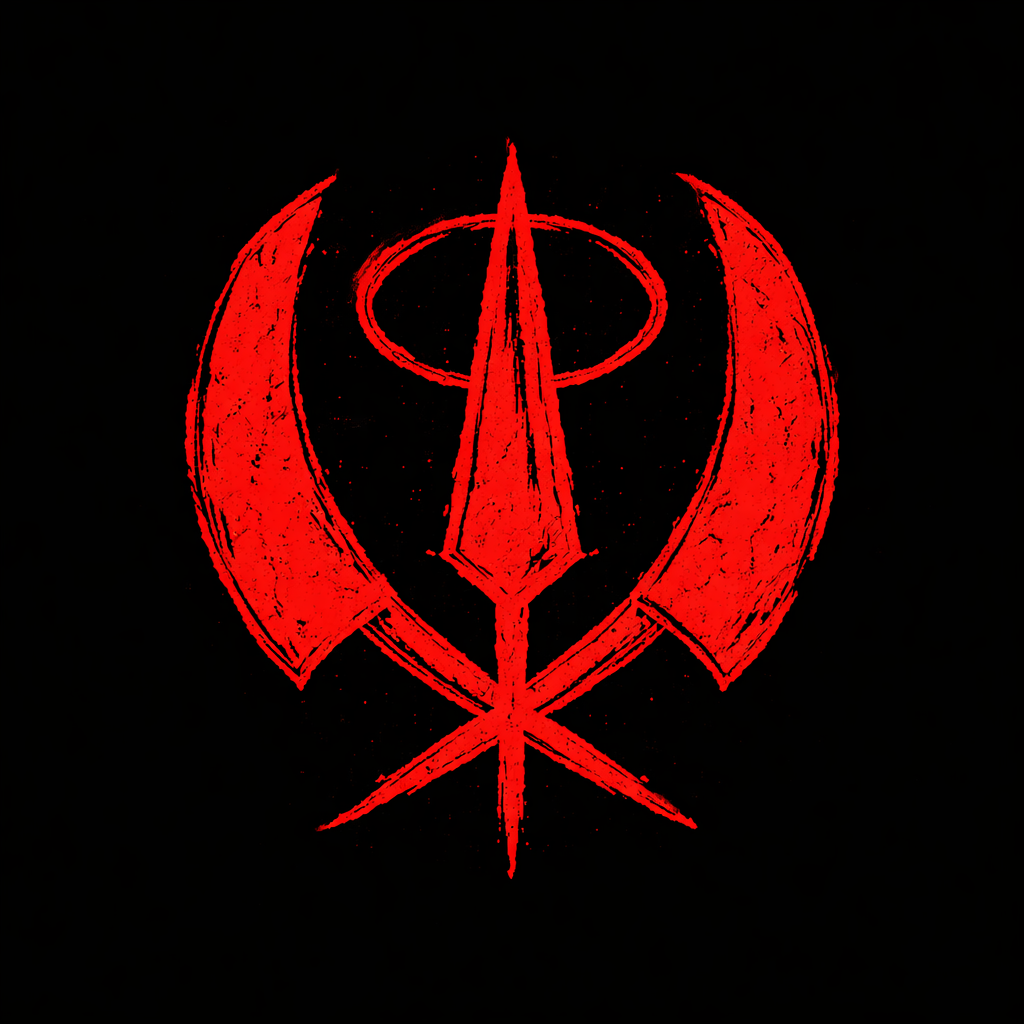
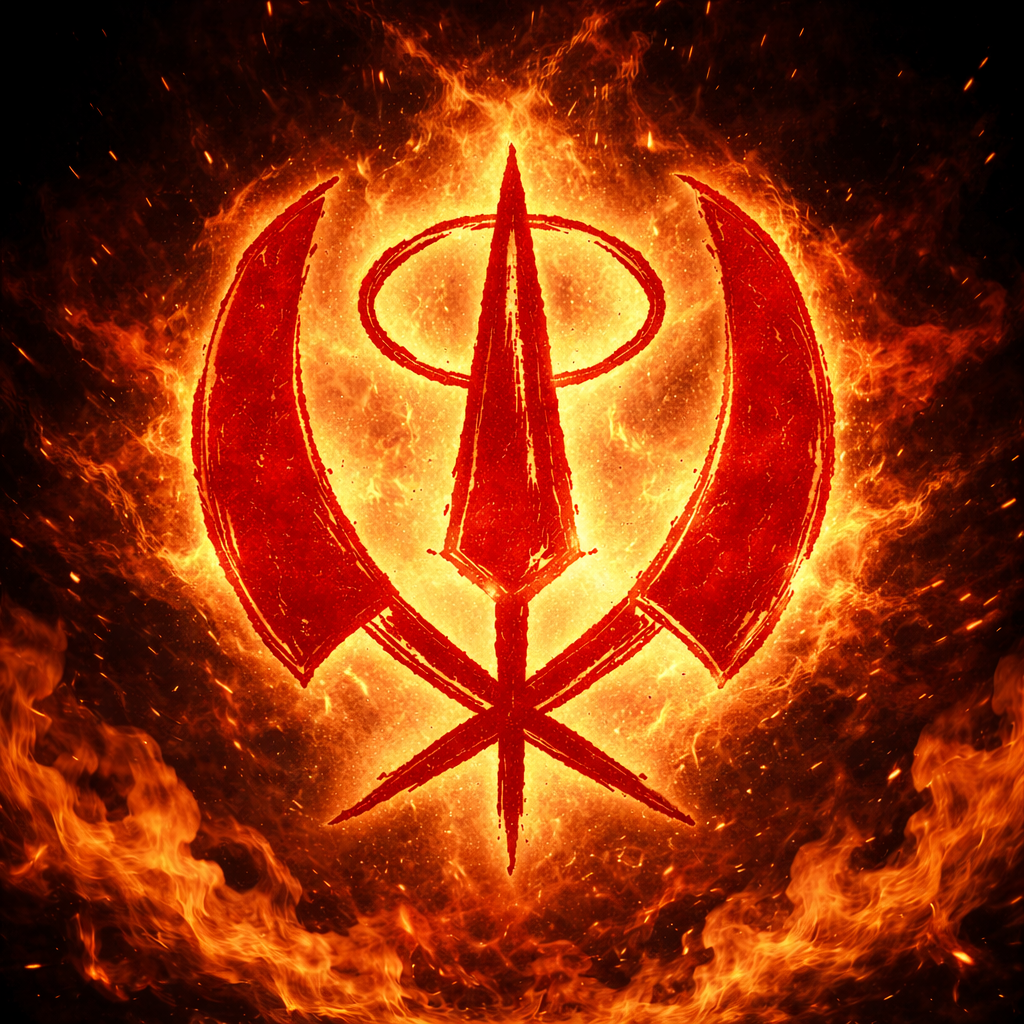
Looks creepy.
thank you, it is a symbol of Vaheguru Universal Master.
They are all symbols of destruction.
three swords and circle? they represent Vaheguru, the omni-benevolent master,
The modern Sikh symbol is never written on or in any copy of the Guru Granth Sahib. The main symbol traditionally used in the Guru Granth Sahib and Gurdwaras around the world is "Ik Onkar". Traditionally, it was very common to see "Ik Onkar" above the entrance to a Gurdwara, or on the front page of the Guru Granth Sahib. The other one was the Aad Chand.
It is an amalgam of 3 symbols:[3]
It depicts the Sikh doctrine Deg Tegh Fateh in emblematic form. It consists of three weapons and a circle: the khanda, two kirpans and the chakkar which is a sharp circular throwing weapon. Deg Teg Fateh (Punjabi: ਦੇਗ ਤੇਗ਼ ਫ਼ਤਿਹ), or Victory to Charity and Arms) is a Sikh slogan and the title of an anthem in the Punjabi language that signifies the dual obligations of the Khalsa: The responsibility to provide food, and to provide protection, for the needy and oppressed. Deg refers to the "cauldron" and Tegh to the "sword". The cauldron or kettle symbolises charity and is a reference to the Sikh religious obligation to provide langar, the free distribution of food, to all people, irrespective of an individual's religion, caste or ethnicity. The sword, or (kirpan), represents the warrior code of the Khalsa. The Khanda icon conveys these two principles. It is the military emblem of the Sikhs. It is also part of the design of the Nishan Sahib. A double-edged khanda (sword) is placed at the top of a Nishan Sahib flag as an ornament or finial.
Sikhism is the fourth-largest religion in India, making up about 1.7% of the population, following
Hinduism, Islam, and Christianity, with the majority of Sikhs residing in the Punjab state where they form a majority.
Key Facts: