Addressing Dean Wither's abortion argument

Started by RemyBrown

Replies
22
Posts
23
Page
1 / 1

Conversation

#1 •••
⚠️ This post has been marked as offensive.

Edit comment

#2 •••
@RemyBrown

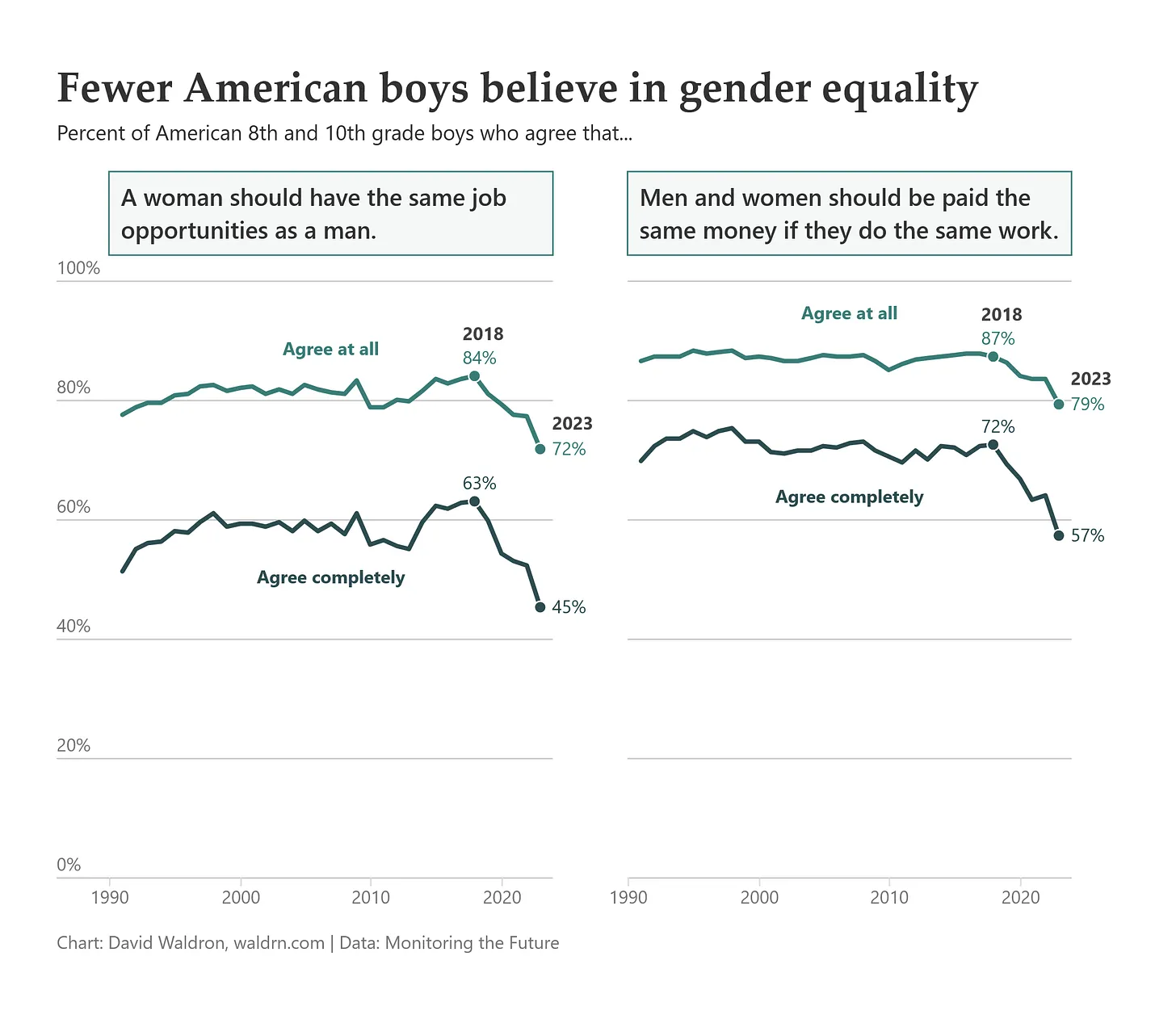
People who believe in gender equality are idiots. there is no equality. there never was. there never will be.


Men and women are different. thats why they dont let men compete in women's sports. Average woman has brain and body smaller than in average man.


there is simply a pure fact that women are only wanted for looks, and men for wealth. No one cares for personality, not men, and not women. Personality doesnt matter.


Women are attracted to wealth and power, and will literally date old men just because they see wealth and power there, wealth and power increases odds of offspring survival.


Men only care for women's looks and reproduction ability, which is why older women are less wanted as they expire.

Edit post

#3 •••
@RemyBrown

I am a self-declared expert in all fields of science.


I have observed many animal species, and these rules seem to be almost universal:

1. It is usually male that chases the female (not always, but most cases)

2. It is usually male with wealth and power which gets the female (this is almost always true)

3. Males are valued by their position in group, females are valued by looks.


So, if you believe fake theory of evolution, apes are our relatives, and in apes, we see these 3 rules.


In apes, just as in lions, female is chased for her looks. Male is naturally attracted to female and chases her.


However, female is not attracted to male in the same sense.


Female will almost always prefer male who has more wealth or power.


Female lion will prefer a male lion who offers her free meal. Same is true in cats and apes. Also, male who claims dominance over other males physically.


This is why women are not attracted to looks like men are, but women are attracted to symbols of wealth and power. Muscles aren't attractive, they are symbol of power. Being tall, big, isn't something which is attractive, but is symbol of power.


Buying her things she likes is symbol of wealth, and she is attracted to symbols of wealth.


So again, if you want to have female, you have to be her provider and also have power to chase away others from her.


While comedy and good times do also act as types of providing, the truth is this: you need wealth or power or both.


Without wealth, you cannot provide for family, for offsprings, and due to that, you are less attractive to a female.


So you must:

1. Have wealth

2. Show her that you are willing to provide wealth by buying stuff and giving it to her.


This is true in animal world almost universally.

Edit post

#4 •••
@SatanLucy
⚠️ This comment has been marked as offensive.

Edit post

#5 •••
@RemyBrown

Discussions surrounding voting rights often highlight the tension between democratic ideals and the strategic, sometimes contradictory, actions of political actors. While the foundation of voting rights is rooted in principle, contemporary debates frequently accuse parties and institutions of using hypocritical, partisan, or inconsistent arguments to influence election outcomes

Key Aspects of the Hypocrisy Debate in Voting Rights:

  1. Partisan Motivation: Research suggests that political parties often adopt positions on voting reforms—such as mail-in ballots, voter ID laws, or ranked-choice voting—based on perceived partisan benefit rather than consistent democratic principles.
  2. Supreme Court Consistency: Critics have argued that the U.S. Supreme Court has shown inconsistency in its rulings on voting rights, pointing to cases that have weakened the Voting Rights Act while expanding Second Amendment rights.
  3. Erosion of Trust: Research indicates that perceived hypocritical behavior by politicians can damage public trust in the overall electoral system.
  4. Selective Application: Debates often focus on whether voter ID laws are truly for election security or, as critics argue, intended to selectively suppress votes in specific demographics.
  5. The "Phony" Argument: Some arguments label discussions of hypocrisy as distractions designed to shift focus away from substantive voting rights legislation, such as the John R. Lewis Voting Rights Advancement Act. 

While some view hypocrisy as a necessary, albeit unfortunate, part of democratic politics, others argue it undermines the foundational right to vote. 


Edit post

#6 •••
@Debby
⚠️ This comment has been marked as offensive.

Edit post

#7 •••
@RemyBrown

Without women there would be no procreation. The human race would go extinct. Get real.

Edit post

#8 •••
@Debby
⚠️ This comment has been marked as offensive.

Edit post

#9 •••
@Debby
⚠️ This comment has been marked as offensive.

Edit post

#10 •••
@RemyBrown

It goes against procreation.

Edit post

#11 •••
@Debby
⚠️ This comment has been marked as offensive.

Edit post

#12 •••
@RemyBrown

All life is sacred" is 

a principle affirming the intrinsic value and holiness of all living things, rooted in religious traditions like Judeo-Christianity and Hinduism, emphasizing respect, protection, and inherent dignity from conception to natural death, often linked to being made in God's image or part of a divine creation, influencing views on issues like abortion and animal rights. It's a call to see the divine in all existence, promoting compassion and moral responsibility across all stages of life and for all creatures. 

Key aspects of the principle:

  1. Religious Foundation: In Christianity, humans are made in God's image (Imago Dei), making life a sacred gift, leading to prohibitions against murder (Exodus 20:13). Hinduism promotes vegetarianism and harmony with nature due to this belief.
  2. Scope of Life: While often focused on human life (from conception to natural death), the principle extends to animals and nature, encouraging veganism, rescuing pets, and preserving wild spaces.
  3. Moral Implications: It underpins opposition to abortion and euthanasia, advocating for society's duty to protect the vulnerable.
  4. Spiritual Practice: For some, recognizing the sacredness in everything involves contemplative practices and seeing God's presence in all circumstances, not just designated holy places or times. 

How it's applied:

  1. Human Life: Protecting the unborn, elderly, and sick; opposing capital punishment and war.
  2. Animal Life: Ethical treatment, vegetarianism, avoiding animal products (fur, leather).
  3. Environment: Reducing consumption, recycling, caring for ecosystems as part of a sacred whole. 


Edit post

#13 •••
@RemyBrown
A zygote's life matters more than 9 months of woman's pain


You do realize that the impacts on one’s body that comes along with creating a whole other human being goes far beyond 9 months of pain… right?

Edit post

#14 •••
@Double_R

Life is more precious than the woman suffering a little discomfort.

Edit post

#15 •••
@Double_R
⚠️ This comment has been marked as offensive.

Edit post

#16 •••
@RemyBrown

In countries like 

Canada, abortion is legal at any stage as a medical procedure, with no federal gestational limits, though clinics have internal restrictions, often allowing procedures up to 24 weeks or later for medical reasons, varying by province. Globally, laws vary significantly, with some nations liberalizing access (e.g., "Green Wave" in Latin America) while others have strict bans, making it legal on request, for health, or with significant restrictions depending on the jurisdiction and gestational age, as seen in the US after Roe v. Wade's overturn. 

Key Factors Influencing Legality:

  1. Decriminalization: Canada is a prime example of decriminalization, treating abortion as healthcare without specific criminal laws, making it legal throughout pregnancy.
  2. Gestational Limits: Many places set gestational limits (e.g., viability, 24 weeks) for abortions, with later abortions typically allowed only for severe medical conditions, as in parts of Canada or under specific US state laws.
  3. Provincial/State Laws: Even in decriminalized nations, local regulations (like in Canadian provinces) influence access, while in federal systems like the US, states dictate legality.
  4. Public Funding: In Canada, it's publicly funded, while in other countries, funding varies, affecting access. 

How to Find Specific Information:

  1. For Canada: Check provincial health websites (e.g., Ontario's Planned Parenthood) or resources from Action Canada for Sexual Health and Rights.
  2. For the US: Laws are state-specific; consult resources like the Guttmacher Institute or Abortion Finder for state-by-state details.
  3. Globally: The Center for Reproductive Rights offers maps and info on world abortion laws. 

In Summary:

Legality depends entirely on where you are, ranging from full decriminalization (Canada) to highly restricted access, with different rules for gestational age, parental consent, and availability. 


Edit post

#17 •••
@Debby
⚠️ This comment has been marked as offensive.

Edit post

#18 •••
@Debby
⚠️ This comment has been marked as offensive.

Edit post

#19 •••
@RemyBrown

abortion laws in Canada are generally popular

, with strong majority support for abortion rights, although opinions vary, and debates exist over access barriers like wait times and provincial regulations, but overall, Canada treats abortion as healthcare with no criminal restrictions, a model supported by most Canadians who believe it should be a woman's choice. 

Public Opinion & Support

  1. Strong Majority Support: Surveys consistently show broad public backing, with figures around 80% supporting a woman's right to choose, according to a 2024 Leger poll.
  2. Pro-Choice Majority: A majority of Canadians support access to abortion whenever wanted, though younger adults show slightly less support than older groups for this absolute stance. 

Legal Framework

  1. Decriminalized & Legal: Canada is unique in having no specific law governing abortion; it's a healthcare service regulated by provinces, not a crime.
  2. No Gestational Limits: There are no legal gestational limits, though most abortions occur early in pregnancy, and later-term abortions are rare, often for medical reasons, notes Canada.ca.
  3. Healthcare, Not Criminality: Following the Supreme Court ruling in 1988, abortion became a medical procedure, not a criminal act, under the Canada Health Act. 

Access Challenges

  1. Provincial Variation: While federally legal, access, funding, and service availability differ significantly between provinces and territories, creating barriers.
  2. Wait Times: Long wait lists and regional shortages can sometimes prevent timely access, particularly for those further from urban centers, reports CBC

In essence, Canadians widely support abortion rights, but debates continue regarding ensuring equitable access across the country. 


Edit post

#20 •••
@Debby
⚠️ This comment has been marked as offensive.

Edit post

#21 •••
@RemyBrown

It shows the majority of people around 80% supporting a woman's right to choose, according to a 2024 Leger poll. That is a clear victory sign.

Edit post

#22 •••
@Debby
⚠️ This comment has been marked as offensive.

Edit post

#23 •••
@RemyBrown

According to you either way is a win for the conservatives. But democrats are liberal.
Edit post