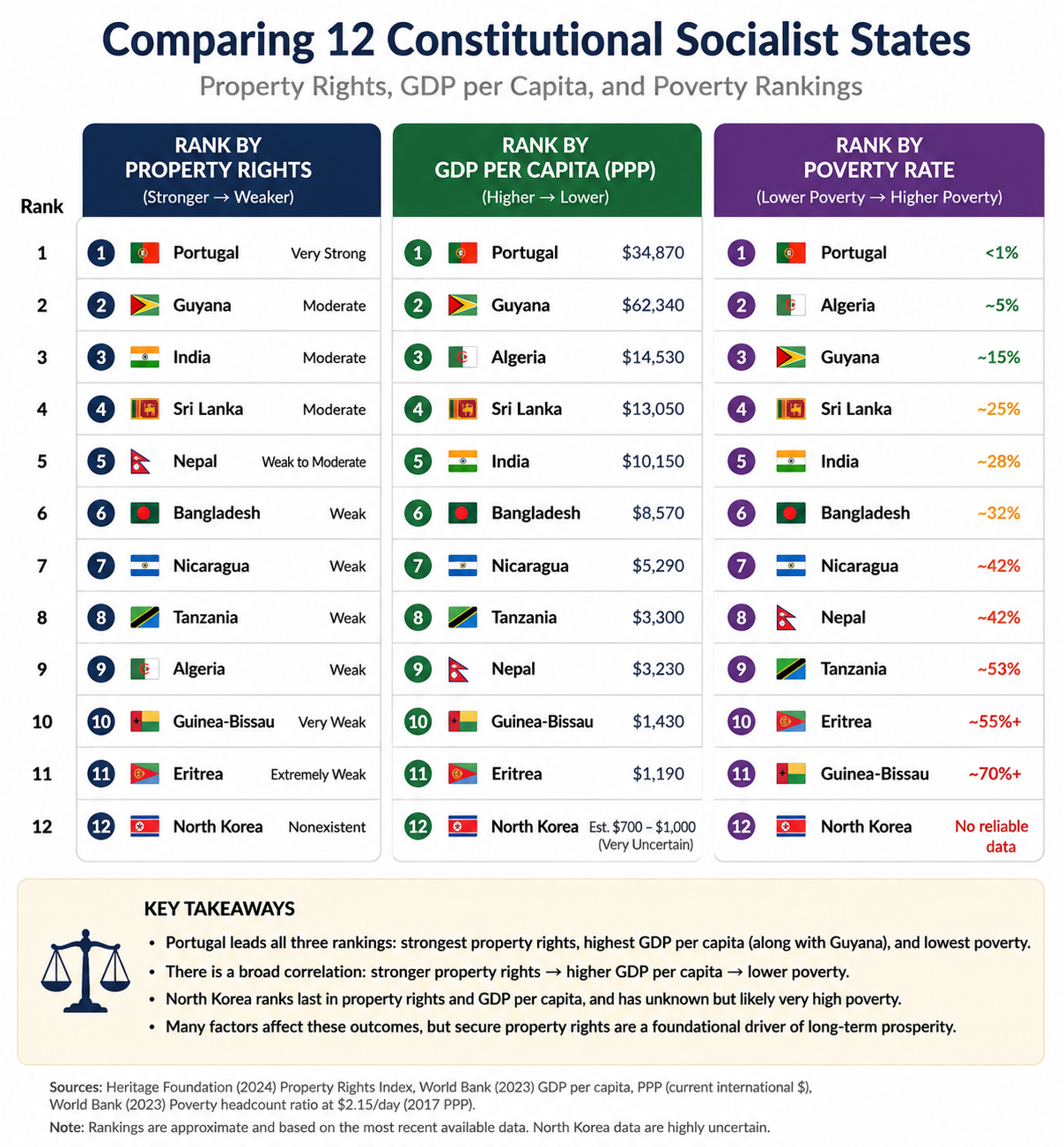
Conservatives often argue that there are no successful socialist countries. But by the same logic, there are also no successful purely capitalist countries. Virtually every prosperous nation operates with some mix of markets and government programs rather than adhering to either extreme.
It's not as though every country outside the United States has failed. There are many successful countries, and most of them have stronger social safety nets than the U.S. The debate is rarely about capitalism versus socialism in a pure sense; it's about where to draw the line between the two.
The United States is exceptionally prosperous, but that isn't solely because we have less government involvement. Our wealth is also the result of abundant natural resources, strong institutions and laws, favorable geography, and historical advantages, including emerging from World War II in a uniquely strong economic position while many competitors were devastated.
It's also worth noting that comparisons based only on taxes can be misleading. Once you include what Americans spend privately on healthcare, along with defense spending and other costs that many countries fund through taxes, the overall burden looks much closer to that of other developed nations. If you also include private spending on things like childcare and other services that are publicly funded elsewhere, Americans may actually spend more overall. That's one reason living in the U.S. is so expensive.
The bottom line is that while the United States has the world's largest military, we also spend substantially more overall than many other successful countries. At the same time, there are no modern examples of highly successful laissez-faire capitalist economies. Finally, it's important to remember that much of America's prosperity has also been financed through enormous government borrowing. Our national debt means we have, in many respects, borrowed from the future to help create the standard of living we enjoy today