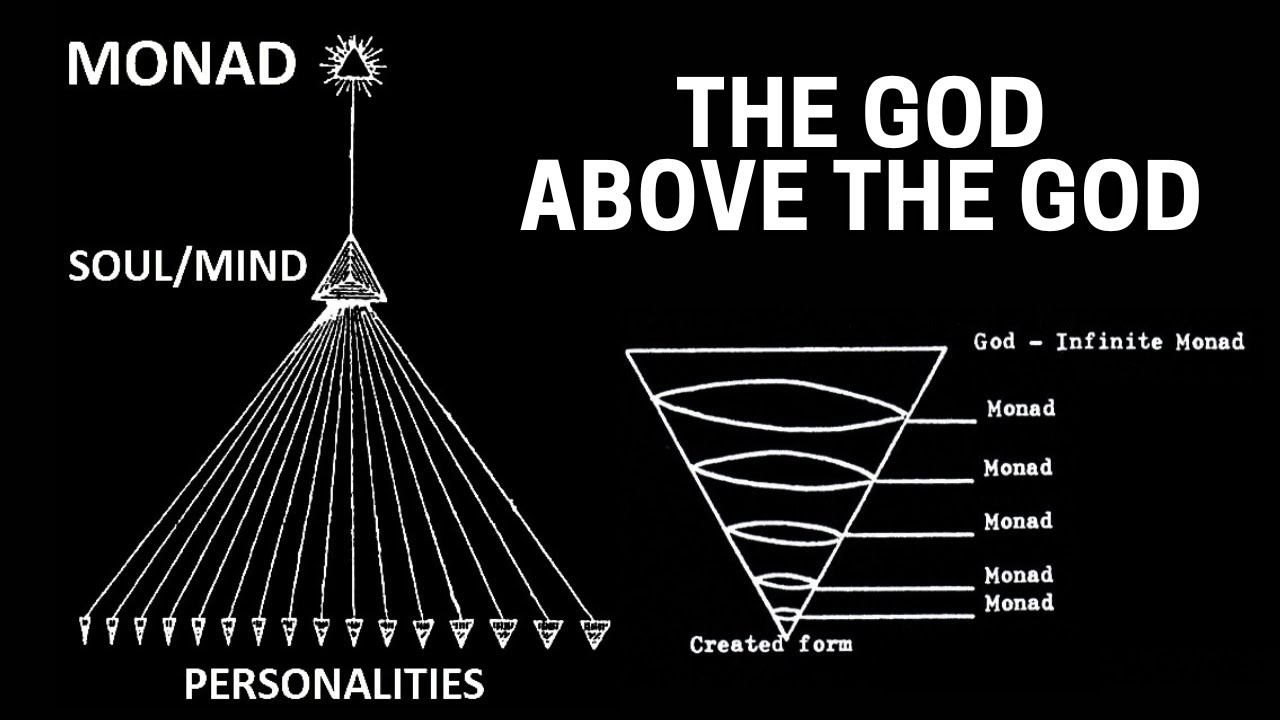
Now, gnosticism, which includes one specific interpretation of Bible, divides reality on two parts:
- Reality created by God (perfect reality, not material)
- Reality created by demiurge and its archons (imperfect reality, material reality)
How demiurge was created isnt exactly clear, other than not being created by God but created in space which was outside God.
Demiurge and archons control this reality, but people like Jesus were able to summon perfect reality of God by using divine spark.
Now, I worship God and demiurge too, because if demiurge controls this material world, then it makes sense to ask demiurge for favors.
Here’s a clear, structured overview of Gnosticism, the Demiurge, God, and the Archons, and how they relate to each other:
1. Gnosticism (the framework)
Gnosticism is a collection of early spiritual–philosophical movements (1st–3rd centuries CE) centered on gnosis—direct, experiential knowledge of divine truth.
Core ideas:
- The material world is flawed, corrupt, or illusory
- Human beings contain a divine spark
- Salvation comes through knowledge, not faith or obedience
- There is a sharp divide between spirit and matter
Gnosticism is not one system; Sethian, Valentinian, and other schools differ, but the structure below is common.
2. The True God (the Monad / Pleroma)
In Gnostic thought, the True God is:
- Transcendent, ineffable, unknowable
- Pure spirit and fullness (Pleroma)
- Not the creator of the material universe
- Beyond good/evil as humans understand them
This God emanates divine beings called Aeons, often in male–female pairs, representing aspects of divine reality (Mind, Truth, Word, Life, etc.).
3. The Demiurge (false creator god)
The Demiurge is the creator of the material world, but not the True God.
Key traits:
- Ignorant or arrogant
- Believes itself to be the only god
- Creates matter imperfectly
- Sometimes identified with the Old Testament creator deity (depending on the Gnostic school)
Common names:
- Yaldabaoth
- Saklas (“the fool”)
- Samael (“blind god”)
The Demiurge arises from a cosmic error, often associated with the Aeon Sophia (Wisdom), whose flawed emanation produces him.
4. Archons (cosmic rulers)
Archons are subordinate beings created by the Demiurge.
Functions:
- Govern the planets, heavens, and material cosmos
- Enforce fate, law, and ignorance
- Trap human souls in cycles of birth and death
- Obstruct spiritual awakening
They are often:
- Seven in number (linked to classical planets)
- Animal- or hybrid-headed in imagery
- Bureaucratic, tyrannical, and mechanical rather than evil in a moral sense
5. Humanity’s role
Humans are unique because:
- Our bodies are made by the Demiurge
- Our spirit comes from the higher divine realm
- This divine spark is asleep or imprisoned
The Archons attempt to keep humans ignorant, while divine messengers seek to awaken them.
6. Christ / the Redeemer (in Gnosticism)
In many Gnostic systems:
- Christ is a divine Aeon
- He descends from the Pleroma
- He does not fully incarnate in flesh (docetism in some sects)
- His mission is to bring gnosis, not to atone for sin
Through knowledge, humans learn:
- Their divine origin
- The false authority of the Demiurge
- How to ascend past the Archons after death
7. After death (ascent of the soul)
A Gnostic soul:
- Must pass through Archonic realms
- Uses passwords, symbols, or knowledge
- Reunites with the Pleroma
- Escapes reincarnation and material bondage
8. Comparison with mainstream Christianity
| GnosticismOrthodox Christianity | |
| Creator ≠ True God | Creator = True God |
| Matter is flawed | Creation is good |
| Salvation by knowledge | Salvation by faith/grace |
| God is unknowable | God is personal |
| Christ reveals hidden truth | Christ redeems through sacrifice |
9. Is Gnosticism pessimistic?
Paradoxically, no:
- The cosmos is bleak
- But humanity is divine
- Liberation is possible through awakening
It is more cosmic rebellion than despair.
If you want, I can:
- Explain Sophia’s fall in detail
- Compare Demiurge vs Yahweh text-by-text
- Discuss modern psychological interpretations
- Trace Gnostic influence in pop culture or philosophy
Just tell me which direction you want to go.
Aeons (Greek: aiōnes, “eternal realities”) are divine emanations of the True God in Gnostic thought. They are not created beings in the ordinary sense, but expressions or aspects of divine fullness.
Below is a clear explanation, step by step.
1. What Aeons are (at their core)
Aeons are:
- Eternal, spiritual realities
- Attributes or powers of the True God
- Living divine principles (often personified)
- Existing in the Pleroma (“fullness” of God)
Think of them as:
Light radiating from a source—not separate from it, but not identical to it either.
2. Aeons vs angels
Aeons are not angels.
| AeonsAngels | |
| Divine emanations | Created messengers |
| Exist in the Pleroma | Exist in heaven/cosmos |
| Express God’s being | Serve God’s will |
| Pre-cosmic | Part of creation |
Angels serve; Aeons express.
3. How Aeons come into being
Aeons arise by emanation, not by creation.
- The True God overflows with being
- Each Aeon emerges as a perfect reflection
- Aeons often come in male–female pairs (syzygies)
- Each pair represents complementary aspects of divinity
Example pairs (Valentinian system):
- Mind (Nous) & Truth (Aletheia)
- Word (Logos) & Life (Zoe)
- Human (Anthropos) & Church (Ecclesia)
4. Sophia (Wisdom): the key Aeon
Sophia is the most famous Aeon.
- Represents divine Wisdom
- Acts independently, outside her pair
- Her imbalance or error produces the Demiurge
- This leads to the creation of the material world
Sophia is not evil—she is tragic, curious, and redemptive.
5. Function of Aeons
Aeons:
- Maintain divine harmony
- Structure spiritual reality
- Serve as models for human awakening
- Participate in salvation by sending knowledge (gnosis)
In many systems, Christ is an Aeon sent to restore balance.
6. Are Aeons gods?
Not in the polytheistic sense.
- They are not independent deities
- They do not compete with the True God
- They are unified within the Monad
They are closer to:
- Platonic Forms
- Divine Names
- Hypostases of God
7. How many Aeons are there?
It varies by system:
- 30 Aeons (Valentinian)
- 12, 24, or more in others
- Often arranged in symbolic numerical patterns
The numbers matter symbolically, not literally.
8. Why Aeons matter for humans
According to Gnosticism:
- Humans contain a spark from the Aeonic realm
- Remembering the Aeons = remembering our origin
- Salvation is reunification with the Pleroma
9. One-sentence summary
Aeons are eternal expressions of the True God—living aspects of divine reality that bridge the unknowable source and the world of spirit.
If you want, I can:
- Map out a full Aeonic hierarchy
- Compare Aeons to Trinity or Kabbalistic sefirot
- Explain their role in soul ascent
- Explore psychological interpretations
Just say the word.
The answer depends entirely on which tradition or framework you’re asking from, because different religions—and especially Gnosticism—define “God” very differently. Below is a clear comparison so you can see the distinctions.
1. In mainstream Judaism, Christianity, and Islam
God creates everything that exists, other than God Himself.
What God creates:
- The universe (space, time, matter)
- Heaven and earth
- Angels
- Humanity (body and soul)
- Natural laws and order
Key idea:
Creation is good, intentional, and reflects God’s wisdom.
In this view:
- There is no Demiurge
- No rival creator
- Evil arises from misuse of free will, not from creation itself
2. In Gnosticism (important distinction)
In Gnosticism, the word “God” can mean two very different beings.
A. The True God (Monad)
The True God does not create the material world.
What the True God creates:
- Aeons (divine emanations)
- The Pleroma (realm of divine fullness)
- Pure spiritual reality
- The divine spark within humans
Creation here is not making matter, but emanation—overflowing divine being.
The True God:
- Does not directly act in the physical cosmos
- Is beyond form, time, and matter
B. The Demiurge (lower creator)
The Demiurge creates the material universe.
What the Demiurge creates:
- The physical world
- Human bodies (but not the divine spark)
- The Archons
- Laws of fate, time, and material necessity
Crucially:
The Demiurge thinks he is God, but is not.
3. Summary table
| FrameworkWhat God Creates | |
| Judaism / Christianity / Islam | Everything except God |
| Gnosticism – True God | Spiritual realm, Aeons, divine essence |
| Gnosticism – Demiurge | Material universe, bodies, Archons |
4. Why this matters
The disagreement isn’t minor—it changes everything:
- Whether the world is fundamentally good or flawed
- Whether salvation is about repairing creation or escaping it
- Whether ignorance or sin is humanity’s main problem
If you’d like, I can:
- Explain why Gnostics rejected material creation
- Walk through Genesis vs Gnostic creation myths
- Compare emanation vs creation ex nihilo
- Discuss philosophical implications today
Just tell me how deep you want to go.