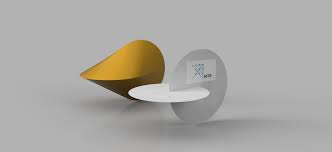
Oloid 4Pi * r^2 --> 1/2 Black Hole Surface Area

Started by ebuc

Replies
2
Posts
3
Page
1 / 1

Conversation

#1 •••
@SergeantLynch, @Sidewalker

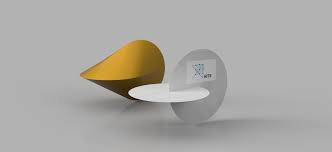
In regards to of a spherical, outer event horizon surface ---planckian area-- being equal to the the four great circles that define a spherical cubo-octahedron, this below is presented this Oloid of two same size circles --ergo same area-- reshaped as an The Oloid below at link.


For me it is perhaps another way of beginning to giving volume to a black hole via four great circle areas of the cubo-octahedron. That part is still and unknown. Anyway here is the link to The OLoid on Instagram. I dunno anything about accuracy of the claims.


...' That property leads to a surprising result. When unrolled, the oloid’s surface area equals exactly 4πr², the same formula as a sphere of the same radius. The shape and curvature are completely different, but the total area matches precisely because of how the perpendicular circles and straight generators distribute area across the surface. '..

https://www.instagram.com/reel/DVeLY52AfIy/?igsh=YzljYTk1ODg3Zg%3D%3D
Edit comment

#2 •••

...' The Oloid

1. September 2019

The oloid is a solid which has been discovered by Paul Schatz in the beginning of the 20th century. He was studying how to turn a cube inside out. On the way, he discovered the oloid, since the trajectories of certain points of the cube form an oloid.

In many different respects, the oloid is interesting. It is aesthetic, it has interesting mathematical features, and it can even be used as a propeller for smoothly and efficiently mixing chemicals. '.

https://www.h-its.org/projects/oloid/

Two of these equal to the four great circles that define the spherical 4-fold cubo-octahedron. If I understand Bekenstien-Hawkings Entropy relationship correctly it is 1/4 of the whole surface in ratio, so one great circle area.


1} My hopes understand that better,


2} to find a way the the area of 4 great circle areas can become a volumetric { occupied space } value of one or more kinds of black hole { charged or not }with out disturbance to the 4 areas - to outer surface area of the spherical being defined, i.e. holography of 2D:3D remains. One way that comes to mind is to


3} first consider each great circle having a diameter line and think of that line as a shaft attached to a ship, i.e. the circle area becomes like a propeller that revolves in whole inside the black whole at ultra-high frequency speeds. In this way one or all four could then define a volume of the black.


Edit post

#3 •••
@ebuc

Most people already know black holes are darker and bigger.

Edit post