
Water is wet.

Voting water wet water

The participant with the most points wins.

Voting stays open until 3 more votes are cast.

Like this debate? Score 0
···
X Facebook
Pro Instigator Opens first
Instigator Avatar
0
Rating
1500
New debater

Match format

Type
Unrated · 5 rounds
Time
One week
Limit
10,000
Vote
One week · 3 votes to close
Con Contender
Contender Avatar
0
Rating
1502
Debates
27
Win rate
51.85%

This is a debate about whether or not water is wet. I will be taking the position that water is wet, therefore my opponent must take the position that water is not wet. Two rules:


  1. In the last round, do not dramatically increase the quality of your argument and introduce new, better arguments than what you had before, because I will not be able to respond to them.
  2. Always act upon the most obvious interpretation of what someone says. Do not abuse loopholes in the technical wording of a quote when you know that's not what they meant, and therefore the incorrect interpretation does not apply to them.


Any other potentially violating things you could do in this debate I just consider to be you being bad at debating, so have other potential mistakes in mind so you don't do them.

Round 1

1 of 5
avatar Pro #1

Some say that water is obviously wet. It does indeed seem obvious to some, but to others, not so much. They insist that water merely makes things wet, not that it is wet in and of itself. Indeed, they can propose some initially challenging scenarios that put to the test the idea that water really is wet. These include:


If you fill a glass of water with more water, is it more wet than it was before?

Is the water soaked with itself?

If water is wet, how come we don't say things like, "My water got wet!"?


Initially, that did have me thinking. But the more I researched and thought about it, the more I came to realize that every step of the way, the argument of water not being wet fails and cannot stand on its own in any form. Here is what I found.


Definitions

The first thing people will cite is the definition of "wet." This is:


Covered or soaked with a liquid, such as water.


This definition is by the American Heritage® Dictionary of the English Language, 5th Edition, and it's the first definition that pops up when you look up any definition, if it has one for what you searched. They say that "Water is not covered with water, nor soaked with water. Therefore, water is not wet." But I would beg to differ, for the water actually is covered with water. The water molecules are covered with other water molecules. It's only not covered with water if you treat the whole liquid as one object, which is fair, but it's not reality.


In addition, what they fail to realize is that other definitions exist.


Consisting of, containing, covered with, or soaked with liquid (such as water).
Moistened, covered, or soaked with water or some other liquid.
Covered in water or another liquid.


The first definition agrees that water is wet, because water is consisting of liquid, and, as stated earlier, the water molecules are covered with other water molecules. The second definition also agrees that water is wet, because the water molecules are covered with other water molecules. The third definition also agrees that water is wet, because the water molecules are covered with other water molecules. You get the point.


The case becomes even stronger when you realize that wet and dry are opposites. So, let's define dry by the four sources that I used to define wet:


Free from liquid or moisture.
Free or relatively free from a liquid and especially water.
Free from moisture or excess moisture; not moist; not wet.
Used to describe something that has no water or other liquid in, on, or around it.


The first definition agrees that water is not dry because water is not free from itself. The second definition agrees that water is not dry because it is not free or even relatively free from itself. The third definition agrees that water is not dry because it is not free from itself. The fourth definition agrees that water is not dry because water doesn't have none of itself in, on, or around it.


So, given this, it's clear that water is not dry. That's common sense, but I brought up definitions because that's what this conversation comes to. So, if water isn't dry, what else is it? I mean, for proponents that water is not wet, congratulations, you just agreed that water is dry, because the third definition literally uses the exact words "not wet." It could not be more clear. If water is not dry, it has to be wet, otherwise you'd have to argue that wet and dry are not opposites.


It's funny how the proponents of water not being wet will use the definition as their first argument, even though they know so little about definitions and about how the exact words "not wet" are used in the definition of dry, even though they would agree that water is not dry. If they wouldn't like to agree to the exact wording of that definition, they shouldn't use the exact wording of another definition as their argument either.


Instead, they'll say that water is a third option, neither wet nor dry. Or, it isn't anything, not wet, not dry, not a third option. However this claim is completely unscientific, as there is no evidence for it, and the only reason they propose this idea is so they can claim that water is not wet, which is circular: water is not wet because it is the third state, and it is the third state because it is not wet. Rather, there is quite a lot of evidence that water is wet, and that no such third state exists or can exist.


Thought experiments

Some will or will then resort to thought experiments, such as the ones I mentioned earlier. Let's address these.


If you fill a glass of water with more water, is it more wet than it was before?

Yes, because the more liquid there is, the more wet it is. The less liquid there is, the more dry it is. They think that the answer isn't intuitive enough for someone to answer in honesty, even though they themselves are arguing for something rather counterintuitive.


Is the water soaked with itself?

No, but it is covered with other water, as I stated earlier. And because no definition has singled out being "soaked" as the only metric, that means that just because water isn't "soaked" doesn't mean it isn't wet.


If water is wet, how come we don't say things like, "My water got wet!"?

Because there's no practical reason to say that. But just because a word isn't practically used in a particular way doesn't mean its definition doesn't allow for the word to be used that way.


Conclusion

Any way you look at it, water is obviously wet, and obviously not dry. Those who say water is not wet have no idea how much evidence there is against their claim, even while using their very arguments such as definitions.
“The first definition agrees that water is wet, because water is consisting of liquid, and, as stated earlier, the water molecules are covered with other water molecules. The second definition also agrees that water is wet, because the water molecules are covered with other water molecules. The third definition also agrees that water is wet, because the water molecules are covered with other water molecules. You get the point.”


Water doesn’t consist of a liquid. It is a liquid. Those water molecules make water. It could be correct to say the molecules are wet, but water by definition is those molecules. Water molecules adhere to surfaces, which cause the feeling of wetness, but the water itself is not wet. Do we ever say that things are covered in themselves?


“It's funny how the proponents of water not being wet will use the definition as their first argument, even though they know so little about definitions and about how the exact words "not wet" are used in the definition of dry, even though they would agree that water is not dry. If they wouldn't like to agree to the exact wording of that definition, they shouldn't use the exact wording of another definition as their argument either.”


This is not how it works. Saying water is wet does not make it dry. Water is neither wet nor dry. It is used to measure wetness.


Also, ever heard of dry water?


If you fill a glass of water with more water, is it more wet than it was before?

Yes, because the more liquid there is, the more wet it is. The less liquid there is, the more dry it is. They think that the answer isn't intuitive enough for someone to answer in honesty, even though they themselves are arguing for something rather counterintuitive.


No, that’s not the definition of wet. More wet is when something has more water on it. More water isn’t wetter by itself. Adding more water doesn’t change the properties of the water.


I mean, for proponents that water is not wet, congratulations, you just agreed that water is dry, because the third definition literally uses the exact words "not wet."


The definition of dry is not “not wet.” It is “free from liquid or moisture.”


Is the water soaked with itself?

No, but it is covered with other water, as I stated earlier. And because no definition has singled out being "soaked" as the only metric, that means that just because water isn't "soaked" doesn't mean it isn't wet.


Agreed.


If water is wet, how come we don't say things like, "My water got wet!"?

Because there's no practical reason to say that. But just because a word isn't practically used in a particular way doesn't mean its definition doesn't allow for the word to be used that way.


Exactly. It is not practical. Water can’t get wetter.


For something to feel wet, we need to touch it because wetness is always in relation to a surface. This proves water alone cannot be wet.

Round 2

2 of 5
avatar Pro #3
Water doesn’t consist of a liquid. It is a liquid.


Here are three definitions of "consist of":


To be formed or made up of (specified things or people).
To be made of or formed from something.
To be made up or composed (usually followed by of).


Saying that the entire entity of water "consists of" water is treating the entire entity of water as one thing, thus it is made up of the finer units of water molecules. Whereas individual water molecules consist of hydrogen and oxygen atoms. And since I was referring to the water molecules, it appears you are correct in this statement. I therefore concede that that part of the definition of "wet" does not apply. Nonetheless, the rest of the parts of the definitions still apply.


Do we ever say that things are covered in themselves?


It depends on how you define "themselves." Sure, the water molecules aren't covered with themselves in fundamental being. But they are covered with themselves in the sense that they are covered with their own kind. The water molecules are all separate molecules, however they are the same kind of molecule, so in that sense, the molecules are covered with themselves. And regardless, this still means that the molecules are covered with water molecules, meaning the water is covered with water.


Saying water is [not] wet does not make it dry.


Yes it does, because wet and dry are opposites. This is common knowledge we all have learned in Kindergarten, and it is a necessity by definition.


Also, ever heard of dry water?


Dry water isn't just water, it's water droplets covered with silica coatings. Just because it's called "dry water" doesn't mean the water itself is dry, it means that the powder is dry. If you have to add something to water in order to call it dry, then water itself is not dry, otherwise you'd be able to demonstrate that water is dry just by using water exclusively.


More wet is when something has more water on it. More water isn’t wetter by itself. Adding more water doesn’t change the properties of the water.


Such as when the water has more water on it, as I said earlier when I talked about how the water molecules are covered with other water molecules.


The definition of dry is not “not wet.” It is “free from liquid or moisture.”


Except for one of the definitions I provided. You're just cherry picking which definitions you want to use to fit your argument, even though your move is plain for everyone to see.


It is not practical. Water can’t get wetter.


Indeed it is not practical, however water can get wetter, just by surrounding it with more water.


For something to feel wet, we need to touch it because wetness is always in relation to a surface. This proves water alone cannot be wet.


The question isn't whether water feels wet, it's whether water is wet. This point is irrelevant, and does not "prove" that water alone cannot be wet.

Wetness describes the interaction between a liquid and a solid.


How do you explain the density of water? This would make certain water more wet than others.


At 1 atm pressure, it reaches its maximum density of 999.972 kg/m3 (62.4262 lb/cu ft) at 3.98 °C (39.16 °F).Below that temperature, but above the freezing point of 0 °C (32 °F), it expands becoming less dense until it reaches freezing point, reaching a density in its liquid phase of 999.8 kg/m3 (62.4155 lb/cu ft). Once it freezes and becomes ice, it expands by about 9%, with a density of 917 kg/m3 (57.25 lb/cu ft). -Wikipedia


At different temperatures water can be hard or gassy? Are these forms still wet?


“Saying that the entire entity of water "consists of" water is treating the entire entity of water as one thing, thus it is made up of the finer units of water molecules. Whereas individual water molecules consist of hydrogen and oxygen atoms. And since I was referring to the water molecules, it appears you are correct in this statement. I therefore concede that that part of the definition of "wet" does not apply. Nonetheless, the rest of the parts of the definitions still apply.”


This isn’t about whether the water molecules are wet but rather if the water itself is wet? Isn’t water the group of all those molecules? If the molecules aren’t there, it’s not water.


In this context, water molecules themselves do not exhibit wetness in the way described by the definitions, because they do not interact with a different substance to produce that condition.


“Yes it does, because wet and dry are opposites. This is common knowledge we all have learned in Kindergarten, and it is a necessity by definition.”


Water itself is a state of matter, not a condition that can be classified as wet or dry. The answer is N/A. The question is not even valid to start.


“Dry water isn't just water, it's water droplets covered with silica coatings. Just because it's called "dry water" doesn't mean the water itself is dry, it means that the powder is dry. If you have to add something to water in order to call it dry, then water itself is not dry, otherwise you'd be able to demonstrate that water is dry just by using water exclusively.


Dry water is considered dry because it has those coatings. Adding something to the water would make it dry? That’s what dryness is.


“Except for one of the definitions I provided. You're just cherry picking which definitions you want to use to fit your argument, even though your move is plain for everyone to see.”


You’re cherry picking. I’m not even going to argue with this. We can all pick whatever definitions we like to fit the narrative.


“Indeed it is not practical, however water can get wetter, just by surrounding it with more water.”


But the water is still water. You argue that water is wet by its very nature, so adding more water doesn’t make the water more wet.


“The question isn't whether water feels wet, it's whether water is wet. This point is irrelevant, and does not "prove" that water alone cannot be wet.”


That’s what being wet means. Being wet is a feeling. It is a state of mind. In scientific terms, we would say how much water is in something. Wet isn’t a very scientific word.

Round 3

3 of 5

Round 4

4 of 5
avatar Pro #7
At different temperatures water can be hard or gassy? Are these forms still wet?


You propose the idea that water is less or more wet depending on its temperature because it appears to be uncomfortable to accept, so that such a difficulty can be revealed in my point. But actually, water is in fact less or more wet depending on its temperature. Water vapor is moist, whereas liquid water is wet. When you get your hand on them, it will therefore get different amounts of wet. The difference is their densities, which is being caused by their temperature. And a solid block of ice that is so cold that absolutely no liquid water is on its surface is dry. The only reason it might be wet is if some water on the surface melts into liquid, in which case it is not the ice that is wet, but the liquid water that melted from it. So yes, certain water is more wet than others.


...water molecules themselves do not exhibit wetness in the way described by the definitions, because they do not interact with a different substance to produce that condition.


Tell me where in the definitions does it specify that water has to adhere to another surface to be considered wet? The fundamental mechanism behind wetness is being done between water molecules, it just goes by the name "cohesion" instead of "adhesion" because it's the same material, but it's the exact same phenomenon.


Water itself is a state of matter, not a condition that can be classified as wet or dry. The answer is N/A. The question is not even valid to start.


No, liquid is a state of matter. Water is a material in a state of matter if there are multiple molecules involved. You haven't provided any evidence for this argument, so I still can't believe you. This doesn't make any sense.


Adding something to the water would make it dry? That’s what dryness is.


No, dryness is the absence of liquid. It says so in the definitions.


You’re cherry picking. I’m not even going to argue with this. We can all pick whatever definitions we like to fit the narrative.


If picking the first four most cited sources for definitions on the internet is what you call cherry picking. These definitions are by the American Heritage® Dictionary of the English Language, 5th Edition, Merriam Webster Dictionary, dictionary.com, and the Cambridge Dictionary. And I used the first listed definition in each source. I cited four different credible definitions specifically so that I would be doing less cherry-picking, because it's hard to cherry pick four different sources that agree on something that isn't very good of a definition, especially when it's the first four definitions every single time. So what's far more likely is that these definitions agree with each other because the definitions they convey are actually good definitions.


You argue that water is wet by its very nature, so adding more water doesn’t make the water more wet.


I should clarify that a single water molecule is not wet, because whether something is a liquid or a solid or a gas is defined by its relationship between other molecules. So, if you add another water molecule in, then its relationship between that water molecule will define how wet it is, as well as how much of it there is. Of course, this means that a glass of water has plenty of water to make this distinction, and I can therefore say that the water itself is wet.


That’s what being wet means. Being wet is a feeling. It is a state of mind. In scientific terms, we would say how much water is in something. Wet isn’t a very scientific word.


Again, I have no reason to believe that's all wetness is because you haven't provided any evidence that wetness cannot be more than that.

Adhesion and cohesion are not the same thing. Cohesion is the attraction between molecules of the same substance. Adhesion is the attraction between molecules of different substances.


Scientifically speaking, the wetness of an object depends on the relationship between adhesive and cohesive forces of the liquids and solids that are brought into contact with one another. While cohesive forces cause molecules in a liquid to stick together, adhesive forces are what allow liquids to stick to solids. When we fall into the water and our clothes get wet, what really happens is that the adhesive forces of our clothes outweigh the cohesive forces of the water, causing water to adhere not to itself, but to our clothes. - Mental Floss


From a scientific standpoint, “wetness” describes the state of a solid surface when a liquid adheres to and spreads across it. It is not an inherent property of the liquid itself but rather a description of the interaction between a liquid and a solid. This interaction depends on a balance of intermolecular forces: cohesion and adhesion. - biologyinsights.com


The GNU version of the Collaborative International Dictionary of English” lists many definitions of wet. Among them are:

  1. The quality or state of being wet; moisture; humidity.
  2. A watery or moist state of the atmosphere; a state of being rainy, foggy, or misty
  3. The condition of containing or being covered by a liquid (especially water)


They seem to be conditions or states. Water is water. For something to be wet it has to have a dry form. You have to be able to make it less wet? You can’t really do this to water.


No, liquid is a state of matter. Water is a material in a state of matter if there are multiple molecules involved. You haven't provided any evidence for this argument, so I still can't believe you. This doesn't make any sense.


Water is the liquid form of dihyrdogen monoxide.

It’s a state of matter in that sense. Water is only a form.


I should clarify that a single water molecule is not wet, because whether something is a liquid or a solid or a gas is defined by its relationship between other molecules. So, if you add another water molecule in, then its relationship between that water molecule will define how wet it is, as well as how much of it there is. Of course, this means that a glass of water has plenty of water to make this distinction, and I can therefore say that the water itself is wet.


You seem to not even understand the definition of water. Water is a group of molecules. The molecules are treated as a single unit. You seem to be reducing the molecules to the base, while I reduce water to the base. You use the molecules to measure wetness, while I use water (the collection of molecules) to measure wetness.


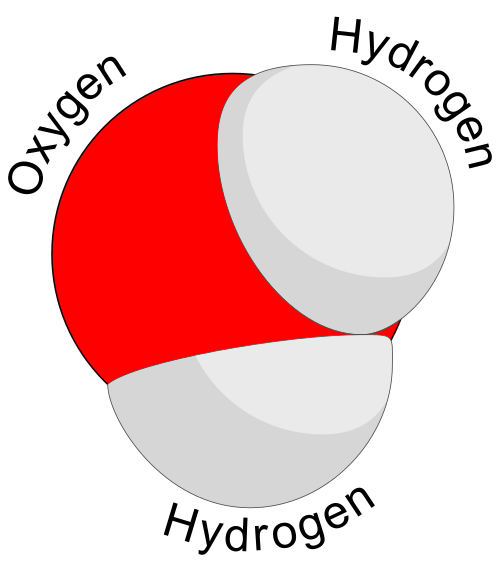
Water (H₂O) possesses unique molecular properties that allow it to make other substances wet. Each water molecule is polar, meaning it has a slight positive charge on the hydrogen atoms and a slight negative charge on the oxygen atom due to the uneven distribution of electrons. This polarity results from its bent molecular geometry, where the oxygen atom pulls electrons more strongly than the hydrogen atoms.

This polarity enables water molecules to form hydrogen bonds with each other, where the positive end of one water molecule is attracted to the negative end of another. These strong intermolecular attractions contribute to water’s high cohesive forces, making water molecules cling together. Simultaneously, water’s polarity also allows it to form strong adhesive bonds with other polar surfaces, such as glass or cotton. - more from biologyinsights.com


Let’s end with the final paragraph from the website to prove the point:

For something to be wet, there must be a liquid present that is sticking to a separate material. Since water does not have a solid surface for its own molecules to adhere to in the way it adheres to other materials, it cannot be “wet” in the scientific sense. When you feel water, the sensation of “wetness” arises because the water molecules are adhering to your skin. Water makes things wet due to its adhesive properties, but it is the object that is wet, not the water itself.

Round 5

5 of 5

My opponent forfeited 2 rounds in this debate, 40% of the debate.


Vote pro!

New comment

avatar
•••
#11
--> @Tickbeat

What is rated and unrated?

avatar
•••
#10
--> @SomeDebatePerson

I think you lost the debate tbh but I also recognise that the opponent didn't really try properly as it progressed and rewarding the opponent would be stupid at this point.

I skimread it and thought you had lost and chose not to vote.

As the opponent pushed and reiterates 'consisting of' does actually matter and mean what he says. The molecules are making each other wet.

However, neither side properly clarified what wetness is in and of itself.

avatar
•••
#9

Dang. At least it’s unrated.

avatar
•••
#8
--> @Debby, @GreatfulGoy, @Kohai, @Savant

Pls vote

avatar
•••
#7
--> @Tickbeat

I've been busy. Also why did you say "vote pro?" Wouldn't you want people to vote con considering you are con?

avatar
•••
#6
--> @Tickbeat

Thanksgiving hits hard man.

avatar
•••
#5
--> @Tickbeat

I haven't had the computer available in a while.

avatar
•••
#4

This debate might be over, idk

avatar
•••
#3
--> @SomeDebatePerson

Why Claiming Water Is Not Wet Is Absolutely Ridiculous

Look, water wrote the literal instruction manual on being wet. It's the gold standard, the benchmark, the Platonic ideal of wetness itself. If water isn't wet, then we need to have a serious conversation with the English language because that word just got fired. It's like claiming that fire isn't hot, that ice isn't cold, or that your Uncle Jerry isn't embarrassing at Thanksgiving. Water doesn't just happen to be wet—water IS the thing that makes other things wet. When you jump in a pool and come out soaking, that's not some cosmic accident or a matter of perspective; that's water doing its job. To argue water isn't wet is to argue that gravity doesn't pull things down and that the sky isn't up. You're not being philosophically adventurous; you're just fighting with definitions like a toddler arguing that a dog is actually a cat because they both have four legs.

The whole "water isn't wet" argument is the debate equivalent of someone insisting that a sandwich isn't food, technically speaking, if it's on the ground. Sure, if you want to get pedantic about *molecules* and *definitions of wetness*, fine—be that person at parties. But in the actual world where humans speak English and use words to mean things, water is wet. It's been wet for billions of years. It will be wet tomorrow.

avatar
•••
#2

I’ll accept if no one else wants to. I found some good arguments against the resolution.

avatar
•••
#1
--> @Tickbeat

I admire your commitment to wasting everyone's time with maximum efficiency. 'Water is wet' is right up there with 'chairs are for sitting' and 'the floor is not the ceiling.' Truly groundbreaking work.