
@Leaning
Being young doesn't mean one will have energy and health.
Nor being old that one will lack energy and health
Well stated.
Being young doesn't mean one will have energy and health.
Nor being old that one will lack energy and health
Well stated.
One pillar of consent, I assume is awareness and knowledge of situation.
Yes, old people have poor memory and awareness, as proved by all studies.
Even past 100, do not as a rule lose their awareness and knowledge of a situation.
Unproved claim.
My parents learned easy enough.
Most old people dont, so I doubt that.
One can also argue additional factors such as lack of interest
Having lack of interest to learn further reduces ability to consent which depends on learning. If old person has no interest in new knowledge, no new situation can be consented to by them. If ability for new knowledge died, the ability to consent died as well.
It seems a bit silly to say old people can't use Tik Tok, therefore they can't consent.
Unproved claim. If you use smartphone for 10 years and still cant figure out basic things, you cant consent. People usually say kids cant consent because they also cant drive. Well, some kids do drive, but if you think that argument works, then old people not being able to figure out new knowledge very much makes them incapable to consent.
Older adults can be quite smart, often exhibiting wisdom, better judgment, and a wealth of knowledge accumulated over their lifetime.
Indeed, the elderly possess a wealth of intelligence, which manifests in unique and valuable ways:
Therefore, they remain a vital source of knowledge, guidance, and expertise in families and communities.
I have never met a smart old person. Old people lose ability to learn new things. Once you lose ability to learn new things, Gods will that your brain is useless.
(FLRW raises hand) HELLO!
Why do you hate Trump?
I've certainly met a lot of daft young people.
You can meet "smart" or intellectually engaged older people in environments that foster continuous learning, shared interests, and community involvement
.
Educational Settings
While I'm not impressed by the post in #32.
The topic of old people and consent 'is a bit interesting.
. . . The concept of minimum age reversed.
Since many licenses such as driving, teaching require periodic evaluations 'regardless of age, I suppose it often doesn't occur to people.
And while I still don't think the statement that all individuals past X age are X.
It's true that statistically people become more at risk of various mental declines that dehabilitate, the older they get, and that the decline is gradual.
. . .
I'd suppose part of the lack of such laws, is that they are on their way out,
Another reason would be our appreciation of Choice,
. . . Adults have the knowledge and ability to schedule regular checkups, or write their wills out ahead of time.
What happens to them, is something resultant of choices they have made.
Contrast this with children, who have not yet gained knowledge or experience,
Various contracts and activities are denied to them, even if only they would be effected.
Drinking and smoking as examples.
. . . Though arguably even if only just a person is effect, they are often 'not the only one effected. Because they make later decisions based upon earlier decisions.
Drug use for example, one might say it 'only effects them, but then if they enter a psychosis, murder or steal, others are effected.
. . .
Gun laws and police doing inventory of citizens guns occurred to me as an example.
I'm disinclined to have such for regular citizens, but depending on probabilities and age, one could make an argument for requiring regular mental health checkups on citizens based on age.
. . .
Course on another hand, there's chances for people 'throughout life.
Schizophrenia has some early age range I forget,
And what about STDs,
Surely society would be healthier and less deadly, if all citizens were required to be health checked, and tagged if they possessed a disease, required to present a bill of health to sex partners.
Or have their information online, able to be checked by anyone.
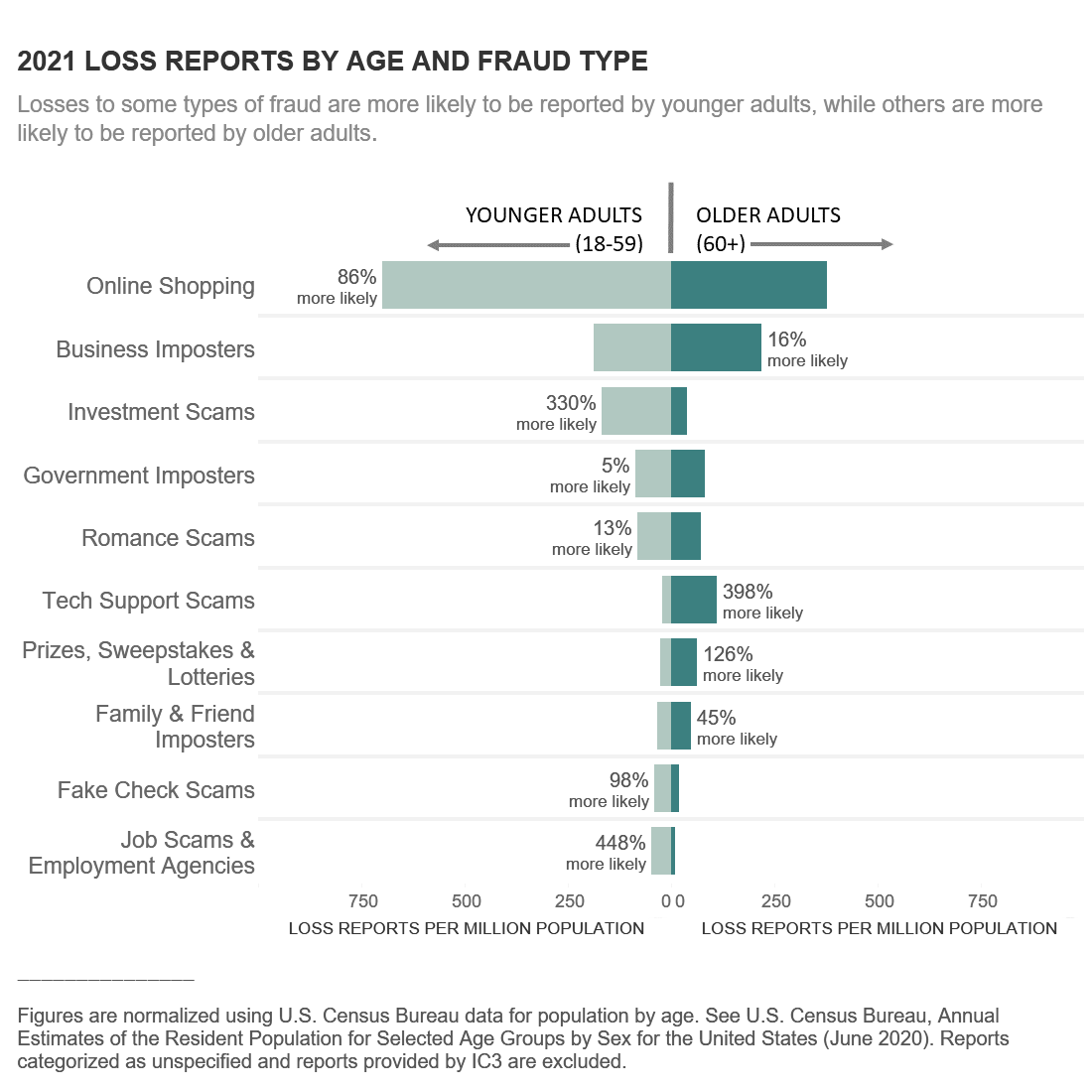

https://www.ftc.gov/news-events/data-visualizations/data-spotlight/2022/12/who-experiences-scams-story-all-ages
Yes,
younger people are frauded more frequently than seniors, though seniors often experience higher median financial losses when they are victimized. Younger individuals are more often targeted by online and social media scams, while seniors are a more frequent target for scams that result in larger financial losses.
Younger people are frauded more frequently by seniors like Trump. Did you go to Trump University?
No, but the students win the 25 million lawsuit and received 90 percent compensation. The senior here was Trump.