Inflation makes rich richer

Started by SatanLucy

Replies
54
Posts
55
Page
1 / 2

Conversation

#1 •••

While many poor people complain about inflation, inflation is rich man's best friend.


But first we have to understand why.


You see, inflation basically results in rise in prices of things compared to money.


Poor person, who is a wage slave, earns money. His money loses value when inflation happens, so he can buy less.


However, with rich person, opposite happens.


You see, rich person doesnt hold most of his wealth in money.


Rich person owns land, gold, silver, crypto, houses, investments, buisnesses...ect.


When inflation happens, and rich person owns gold, rich person doesnt lose money at all.


We know that in long run, gold beats general inflation. So rich person who holds his wealth in gold would actually have more money each time inflation happens, because inflation increases value of gold more than of other products.


So rich person, who invests in things which see biggest price rise over time compared to other things, benefits from inflation.


Inflation hates the poor, and loves the rich.



Edit comment

#2 •••

The left wing solution to this is to control many things to soften the blow/impact of it on the poor and stablise inflation by forced price-caps or subsidising things so it's cheaper for low in come people etc.


The right wing solution is at its extreme (pure free market) to assume things 'even out over time' and motivte people to work hard to earn stuff.


Left wing are smarter at first, genuinely, and you will find that more developed nations lean left on how they handle inflation usually. Right wing approach doesn't work short-term but longer term it ends up needed, hence why socialism and communism tend to fail when properly done each and every time.

Edit post

The US is a definitively secular nation, founded on complete separation of the State and religion. The Left Wing of US realise this but don't realise that pure freedom requires as low tax and free access to guns as possible. The Right Wing of US don't realise that secular pure freedom means the LGBTQ+ and abortion agendas both end up in line with US's liberty-first ethos.

It is left-wing to be pro-life. You are backing poor babies being born at the inconvenience of the already-born. Go figure.

#3 •••

Free market is technically flawed because it almost always benefits wealthier over poorer. If you inherit 1 million dollars from parents, its very easy to turn it into 10 million. You just need 10x return. But person who inherits only 10k would need 100x returns to make million dollars.


Now, the only way to make money without having starting wealth is by skill. Having some skill which people are willing to pay lots of money for. But that is almost impossible, because even among most educated people, only few actually earn lots of money by skill alone to be able to earn millions.


Now, poor people love lottery, because its their 1 in a million chance to become millionaires, and poor people would rather attempt 1:1000000 odds than actual safe investments for their money.


But there are people who won millions on lottery, and then wasted it all and became poor again. If person doesnt know how to handle money, having money is useless for that person.


this is why rich people teach their kids how to make money from money, and poor people teach their kids honest work will make them rich.


Honest work never made anyone rich. You could work in a factory for 40 years and you would never become rich, but factory owner would.

Edit post

#4 •••
@SatanLucy

Yes, inflation often makes the rich richer 

because they own appreciating assets (stocks, real estate) and use financial strategies to grow wealth, while the poor and middle class see their savings eroded and purchasing power decrease, although middle-class borrowers can benefit from cheaper debt. The wealthy use inflation as a tool by investing in assets that outpace price increases, essentially transferring wealth from those who hold cash to asset owners, acting as a "hidden tax" on earnings and savings, according to some economists. 

How Inflation Benefits the Wealthy

  1. Asset Appreciation: The rich own assets like stocks, real estate, and businesses that increase in nominal value during inflationary periods, preserving and growing their net worth.
  2. Financial Expertise: They can afford financial advisors to implement strategies like hedging and investing in inflation-protected assets, says Forbes.
  3. Debt Advantage: Inflation erodes the real value of debt, making mortgages and loans cheaper for those who have them, which can include wealthier individuals and middle-class homeowners. 

How Inflation Harms Others

  1. Erodes Savings: For those with cash savings, inflation reduces its purchasing power, making everyday goods and services more expensive.
  2. Income Lag: Wages for many workers often don't keep pace with rising costs, causing a decline in real income, notes AEI

The Systemic View

  1. Some sources, like this YouTube video, argue that modern fiat money systems and central bank policies inherently favor asset owners, allowing new money to first benefit those who receive it early (often large businesses and investors) before it trickles down, causing price increases for everyone else. 

In essence, while inflation can benefit some middle-class borrowers, it disproportionately advantages the wealthy by increasing the value of their assets and providing means to protect themselves, while diminishing the value of wages and savings for the majority, explains this YouTube video. 


Edit post

#5 •••
@SatanLucy
Poor person, who is a wage slave, earns money. His money loses value when inflation happens, so he can buy less.

Only if he has a bunch of money stuffed away in a mattress or something, in which case they could just invest in stocks. Median wages have generally outpaced inflation, so if they're living paycheck to paycheck it's not as big of an effect since their pay keeps going up.

Edit post

#6 •••
@Savant
Only if he has a bunch of money stuffed away in a mattress or something


Or in a saving account on bank, which is more often the case. Such a classical mistake poor people make, because those saving accounts rarely beat inflation, and in most countries you actually need 10 millions on saving account to create 1000$ monthly income.


in which case they could just invest in stocks


It takes a certain education to be good at that. You actually can lose money in investments easily if you dont know what you are doing.


Median wages have generally outpaced inflation, so if they're living paycheck to paycheck it's not as big of an effect since their pay keeps going up.


this topic isnt about inflation vs. wage over time, it is just about inflation itself. Even if you increase the wage, inflation still doesnt benefit the poor but reduces his increased wage.

Edit post

#7 •••
@Savant

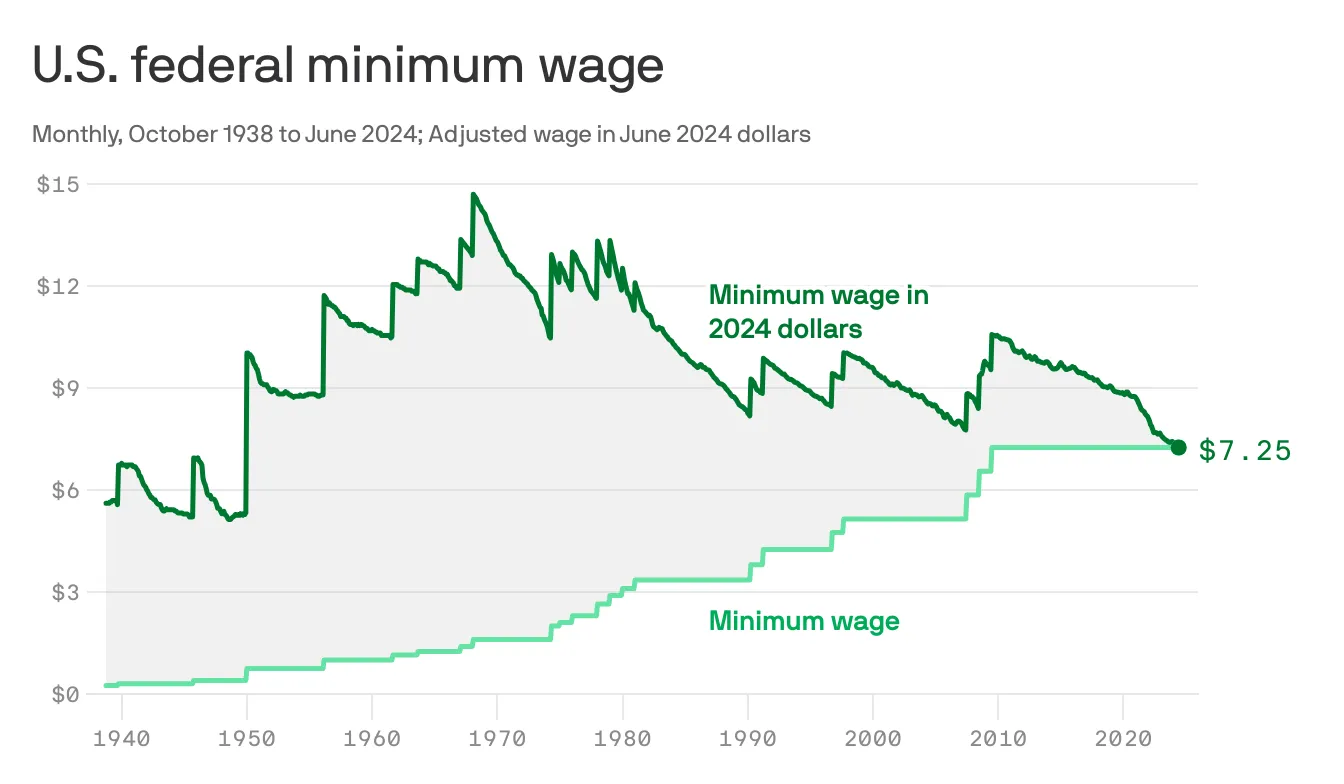
Also, minimum wage didnt actually keep up with inflation long term, even in USA.


As for median wage, that depends what you are comparing it with.


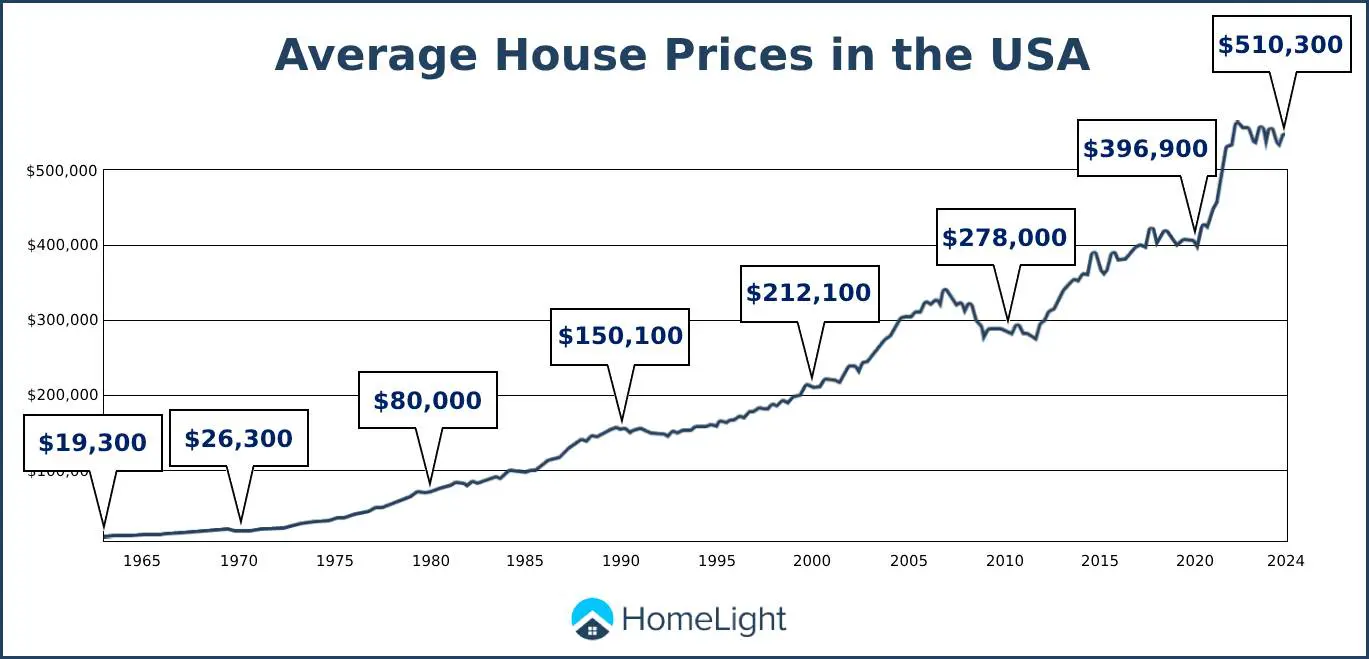
Price of house increased over 40 times since 1960. Minimum wage didnt, and people in 1960 for sure as hell didnt work for 100$ a month, so we can say for sure that median wage didnt increase in nominal value 40 times since 1960, while price of house in nominal value increased over 40 times. Minimum wage barely increased 7 times, which is a lot lower than inflation.


Also, your own link shows that actual value of wage was lower for much longer time than it was higher. Only if you pick first and last point would you see a small increase. Everything from 1980 to 2014 is basically mostly decrease in value of wage, even by those measurements which fail to account for a lot of things.

Edit post

#8 •••
@SatanLucy
It takes a certain education to be good at that.

Just invest in an index fund.

Even if you increase the wage, inflation still doesnt benefit the poor but reduces his increased wage.

But a good deal of the wage increase is due to inflation in the first place.

Edit post

#9 •••
@SatanLucy
Also, your own link shows that actual value of wage was lower for much longer time than it was higher. Only if you pick first and last point would you see a small increase. Everything from 1980 to 2014 is basically mostly decrease in value of wage, even by those measurements which fail to account for a lot of things.

Real wages actually went up in the period from 1980 to 2014 if you look at the graph. And I'm looking at the long-term trend. Obviously you can look at short-term periods where real wages decreased, but we're talking about overall, right?

Edit post

#10 •••
@Savant
Just invest in an index fund.


You could say the same about any low risk investment. Just invest in gold. Just invest in land. the problem is that poor people usually lack education to do that. And in a lot of countries, options for investments are even lower in number. Not every country is US.


But a good deal of the wage increase is due to inflation in the first place.


Still, same amount of money will always be lower in value when inflation happens.


Real wages actually went up in the period from 1980 to 2014 if you look at the graph.


Your graph starts with 335 wage in 1979 and then shows 330 wage in 2014.


Whole time from 1980 to 2000, wage was lower than in 1979, and for about half the time from 2000 to 2014, wage was lower than in 1979.


that means at least 25 years of lower wage than 335. For someone who worked since 1979 to 2020, that basically means lower overall wage than in 1979.


But here, you used median wages adjusted for general inflation, which isnt how standard of life for poorest workers is even measured. those who work for minimum wage didnt see anything close to what you are showing. Minimum wage increased about 7x since 1979, and prices increased 40x, so you do the math.

Edit post

#11 •••
@Savant

And lets say we accept that what you are saying is true, regarding median wage graph.


How much is the increase?


1979: 335

2000: 334

2025: 376


that is basically an increase of just 41$ after 46 years,


or about 12%.


So even if we were to take that graph as accurate, all it would show is a very small increase in wealth, increase which had to be waited for for 35 years because it only started in 2015.


But inflation increases nominal wealth of rich people by at least 50x over 46 years, where nominal wage of US worker sure as hell didnt increase 50x in past 46 years.


And again, this is when we take graph as true, which it realistically isnt.

Edit post

#12 •••
@Savant


the two lines show minimum wage, and minimum wage adjusted for inflation.


today, minimum wage is on level where it was in 1950 when adjusted for inflation, and this gets even worse when we take into account inflation of necessities, such as house (40x price increase in past 46 years).

Edit post

#13 •••
@SatanLucy

housing affordability is a major crisis in the U.S., with recent data showing around 

75-80% of homes on the market are unaffordable for median-income households due to soaring prices and high mortgage rates, creating a severe shortage of available homes and pushing the dream of homeownership out of reach for many Americans and working families. 

Key Factors Driving Unaffordability:

  1. High Home Prices: Prices have risen significantly faster than wages, making median-priced homes unattainable for many.
  2. Increased Mortgage Rates: Higher rates, even with slightly slowed price growth, have added a major barrier for buyers.
  3. Inventory Shortage: A persistent lack of new construction to meet demand, combined with existing homeowners staying put, limits supply.
  4. Income Stagnation: Wages for many Americans haven't kept pace with housing costs, widening the gap between earnings and required income. 

Impact on Americans:

  1. Luxury Good: Homeownership is increasingly seen as a luxury rather than an accessible goal.
  2. Priced Out: Millions of households, including those with decent incomes, struggle to afford even a median-priced home.
  3. Rent Burden: High rents are also pricing out many workers, with some spending over half their income on housing.
  4. Desire to Move: Many Americans (around 77%) are willing to relocate to find more affordable housing. 

Statistics Highlight the Crisis:

  1. 75%: Roughly three-quarters of U.S. homes on the market are unaffordable for median earners.
  2. 20%: Households earning median incomes or less can only afford about 20% of available homes, down from 50% in 2016.
  3. 14%: The share of tracked occupations that could afford to buy a home with a 10% down payment dropped from 37% in 2019 to just 14% by 2024. 


Edit post

#14 •••
@SatanLucy
the problem is that poor people usually lack education to do that

Maybe, but then inflation doesn't punish the poor as much as it punishes the uneducated. And there could be some correlation there, but who hasn't heard of index funds? It might require some education but not much. Inflation also guards against deflation, which is also pretty bad for the poor, so it's still a net benefit.

today, minimum wage is on level where it was in 1950 when adjusted for inflation

Most people earn above the minimum wage.

Edit post

#15 •••
@Savant
Most people earn above the minimum wage.


there are also those who dont, or those who earn close to minimum wage.


Maybe, but then inflation doesn't punish the poor as much as it punishes the uneducated


Poor is more often uneducated and careless with money.


who hasn't heard of index funds?


there are people in America who cant point to Britain on map, and who think native Americans should "leave USA and go back to where they came from". So it wouldnt surprise me that poor people choose lottery and betting over index funds, and it wouldnt surprise me they never heard of index funds or dont know benefits.


Inflation also guards against deflation


Deflation would imply growth in value of money, and some countries, such as Switzerland, have that when compared to other currencies. So small tiny deflation would do no harm. Small tiny inflation would do very little harm. But we are not talking about small tiny inflation here. We are talking about house going from 10k to over 150k in price in a not so long period of time.

Edit post

#16 •••
@Savant

Lets look at this:


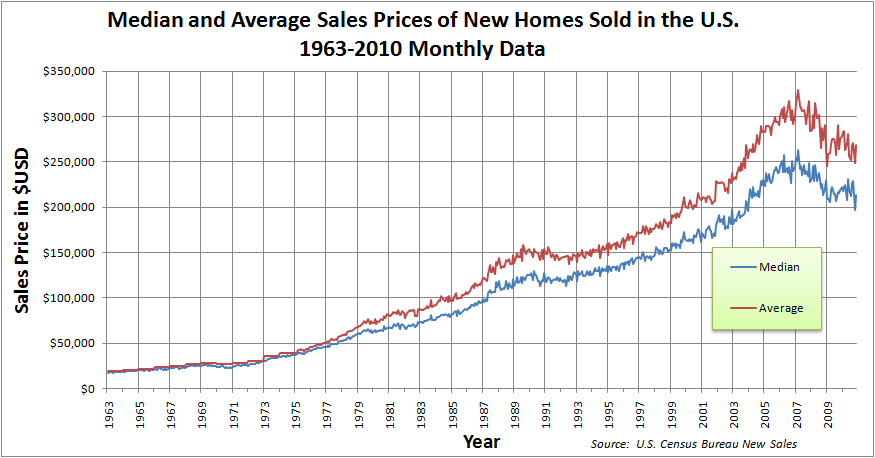
Median house was around 10k to 20k and rose to almost 400k by 2025. By 2000, it was about 150k, and now it is over 400k by some sources.


that is an increase by 20 to 40 times.


https://finance.yahoo.com/news/the-median-home-in-the-us-costs-415000-heres-what-that-will-buy-around-the-country-110043525.html


Many studies which were done show that income to house price ratio reduced over time, and this means, in simple terms, earnings today can buy less houses than they could in 1979.

Edit post

#17 •••
@Savant

https://www.visualcapitalist.com/charted-american-income-vs-home-prices-1985-2025/


Different sources show different numbers, but all agree that both median and average worker wage can buy less houses today than it could before. And poor people who receive minimum wage or close to minimum are in worse position, because minimum wage didnt increase much, max increase is 5x in some states, but usually about 2x since 1980. Price of house, tho, is usually 8x to 40x higher, depending on the source (some sources measure only new houses price).


The latest U.S. Census Bureau data from March 2025 put the average price of a new home at $497,700. Meanwhile, the National Association of Home Builders reported a much larger number — $665,298 — based on its 2024 survey of builders.

Edit post

#18 •••
@SatanLucy

Homes aren't the only thing people buy. You can cherry pick things that get cheaper too.

there are also those who dont, or those who earn close to minimum wage.

Yeah but that's cherry picking as well. You can cherry pick people who are doing better as well. That's why it's best to use the median.

Edit post

#19 •••
@Savant

Buying a home is no longer a median or average experience for the typical American household

; it has become a luxury item due to a massive gap between home prices and income. As of 2024–2025, the income needed to afford a typical home is roughly 40-50% higher than the actual median household income. 

Key Data on Housing Affordability (2024-2025)

  1. Income Needed vs. Median Income: To afford a median-priced home ($402,000–$418,000), a household needs an annual income of roughly $110,000–$117,000. However, the actual median household income is only around $74,500–$80,600.
  2. Affordability Crisis: Only about 15.5% of homes for sale in 2023 were affordable to a household earning the median income, down from 40% in 2019.
  3. Price-to-Income Ratio: The median home price is now roughly 5 to 5.6 times the median household income, exceeding the traditional, more sustainable benchmark of 3x income.
  4. Monthly Costs: Mortgage payments for new buyers are consuming nearly 30% of median income, rising to closer to 40% when taxes and insurance are included. 

Regional Disparities

While the national average is dire, coastal cities are significantly more expensive. In metro areas like San Jose, San Francisco, and Los Angeles, the median home price can be 10 to 12.5 times the median household income. 

Impact on Ownership

  1. First-Time Buyers: The share of first-time homebuyers has dropped to 24% in 2024, the lowest since 1981.
  2. Market Sentiment: Less than half of current non-homeowners believe they will own a home one day.
  3. Long-Term Impact: The high barrier to entry is causing a decline in overall homeownership rates, which dropped to 65.6% in early 2024 from a recent high of 66% in 2023. 


Edit post

#20 •••
@Savant
Homes aren't the only thing people buy


Per homes inflation, median wages decreased, and minimum wages decreased even more.


But we could use other prices too. Price of college increased over 10 times. Price of car increased 10 times.


In 2010, consumers making minimum wage spent 41% of one hour’s wage on a pound of bread, which is the largest percent over the time span shown. The relative cost of a loaf of bread was quite low through the 1970s, 80s, and 90s, but looking at the percent increase of the cost of bread in the last three decades and comparing it with the percent increase in the minimum wage, we can see that the cost of bread was rising more quickly than the federal minimum wage.


https://tasks.illustrativemathematics.org/content-standards/tasks/1330


Edit post

#21 •••
@SatanLucy

Why are you looking at those items specifically instead of the Consumer Price Index? And at minimum wage instead of the median wage? Also, it's not really a fair comparison, because the value of houses and college education is changing. Houses today are bigger than in the past.

Edit post

#22 •••
@Savant
Yeah but that's cherry picking as well. You can cherry pick people who are doing better as well


We are talking about poor people, which median has nothing to do with. Median by definition just means half of people earn less than that amount.

Edit post

#23 •••
@SatanLucy
We are talking about poor people, which median has nothing to do with

But the minimum wage doesn't really measure it either, because poor people can make more without the minimum wage increasing.

Edit post

#24 •••
@Savant
Why are you looking at those items specifically instead of the Consumer Price Index?


those prices show that now poor people are less able to afford house, college, car or bread.


And at minimum wage instead of the median wage


Poor people dont receive median wage by definition. Why would I use median wage for people who earn less than that?


Also, it's not really a fair comparison, because the value of houses and college education is changing. Houses today are bigger than in the past.


Value of land also increased a lot. So not only that house is more expensive, but also, land on it is too. Now, as for houses being bigger or colleges being better, it is not of great importance to poor person who cant afford them. But also, you could build a small house in 1980, and it would likely cost 10 times less than house today, not 2x less (as minimum wage 2x increase) or 6x less (median wage increase 6x) or 7x less (average wage 7x increase).

Edit post

#25 •••
@Savant
But the minimum wage doesn't really measure it either, because poor people can make more without the minimum wage increasing.


Minimum wage is a guaranteed income, which is 2x to 5x higher today than it was in 1979, depending on state. And yes, a lot of people work for minimum wage. However, any wage under 20 dollars per hour is still not 7 times greater than minimum wage in 1979, to cover for inflation of basic necessities. So anyone who works for under 20$ per hour is by logical necessity poorer than person working for 3 dollars in 1980.

Edit post

#26 •••
@SatanLucy
those prices show that now poor people are less able to afford house, college, car or bread

But if they're better able to afford most things in general, it's a net gain.

Poor people dont receive median wage by definition

They also earn increasingly more than the minimum wage. The median wage at least represents the common man, and poor people are a subset of that. If wages are getting better generally, then the standard for what is a low wage is getting higher. You were the one who brought up the distinction between wages and assets as separating the rich and poor in the first place. The point is that things are getting better for wage earners.

Now, as for houses being bigger or colleges being better, it is not of great importance to poor person who cant afford them

But they can rent or buy condos. And when they do save up to get a house, it will be higher-quality than it would be in the past. Houses aren't much more expensive per square foot today compared to CPI (which wages are keeping up with), and they have superior energy efficiency and safer materials. If you really control for all of that, the same house might even be cheaper today.

So anyone who works for under 20$ per hour is by logical necessity poorer than person working for 3 dollars in 1980.

Sure, but there are less people working for the minimum wage today, so poor by today's standards is significantly better than $20 an hour, whereas poor by 1980 standards was closer to the minimum wage and a lower standard of living.

Edit post

#27 •••
@Savant

You can use this inflation calculator if we are going to talk specifically about your way of measuring prices.


https://www.usinflationcalculator.com/


Per this calculator, minimum wage in 1980 (3.1 $) would today be worth almost 13 dollars.


So even when we accept your way of price, today person would have to earn 13 dollars per hour to earn same as person earning minimum wage in 1980, and people earning 7.5 $ minimum wage earn almost 2x less than person in 1980 earning 3.1 $.

Edit post

#28 •••
@Savant

Right now, there is lots of snow in Bosnia, and power went out like 6 times, and I keep losing responses in middle of writing them.


In summary of my lost comment:

  1. Less Americans own homes now, due to higher price of house
  2. Rent is more expensive than home long term, causing an even worse situation economically
  3. Any american who earns less than 13$ per hour is poorer than poor American in 1980 earning 3.1$ minimum wage.
  4. Land likewise increased in price far higher than minimum, median or average wage did. So even a same empty land costs more.

Edit post

#29 •••
@Savant

Also, some items increased in price far more than minimum wage did. Gold increased in price over 100x times. So yes, today, poor people can literally afford much less gold.


Homes cannot be logically cheaper because mere price of land increased 10 times, which adds to cost of home more.

Edit post

#30 •••
@Savant

If we are going to see how many people earn minimum wage today, and compare it to 1980, we cannot use minimum wage of today.


About 16% of US workers in 1980 earned minimum wage of 3.1$.


In todays dollars, that translates to close to 13 dollars.


So anyone earning less than 13 dollars would be poorer or just as poor as person in 1980.


Here’s the most reliable official figure available on how many U.S. jobs pay less than $15 per hour:

📊 Official U.S. Bureau of Labor Statistics (BLS) Data

  1. According to a special tabulation of Occupational Employment and Wage Statistics from the U.S. Bureau of Labor Statistics, in May 2022 there were about 30.2 million jobs that paid less than $15 per hour. That represented 20.4 % of total U.S. employment at that time. (Bureau of Labor Statistics)

⚠️ Note: This figure counts jobs, not individual workers (some people hold more than one job). It’s also from 2022, which is the most recent breakdown by wage intervals that BLS has published in this format. (Bureau of Labor Statistics)

📌 Additional Estimates (Less Official/Methodologically Different)

Different organizations sometimes report different numbers depending on how they count workers and wages:

  1. A report by the National Employment Law Project (NELP) estimated around 42 % of U.S. workers earned less than $15 per hour — but this used survey data and a broader definition of “workers,” and is not the official BLS job count. (National Employment Law Project)
  2. Other analyses suggest the share of individual workers earning less than $15 has fallen over recent years due to state/local minimum wage increases (one unofficial source reported ~13 % in mid-2024), but these are not official BLS estimates and can vary by methodology and timing. (Reddit)

🧠 Summary

Approximately 30 million U.S. jobs paid less than $15 per hour as of May 2022, accounting for about one-fifth of all jobs in the U.S. labor market. (Bureau of Labor Statistics)

If you want, I can break this down by industry, occupation type, or more recent trends in low-wage work.

Edit post