


People wearing diapers always smell like roses, right?

People wearing diapers always smell like roses, right?
fauxlaw wrote:
What's in a name? See Shakespeare. Cure for TDS.
Indeed. Trump by any other name would smell just as shitty. ...maybe Natalie Harp would disagree.
We live in a world where medical decisions should be guided by science, clinical expertise, and patient safety. Yet, in the United States and New Zealand—the only two developed nations on Earth that allow it—medical care is being driven by prime-time television commercials. Direct-to-consumer (DTC) pharmaceutical advertising prioritizes corporate profits over patient well-being.
To clarify, public health is defined not just as the absence of disease, but as the collective physical, mental, and financial well-being of a population served by a functioning healthcare infrastructure.
Pharmaceutical commercials distort medical reality, exploit vulnerable populations, and drain the financial resources of the healthcare system, creating a net-negative impact on society.We present three contentions proving that DTC advertising does far more harm than good.
Contention 1: The Illusion of "Fair Balance" and Public Misinformation
Some might argue that these commercials educate the public. This is a dangerous myth. The purpose of a commercial is to sell, not to educate.
Pharmaceutical companies spend billions on psychological marketing designed to exploit what behavioral scientists call "optimism bias." Advertisements spend the first 45 seconds using vibrant visual imagery—happy families, sunny days, vibrant music—to showcase a drug's benefits. When forced by law to read the side effects, the visual energy remains upbeat while a monotone narrator quickly lists catastrophic risks like blood clots, strokes, or death.This creates a massive information asymmetry. Everyday citizens do not have the clinical training to weigh these risks. By framing complex biological interventions as simple consumer products, DTC ads create artificial demand for high-risk medications, misleading patients into believing a pill is a substitute for systemic lifestyle changes.
Contention 2: The Eradication of Objective Medicine
Public health relies entirely on the integrity of the doctor-patient relationship. DTC advertising systematically erodes this boundary by weaponizing patients against their own doctors.
When a patient walks into a clinic demanding a specific brand-name drug they saw on television, the clinical dynamic is immediately corrupted. A study published by the Journal of General Internal Medicine revealed that when a patient requests a specific advertised brand, physicians prescribe it up to 77% of the time, even when safer, cheaper, or non-pharmacological alternatives exist.
Doctors face intense institutional pressure to maintain high "patient satisfaction" metrics. Denying a request requires a physician to spend valuable, limited appointment time undoing a multi-million-dollar marketing campaign. DTC ads turn doctors from objective gatekeepers of health into fast-food cashiers fulfilling brand orders. This leads directly to over-prescribing, dangerous drug interactions, and medical over-utilization.
Contention 3: The Financial Crippling of Vulnerable Patients
You cannot have public health if patients cannot afford to stay healthy. Pharmaceutical advertising is an economic engine that drives up the cost of life-saving care.
Drug companies do not advertise cheap, effective generic medications; they advertise highly expensive, newly patented, brand-name drugs. By artificially inflating consumer demand for these premium products, ads successfully steer patients away from generics that cost a fraction of the price. Furthermore, the billions of dollars spent annually on these flashy ad campaigns are not absorbed by Big Pharma—they are passed directly to the consumer. This inflates insurance premiums, strains public healthcare budgets, and drives out-of-pocket drug costs to astronomical heights. When marketing drives up the price of medicine, low-income patients are forced to ration their doses or skip prescriptions entirely. This is a structural failure of public health caused directly by advertising.
Conclusion: Every other developed nation—from Canada to Germany to Japan—has looked at the data and banned these commercials. Their populations are healthier, their drug costs are lower, and their doctors are trusted. The American experiment with direct-to-consumer drug ads has proven failures in public safety and economic stability. Medicine belongs in the hands of physicians, not advertising executives.
Sidewalker wrote:
Christian Nationalism isn't Christian either.
I agree, but as an apostate Christians dont generally appreciate my theological opinions.
There is truth to that as well. The internet has provided much need exposure to alternative views, but it has also provided echo chambers for extreme views.
SatanLucy wrote:
I suppose that makes me a dumb atheist with 3 kids.
3 million dollars lost btw
I prefer to think of it as an investment in humanity, tyvm! 😁
How many people are basing their beliefs off of modern YouTube debates?
I think that is a bit reductive. The discourse is much broader than just YouTube debates.
If you're just talking about written discourse on the issue, that's been around like forever.
It is the ease of access to criticism, contradictory information, AND non-believers that is negatively affecting strict, literal understandings of the Bible. In the past, non-believers and apostates were outside the community of believers, and beliefs were, more often, unchallenged and unexamined by the average pew sitter.
Atheists are smart for not reproducing.
I suppose that makes me a dumb atheist with 3 kids. 😅
1. It Directly Violates the U.S. Constitution
The core mission of Christian nationalism—to legally and politically privilege Christianity—directly contradicts the foundational law of the United States.
The Establishment Clause:
The very First Amendment of the Constitution explicitly states, "Congress shall make no law respecting an establishment of religion." Christian nationalism explicitly demands government favoritism toward one religion, which the Constitution forbids.
The No Religious Test Clause:
Article VI of the Constitution specifies that "no religious test shall ever be required as a qualification to any office or public trust under the United States." This ensures that American citizenship and governance are entirely independent of religious belief.
2. It Contradicts the Intent of the Founders -
While many of the Founding Fathers were Christians or deists, they deliberately chose to build a secular republic to avoid the religious wars that had devastated Europe.
The Treaty of Tripoli (1797):
Initiated by George Washington and signed into law by John Adams, this official treaty explicitly stated that "the Government of the United States of America is not, in any sense, founded on the Christian religion." It was ratified unanimously by the U.S. Senate, proving that the early government did not view the nation as a legally Christian state.
The "Wall of Separation":
Thomas Jefferson famously coined this phrase in 1802 to describe the First Amendment, arguing that the legitimate powers of government reach actions only, not opinions or religious beliefs.
3. It Subverts True Freedom of Religion
The American ideal of religious liberty is universal, meaning that the government cannot dictate how citizens worship—or if they choose to worship at all.
Coercion vs. Conscience:
Christian nationalism seeks to use the power of the state (schools, courts, and laws) to enforce a specific religious worldview. This undermines the American principle of liberty of conscience, which protects the rights of religious minorities, non-Christians, and non-believers alike.
The Danger to Christianity:
Roger Williams, the devout Christian minister who founded Rhode Island, argued that when church and state mix, the state inevitably corrupts the church. Forcing religion through politics cheapens genuine faith, making it a tool of state control rather than personal conviction.
4. It Replaces Equal Citizenship with a Hierarchy
The pledge of allegiance promises "liberty and justice for all," establishing that all Americans are equal citizens regardless of their background.
Second-Class Citizenship:
Christian nationalism creates an un-American hierarchy. It implies that Christians are the "true" or "first-class" Americans who have a greater right to define the nation, while non-Christians or those with differing theological views are relegated to second-class status.
Exclusionary vs. Pluralistic:
America’s strength and identity have long been tied to the motto E Pluribus Unum ("Out of many, one"). Christian nationalism rejects this pluralism in favor of an exclusionary identity that divides citizens rather than uniting them under shared democratic ideals.
Kohai wrote:
Why stop there? Call the Atlantic Ocean the east American ocean and the Pacific Ocean the West American Ocean!
Sadly, Trump has already had that idea...
The original witch trials were based on the same behavioral mechanics we now recognize as ragebaiting - manufacturing moral panic and exploiting outrage for personal/political gain.
Are you suddenly against ragebaiting now?
So its subjective opinion of masses, not definite.
Welcome to society. Those that dont like it are welcome to remove themselves from the group and function in the world completely independent and alone.
Having some knowledge about wilderness living, I'd wager most people crying about the masses are incapable of surviving without them.
Yes, perhaps I am expecting too much...
Maybe, but it's not like we can agree on who gets to decide.
Its not "maybe", its *definitely*, and we as a community decide.
I think he's saying that if other rage bait is acceptable, it follows that his rage bait is acceptable as well. Cause he's fine with both.
Well, that naively paints the world in black and white - not all ragebait is equivalent.
I was under the impression you viewed ragebaiting as acceptable behavior. Am I mistaken?
Yes. Each time leftists get in power, they bring USA closer to Communism.
If by 'closer to communism' you mean further from unregulated capitalism, then I agree.
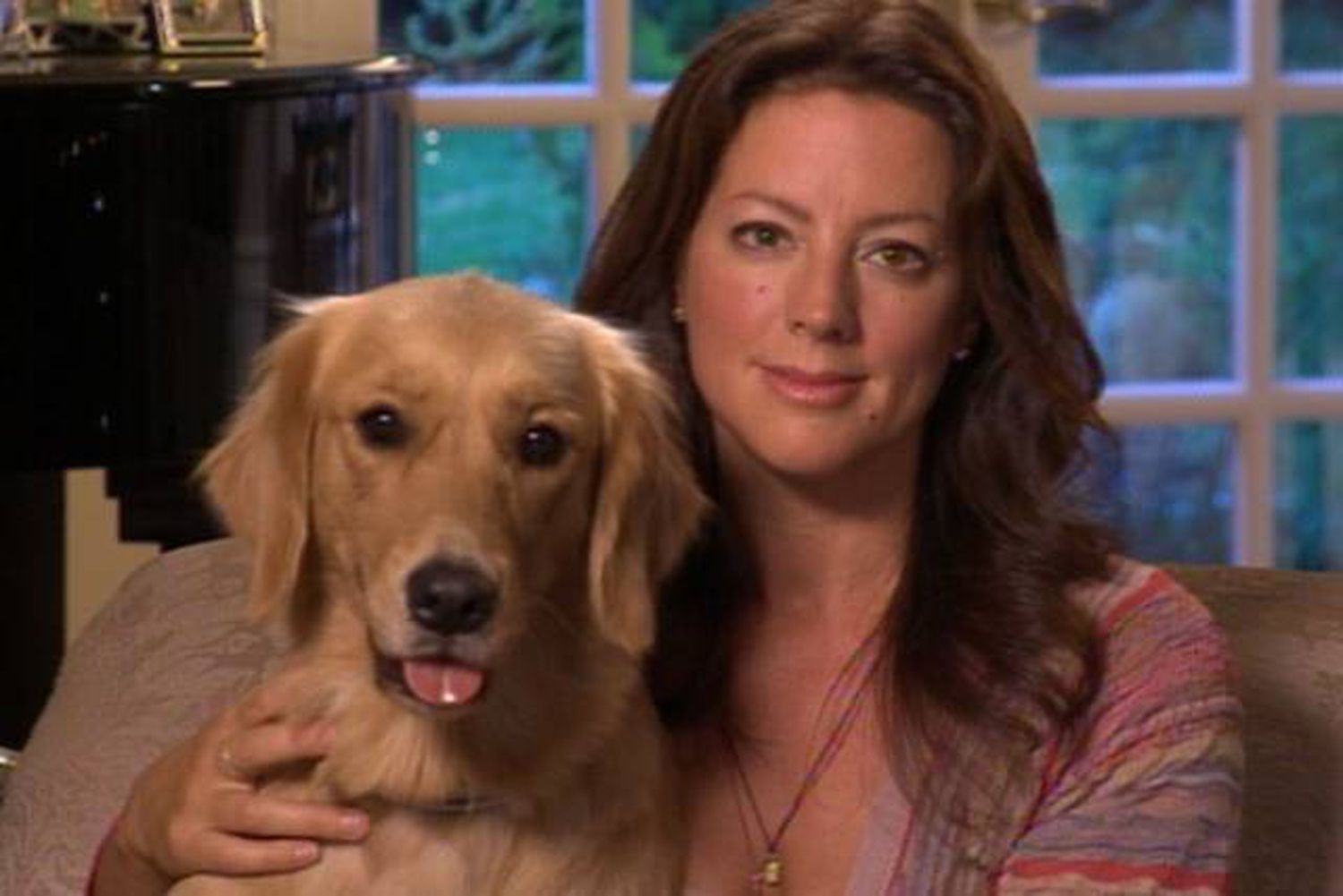
Hi, I'm Sarah McLachlan. Will you be an angel for a helpless ragebaiter? Every day, innocent ragebaiters are verbally abused, mocked, and, worst of all, sanctioned.. For just $18 a month—only 60 cents a day—you'll help rescue a ragebaiter... Call or join online... Please call right now. Don't let their cries for attention be silenced.
(Music: "Angel" plays)"In the arms of the angel, fly away from here...
You can start by removing your vote against me.
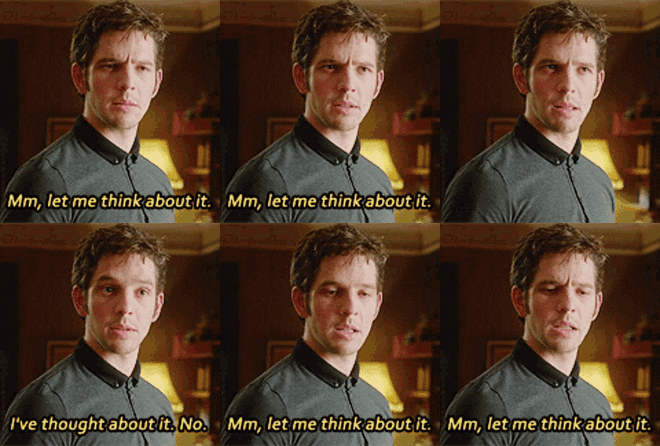
Omg, I've really got to tone it down if RemyBrown is getting triggered by my posts.

Don't surprise if Americans end up electing their own version of Fidel Castro. Sanders can be that person, or even worse.
Bernie Sanders?! Stop 🤣

Somthing tells me that Americans will vote the lefties anyway thinking that they are going to solve their problems. I guess they have to enjoy first hand the socialism to realize how destructive it is.
Being nickel'd and dimed to death under out of control capitalism is empowering American socialism.
Should he get credit for a quantity of citations that do not substantiate his position? NDEs and OBEs are, by definition, fringe.
Fringe: something regarded as peripheral, marginal, secondary, or extreme in relation to something else.
He has no citations from a respected journal that come to the same conclusions he advocates. The only thing he has is 'repeated nature of anecdotes' which puts his case alongside things like alien abductions and Bigfoot sightings. It's fringe.
Well after looking closer theres not as strong of smoking guns as I had assumed,
As expected. You are heavily relying on AI to make your case, but I wonder if you have really critically evaluated what you're advocating. This hints at 'not so much'.
You're vaguely motioning torwards an answer out there somewhere, but you're not answering very pointed questions. The gish gallop thread is not an answer. Pick your best peer reviewed study and let's talk about it.
I've already expressed I am unimpressed by OBEs since we can make them happen on demand. This fact alone throws a wrench into your grandiose claims. Something with mundane triggers can hardly be a evidence for the supernatural.
As far as 'face value', which specific study are you referring to? Is it from a reputable, peer-reviewed journal or a niche publication biased toward a specific viewpoint? If it is a respected journal, what exactly were its conclusions? I would be highly skeptical of any peer-reviewed study claiming to find evidence for the supernatural much less gods. Ultimately, the question is: do you accept legitimate scientific evidence at face value?
My friend, I remain unconvinced NDE are anything other than subjective events driven by extreme physiological changes in a brain near death.
Not to mention, a soul would be required. The concept of a soul is thoroughly quashed by modern neuroscience. This is the final nail in the coffin for NDE...
Contrived problems is the real issue...
Not WNBA.
Not Transgender folks.