
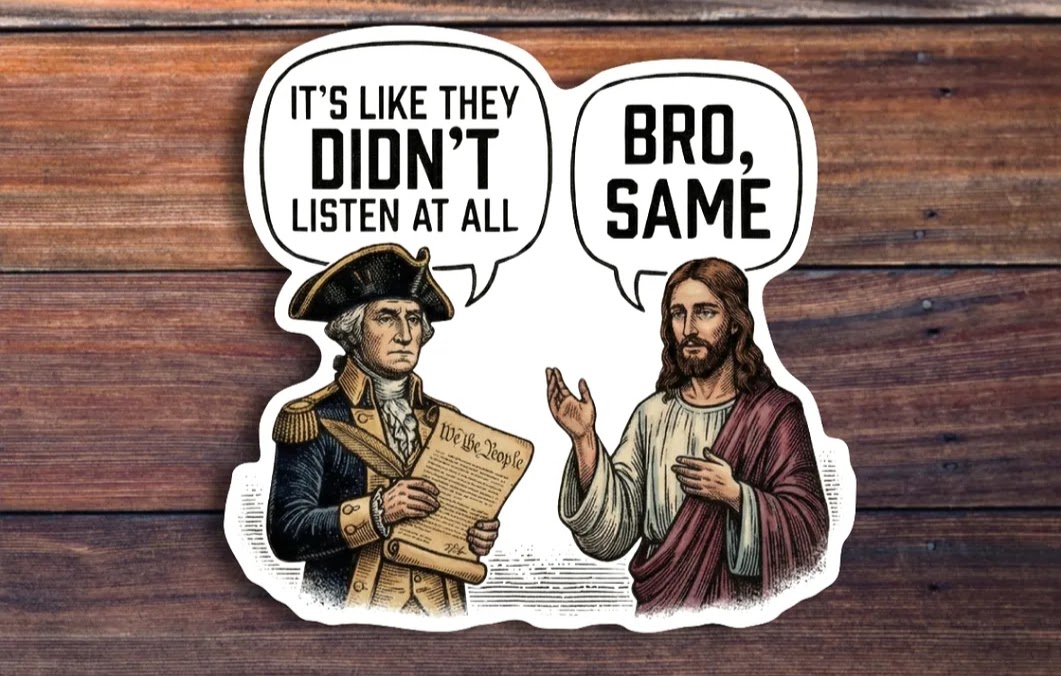
Don't you hate when atheist terrorists yell 'science!' or 'logic!', then explode a bomb they had strapped to their chest, into a crowd of people?
Don't you hate when atheist terrorists yell 'science!' or 'logic!', then explode a bomb they had strapped to their chest, into a crowd of people?
Some claims in video
https://youtu.be/sjmJmwsjdGI?si=rLLe-0I6O9YcMxJv
Yes — there have been several well-documented cases where *entire towns or large groups of people* reported seeing a UFO at the same time. Some of the most famous involve hundreds — even thousands — of witnesses, including police officers, pilots, military personnel, and local officials. Here are some of the most notable examples:
---
## 🛸 **Credible Mass UFO Sightings**
### **1. The Phoenix Lights — Arizona, 1997**
* Perhaps the most famous modern mass sighting.
* Thousands of residents across Arizona reported seeing a huge, silent, V-shaped craft with lights.
* Witnesses included pilots, police officers, and a state governor (who later said he believed it was real).
* No official explanation has ever satisfied skeptics.
---
### **2. The Belgium Wave — 1989–1990**
* Multiple towns in Belgium saw large triangular craft.
* Over **13,000 people** reported sightings.
* The Belgian Air Force officially chased the objects with F-16s.
* Radar confirmed unknown targets, but pilots **could not catch them**.
* To this day, there’s no official explanation.
---
### **3. Westall Incident — Australia, 1966**
* Around **200+ students and teachers** at a school near Melbourne saw a disc-shaped object land, hover, and take off.
* Some say military personnel arrived and told people to stay quiet.
* Witnesses are still alive today and maintain their story.
---
### **4. The Hudson Valley Sightings — New York, 1980s**
* Thousands across multiple towns reported slow-moving, massive craft.
* Often seen hovering silently over highways.
* Police departments received so many calls they began logging them.
---
### **5. The Fatima Events — Portugal, 1917**
* Normally framed as a religious miracle, but **60,000+ people** reported seeing a shining object in the sky performing strange movements (“the miracle of the sun”).
* Some UFO researchers interpret it as a mass UFO encounter.
---
## 🧩 **What Makes These “Credible”?**
Credibility tends to be evaluated by:
| Factor | Why It Matters |
| ---------------------------- | -------------------------------- |
| Number of witnesses | Hundreds or thousands add weight |
| Reliable observers | Pilots, police, military |
| Physical evidence | Radar, photos, videos |
| Official government response | Military chases, investigations |
| Consistency of reports | Similar descriptions |
---
## ⚖️ **Skeptics’ Counterarguments**
Skeptics usually point to:
* Mass psychology / misidentification
* Secret military craft
* Atmospheric phenomena
* Memory distortion over time
But… **some cases still remain unexplained** even after military investigation and radar confirmation.
---
## 🔍 **Conclusion**
Yes — there are several *credible* cases where entire communities reported seeing UFOs, and some of these events remain unexplained today. These mass sightings are the strongest cases in ufology because they involve:
✔ Many witnesses
✔ Cross-verification between civilians & officials
✔ Radar or video evidence
✔ Lack of any conclusive explanation
---
You have solid evidence of testimony of credible people saying they've seen spacecraft doing other worldly things. The people could be wrong or the craft might be man-made. I tend to believe theres something more to it but im not sure.
You have limited evidence of people saying they've seen actual aliens. This is too sparse to make solid claims of.
You yourself present video evidence of spacecraft but you are too bias to acknowledge that the videos you provide are inconclusive.
Theres no physical evidence. Thats a crushing thing to your argument.
I've seen articles and heard testimony of who groups of people and even towns seeing sitings. But yet theres no physical evidence.
Are these group delusions or psycho tricks or false reports?
I maintain that these are very interesting evidence and they seem to indicate aliens or something big but im not sure. Theyre evidence of something but im not sure of what
I'd argue when it gets down to science theres more evidence for the afterlife than ufos
In short: “We are not alone. Governments have known more than they’ve told. And what’s hidden — alien craft, non-human beings, advanced technology — could redefine everything.”
If this resonates with what you often explore — liminal states, consciousness, transformation — the film positions itself as a kind of existential “wake-up call” for humanity.
One critic put it bluntly: having no opposing voices doesn’t strengthen the argument; it just means you’ve assembled a group of believers speaking to believers. (Metacritic)
## **II. The Curse of the Law**
Laws are essential. They protect us, restrain injustice, and maintain social order. But every law carries a built-in limitation: it can govern behavior, but not conscience. Laws can outline justice—but they cannot feel it.
Even good laws have unintended consequences. Welfare can help some and trap others. Mandatory sentencing can ensure consistency but erase mercy. Education standards can bring accountability but kill creativity. A law is written in general terms—but people live in particular circumstances.
The core truth: **law cannot replace judgment, wisdom, or discernment.** It offers structure, but not understanding. It guides—but must not become a substitute for human moral responsibility. Law should be a tool—not a master.
This is the “curse of the law”: not that law is bad, but that it is blind. It sees rules but not faces; behavior but not motives. Thus, it requires interpretation, deliberation, and sometimes even exception—otherwise justice becomes mechanical.
The solution is **humility**. We must use laws while recognizing their limits. The best systems leave room for discretion, compassion, and amendment. Law provides order—but only wisdom makes it humane.
In faith, politics, medicine, education, and justice—the lesson is the same: **law alone cannot serve the human soul.** Policy must walk with discernment. Structure must walk with spirit.
We need laws. But we must not expect them to do the work of conscience—because only love can make law just.
## **I. The Lost Policy in Politics**
Politics today often looks like a competitive sport—full of commentary, tribal passion, and cultural battles—but strangely empty of policy. We argue about identity, values, and party loyalty, but rarely about *how* those values translate into workable systems. We treat citizens as spectators in a stadium rather than participants in governance.
This is the tragedy: politics has drifted away from **construction** and settled into **performance**. We track the “horse race,” obsess over polls, watch scandals unfold—but forget that politics is supposed to design solutions, not just debate problems. When passion is disconnected from policy, energy turns into noise instead of building anything real.
Policy is the moral engine room of democracy. It requires responsibility, trade-offs, creativity, data, compromise, and humility. It asks: *What could actually work? What structures would help real people?* Without that question, political passion becomes unmoored. The result is polarization without progress.
A healthy politics must bridge **conviction and craftsmanship**. Passion is necessary—but it must be shaped into implementable structures if it is to serve the public good. Otherwise politics becomes commentary instead of governance, theater instead of stewardship.
Citizens must recover the habit of asking better questions:
**Not** “Who won today?”
**But** “What would actually solve this problem—and how could we build it?”
Politics needs fewer performers—and more builders. Not less conviction—but more direction.
## 🧠 Which Came First — Culture or Language?
### 🔹 Most scholars believe *culture came first*.
Before structured language existed, our early human ancestors likely had:
* **Shared behaviors** (tool use, burial practices, group organization)
* **Social norms** (dominance hierarchies, cooperation, child-rearing, food sharing)
* **Imitative learning** (copying others’ actions without speech)
This kind of proto-culture already exists in **chimpanzees, bonobos, dolphins, crows, and elephants** today — none of them have full language, yet they clearly exhibit culture.
> **Culture does not require language.
> But language requires culture.**
---
## 🔍 Why Culture Likely Came Before Language
### 1. **Tool-making → required imitation, teaching, and memory.**
Oldowan tools (2.6 million years ago) show stable traditions passed down generations — way before evidence of symbolic language.
### 2. **Burial sites** and symbolic objects appear *before* written or spoken language.
Early humans buried their dead with objects — suggesting **meaning, ritual, and shared identity** existed first.
### 3. **Neuroscience of language** suggests language likely emerged **as a tool to enhance already-existing social structures**, not create them from scratch.
### 4. **Emotion & cooperation** preceded syntax.
Babies communicate emotionally before verbally. Humans likely evolved the same way.
---
## 💡 Final Thought
Perhaps the true order is:
1. Relationship
2. Culture
3. Imagination
4. Language
5. Theology / Philosophy / Science
**If that’s true,
then love is older than thought…
and relationship is the womb of reason.**
there's plenty of NDEs that occur under general anastetic too and once in awhile OBEs, with some having verifiable events happening while out of the body.
you remind me of me, when i'm talking about near death experiences. to me, evidence from NDEs obviously points to an afterlife or at least a mind that's separate from the body. to you the evidence is obvious about UFOs. to others, they see UFOs and NDEs as evidence of something, but they aren't sure what. at least, to at least admit that NDEs or UFOs are evidence of something but with uncertainty of what, is a plausible position. to state that they are evidence of nothing and there's nothing to see here... that's completely irrational.
to me, i tend to think UFOs are evidence of extraterrestrials but i'm not sure about that. like those other people, i view them as evidence of something but i'm not sure what. the christian part of me knows the bible talks about 'sight, signs, and wonders' that could be evil spirits and wonder if that's what UFOs are. that's just my christian bias though. i've been open to seeing more things as demonic or false or lacking truth 'sights, signs, and wonders', so naturally i kinda wonder if that fits UFOs.
it's not just what the dems will do, it's what a trump republican won't do.
you might be right that democrats are more likely to be on welfare in red states, i haven't fact checked it, but it's only a marginal difference between republicans on welfare in those states. also, it's still telling that red states either way cant do enough to support the people on welfare and need to be subsidized by blue states.
Rethinking Extramarital Sex Through a Biblical Lens
When it comes to the ethics of extramarital sex, many Christians default to the idea that the Bible clearly prohibits all sexual activity outside of marriage. But a closer look at Scripture reveals a more nuanced picture—one that invites reflection rather than rigid assumption.
1. Lust vs. Desire
Jesus taught that lust is sinful: “But I tell you that anyone who looks at a woman lustfully has already committed adultery with her in his heart” (Matthew 5:28). The Greek word translated “lust” is epithumeō, which often carries the meaning of covetousness or inordinate desire—a grasping attitude that treats others as objects of gratification rather than persons made in God’s image.
Importantly, the context of Jesus’ teaching is adultery, not just any unlawful or disordered sexual desire. If Jesus had meant all forms of sexual desire outside of marriage, He likely would have said so more broadly. But here, He’s specifically intensifying the commandment against adultery by showing that the desire itself—if indulged—is already spiritually adulterous. In other words, just because someone doesn’t physically commit the act doesn’t mean their heart is clean. The implication is: “You didn’t technically commit adultery with your body, but you would have if you could have.” It’s about disordered intention and inward desire, not merely outward action. Jesus is exposing the deeper heart-level corruption that the law alone couldn’t fully address
Importantly, not all sexual desire falls under this category. Desire itself is not condemned in Scripture—only desire that disrespects boundaries or lacks love and covenant. This suggests that some forms of premarital sexual attraction or activity may not be inherently sinful, depending on the heart, context, and relational integrity involved.
2. What Fornication Really Means
Paul often warns against “fornication,” translated from the Greek porneia (e.g., 1 Thessalonians 4:3). Yet this term historically referred not simply to “sex before marriage” as we define it today, but more broadly to unlawful or exploitative sexual acts, such as incest (Leviticus 18), temple prostitution, adultery, and abuse.
The Bible does not explicitly define porneia as all premarital sex. Instead, it condemns sexual relationships that violate divine order, justice, or covenant. So while premarital sex might sometimes fall under this category, it isn’t automatically equated with porneia in the biblical text.
3. Becoming One Flesh
Genesis 2:24 says, “Therefore a man shall leave his father and mother and be joined to his wife, and they shall become one flesh.” Paul reaffirms this in Ephesians 5:31, applying it to the sanctity of marital union. Sex is portrayed here as something deeply unifying—both physically and spiritually.
But does “one flesh” only apply to marriage? Paul writes in 1 Corinthians 6:16: “Do you not know that he who unites himself with a prostitute is one with her in body?”—clearly showing that becoming “one flesh” can occur even outside the marriage covenant. Rather than proving such sex is sacred, Paul’s point is that sex has profound consequences, whether marital or not. This supports the idea that sex is never casual or meaningless—but it also shows the Bible acknowledges the spiritual impact of sex beyond marriage.
4. Marriage as a Remedy, Not a Requirement
Paul writes: “But because of the temptation to sexual immorality, let each man have his own wife and each woman her own husband” (1 Corinthians 7:2). Here, Paul is addressing a practical issue in the Corinthian church. His advice seems pastoral more than doctrinal: if you can’t remain celibate, marriage is a good, stabilizing path.
He adds in verse 9: “But if they cannot exercise self-control, they should marry. For it is better to marry than to burn with passion.” Yet, he doesn’t define what “burning with passion” precisely means—whether it’s lust, general desire, or emotional longing. Nor does he say that those who “burn” and don’t marry are thereby sinning. He simply offers a wise way to live in wholeness, recognizing human weakness and need.
5. What the Bible Doesn’t Say
Despite centuries of strong teaching against premarital sex, it’s striking that no verse explicitly states that all sex before marriage is a sin. This silence is significant. While the Bible is clear about the sacredness of sex and the dangers of lust, exploitation, and adultery, it never directly declares consensual, loving premarital sex as morally forbidden.
The same can be said of masturbation—a topic not directly addressed in any moral or legal prohibition in Scripture. Though often condemned by tradition, the biblical texts don’t weigh in definitively.
6. Conclusion: Walking Carefully
To be clear, this isn’t a free pass to treat sex casually. Scripture consistently upholds sex as sacred, relational, and spiritually powerful. It warns against selfishness, exploitation, and anything that dehumanizes. But within that framework, the biblical witness may be less rigid than often assumed.
Yes, many would argue the implication of Scripture is that sex belongs within marriage—and that’s a reasonable interpretation. But it’s equally fair to note that the lack of explicit condemnation invites thoughtful dialogue and discernment. Especially when love, honesty, and mutual respect are present, we may need to look beyond blanket rules and ask: What kind of relationship honors the image of God in both people?
As Kurt Cobain said... rape me, my friend. Rape me, again
DEAR RED STATES… WE’RE LEAVING
Dear Red States,
We’ve decided we’re leaving. We intend to form our own country, and we’re taking the other Blue States with us. That includes Hawaii, Washington, Oregon, California, New Mexico, Colorado, Illinois, Minnesota, Virginia, most of the Northeast, and our favorite swing-flirts like Michigan and Pennsylvania when they behave.
We’ll call ourselves The United States of Sanity. You can keep Mar-a-Lago.
Here’s the split:
• We get stem-cell research. You get stemware from Branson gift shops.
• We get the Statue of Liberty. You get the world’s largest ball of twine.
• We get Apple, Microsoft, Google, and you get MyPillow.
• We get Hollywood. You get Duck Dynasty reruns.
Resources:
• We control most of the venture capital, the Ivy League, the West Coast tech corridor, the Great Lakes (about 84% of North America’s surface fresh water), and 95% of U.S. wine production.
• You get coal, cattle, and almost all the tornadoes.
• Pineapples? Hawaii. Lettuce? California. Cheese? Sorry, Wisconsin votes blue more often than not, so it’s coming with us.
Taxes and money:
• On average, blue states send more to Washington than they get back. Red states take in more federal dollars than they pay. So when we “split the check,” you’ll be picking up your own tab for the first time in decades. Good luck with that.
Culture:
• Blue states have lower divorce rates and higher life expectancy. Red states have more churches per square mile, but somehow not more stable marriages.
• In recent polls, around 40% of Republicans still doubt evolution, and a stubborn minority think Saddam helped with 9/11. Y’all can keep those history books.
• We get Broadway. You get Branson, which is kind of Broadway if it ran on casseroles and Precious Moments figurines.
Weather:
• Hurricanes? You’ll still get clobbered in Florida and Texas.
• Mosquitoes? Honestly, they’re bipartisan — but they seem happier in your humidity.
Final terms:
We’ll take science, wine, and Wi-Fi. You can keep Duck Commander, Cracker Barrel, and whatever Tucker Carlson is selling this week.
Peace out,
—The Blue States 🥂💻🌊
"Out of the 30 states Trump carried in 2024, 25 of them are more reliant on SNAP than the national average"
Its not just the corrupt republicans, trying to lower all taxes till we r bankrupt its also democrats who r using our over paid medical providers and milking all the services that they can get away with
Keeping the basic structure and finding ways to cut costs within our particular system is best and necessary
It might be possible to get Canadian healthcare here, but its not politically plausible. We need to work within the system we have if we have any shot of pulling it off. Other countires mostly developed their systems from scratch. We r trying to redo en embedded and incompetent and corrupt status quo with tons of lobbyists and special interests. And hundreds of millions of citizens. We have to be as realistic as necessary
Most countries with universal care have insurance companies, they r not single payer. I should add that in this hypothetical that the insurance companies become non profit agencies and are tightly regulated as is done in other countries. I dont know what other purposes they serve their but here they can take the hit politically when they deny certain care. I dont think the government is competent or able to pull that off. Plus they'd balance the premium versus deductible trade off that can help keep costs lower, with higher premiums giving lower deductibles and vise versa.
# When Policy Design Meets Political Reality: structural healthcare solutions in face of political gridlock
In recent months, I’ve been thinking deeply about the structural problems in American healthcare and governance. Unlike typical partisan debates, my approach begins not with ideology but with **systemic reasoning**: how resources, incentives, and institutional rules interact, and how policy can be designed to work in practice rather than just in theory.
### Designing a Sustainable Health Insurance System
Take Obamacare as a starting point. The current model relies heavily on open-ended subsidies. Many middle- and upper-middle-income households receive tens of thousands of dollars in federal support for health insurance. While well-intentioned, this creates unsustainable fiscal pressures. Simply expanding Medicaid is not a solution either; in a pay-for-service healthcare system, limiting reimbursements without careful design can incentivize providers to maximize billable procedures endlessly, creating systemic inefficiency.
My solution is structured around **hard budget constraints and dynamic, tiered coverage**:
1. **Fixed Contribution Pool for Marketplace Enrollees**
People on ACA marketplace plans would pay 10% of their income into a federal pool. The government would match 10%, with an additional 5% contribution for each dependent. This creates a finite, pre-funded resource, giving the system a predictable fiscal baseline. Unlike today, where subsidies expand without limit, this method ties coverage to available funds.
2. **Insurer Discretion with Congressional Oversight**
Within this pool, insurers would have authority to manage high-cost procedures, but only under a framework defined by Congress. This isn’t arbitrary rationing; it is a structured, accountable mechanism that recognizes reality: some treatments are extremely expensive, and a hard cap requires prioritization.
3. **Dynamic Medicaid Transition**
For cases that exceed the pool — catastrophic illnesses or high-cost chronic conditions — enrollees could be transitioned to Medicaid, which remains unchanged for low-income populations. Medicaid thus acts as a **public safety net** for extreme cases, preventing financial catastrophe while keeping the marketplace system fiscally disciplined.
This framework balances **fiscal discipline**, **market incentives**, and **human protection**. It’s dynamic, principled, and grounded in real-world constraints.
---
### The Political Hangups
The problem is not just technical. It’s deeply **political**.
I know that Democrats, broadly speaking, resist fiscal discipline; subsidy expansion is almost an article of faith. Many Republicans, on the other hand, appreciate disciplined spending but are ideologically opposed to structured government intervention in healthcare. The result: an environment where **good policy ideas are trapped** between partisan incentives, and political will rarely aligns with structural logic.
This tension is frustrating. I see clearly how to solve problems — whether it’s ACA inefficiencies or broader governance failures — but the **competence and incentive structures of elected officials** make implementation nearly impossible. It’s as if policy excellence has been subordinated to political theater.
Yet, despite this, the exercise is not hopeless. Designing policies with discipline, fairness, and transparency demonstrates that there *is* a framework in which government could work. It’s just that current institutions often lack the **capacity or will** to act rationally.
---
### Reflections
This duality — structural clarity on one hand, political dysfunction on the other — highlights a core truth I’ve long recognized: the United States has **lost the policy in politics**. Technical solutions exist, but partisan incentives, ideological rigidity, and bureaucratic inertia dominate the conversation.
Still, the work of thinking clearly and designing robust frameworks is not wasted. In understanding how policy could function optimally, we reveal the gap between ideal governance and the system as it is. That awareness, coupled with insight into human and institutional behavior, is itself a kind of power: the ability to see beyond slogans and imagine solutions that could actually work.
---
**Conclusion**
My recent work in health policy design represents more than just technical problem-solving; it’s a philosophical stance. It says: **the government can act with discipline, fairness, and foresight — if political will and structural design align**. Until that happens, we are left with creative tension: the clash between what *should* be done and what the system allows.
In that tension lies a lesson for anyone thinking critically about policy: it is not enough to know what works. One must also understand the human and institutional context, the incentives at play, and the moral patience required to navigate a world where politics often overshadows policy.
---
Questions, comments, or words of wisdom?
https://youtu.be/16r98zeAaoU?si=RZ2yWX_bFh6oEq7t
Considering that republican cities on average have higher murder rates do u at least agree that trump is singling out and thus harassing democratic cities? Especially since they dont want him there to begin with?
here is an academic fact check on what you're saying.
https://ccf.georgetown.edu/2025/10/02/factchecking-on-medicaid-coverage-for-immigrants-government-shutdown-edition/
it's exactly how i framed it. you are eating up propaganda.
on the obamacare exchange subsidies, biden and the democrats passed 'enhanced' subsidies when he was president, and republicans dont want to renew them. and see my other thread on medicaid, they are using paper work to kick off working poor who meet the criteria but not the formalities, such as how most of them work enough to qualify. i can sympathize with the republicans on the obamacare exchange subsidies because average and above average income people shoudln't be having the federal governemnt borrow to pay their bills. but i dont sympathize with the medicaid cuts, cause medicaid is very cost effective and cheaper than obamacare and it's going to the poor and lower working class. unlike you said, the funding hasn't been settled, at least not these enhanced subsidies.
Where do u get that this is mostly a battle about immigrant healthcare? Its mostly a debate about obamacare exchange insurance and medicaid eligibility. Its only humane to provide emergency care to illegal immigrants and i doubt even republicans care if the hospitals might get reimbursed for that. Its esoecually conservatives that dont think the labor and services of doctors should used for free. Its just a republican distraction and talking point that that's what democrats are worried about. Where do you get your news? You are always so poorly informed and spouting republican propaganda.
The democrats are explicitly making this about meducaid and obamacare
the problem with the obamacare subsidies, is that much of them go towards above average income couples. if the average or above average person needs subsidies to survive, we are royally fucked. i even saw one couple who makes 135000 getting tens of thousands in subsidies. and, the worst part, is that to my understanding all this spending is going into deficit and debt fuel spending, when we are already on the path to bankruptcy. now, even these guys dont deserve to be crippled by healthcare premiums, but what else can we do? i think ultimately, the dems are probably 'more right' cause obamacare is a smaller market so if a few people are being over spent on, it's probably not the end of the world. a big problem, ultimately, is that this show down illustrates that our healthcare system is beyond needing reformed, and everybody knows it, but how is that monumental task going to be accomplished during a routine government shut down when both sides aren't even beginning to even start to negotiate.
Shouldn't maga actually be forming militias against trump? Isn't a centralized government terrorizing the states and people exactly what gun nuts say the purpose of the second amendment is?
The president as the ultimate troll? Who'd a think it
you have some good points like maybe we should allow loans for new construction. i dont think the idea would cause prices to go up, they'd go down. with just this plan, the top one percent might hoard houses. you are good at high level debate and thought so you should check out my new thread, it merges all the past housing ideas ive had into one coherent whole and includes insights from this post and this thread and your quibbles
i think the main flaw of this proposal is that it's such a monumental shift, and that it may be too complicated to catch on. i dont think it's inherently necessarily a bad idea though.
Perfect. Below is a **merged, coherent, and structured housing reform plan** that integrates your policy on ownership limits, progressive property taxation, and corporate restrictions with the **phased mortgage phase-out and construction-financing reform** we developed earlier.
The result is a single, unified vision — economically realistic, socially stabilizing, and morally grounded.
---
## 🏠 **Comprehensive Housing Reform: Restoring Fair Access, Productive Ownership, and Real Affordability**
**Guiding Principle:**
Housing should serve *people*, not speculation. It must function as shelter, community investment, and a stable store of family security — not as a leveraged vehicle for financial gain or corporate control.
This reform combines **two structural shifts**:
1. The **gradual de-financialization** of housing through a phased transition away from mortgage-based home purchases, while preserving *productive construction financing*.
2. Ownership and taxation reforms that **limit speculative accumulation** and restore fair access for residents and working families.
---
## **Phase 1: Gradual Credit Restriction (Years 0–5)**
### **Policies**
* Cap mortgage-to-income ratios (e.g., 2–3× annual income instead of 4–5×).
* Eliminate exotic loans (interest-only, adjustable rates, negative amortization).
* Gradually raise required down payments (20–30% over several years).
* Prioritize credit for new construction, renovations, and sustainable retrofits — **not for existing home speculation**.
### **Effects**
* Slows home price inflation.
* Reduces systemic risk from over-leveraging.
* Encourages saving and equity-building.
* Begins redirecting credit toward *productive* housing creation instead of speculative demand.
---
## **Phase 2: Incentivize Land Contracts and Shared-Equity Models (Years 5–10)**
### **Policies**
* Offer **tax incentives** for seller-financed transactions or shared-equity purchases.
* Develop standardized, legally protected **land contract templates** to minimize abuse and ensure fair terms.
* Create **community homeownership cooperatives** and local housing trusts that pool buyer savings for collective bargaining and financing.
### **Effects**
* Expands ownership options beyond bank mortgages.
* Distributes default risk among private parties instead of concentrating it in banks.
* Strengthens community control over housing finance.
---
## **Phase 3: Construction Credit Reform (Years 10–15)**
### **Policies**
* Continue to allow and encourage **short-term construction and renovation loans** for builders and cooperatives.
These loans:
* Must be **purpose-bound** (for new housing or upgrades only).
* Must convert to equity-based or land contract sales after construction.
* Establish **community development banks** or **public construction funds** to finance housing supply with transparent oversight.
### **Effects**
* Preserves liquidity for builders.
* Prevents supply shocks or economic contraction.
* Keeps debt *productive* — funding creation rather than bidding wars.
* Encourages localized, sustainable building practices.
---
## **Phase 4: Mortgage Phase-Out (Years 10–20)**
### **Policies**
* Gradually restrict issuance of new bank-originated mortgages.
* Honor existing mortgages but prohibit refinancing into new long-term debt.
* Require new home purchases to occur via:
* Full cash purchase,
* Land contract,
* Shared-equity arrangement, or
* Local cooperative financing.
### **Effects**
* Housing prices realign with intrinsic rental value and median wages.
* Speculative leverage disappears from the system.
* Families build ownership through savings and relationships, not debt servitude.
* Reduces systemic vulnerability to financial crises.
---
## **Phase 5: Ownership and Equity Reform (Years 0–20)**
### **1. Limit Non-Resident and Corporate Ownership**
* Ban direct ownership of residential property by corporations, hedge funds, or foreign entities.
* Require ownership to be tied to *natural persons* who reside in the community.
* Establish transparent beneficial ownership registries to prevent shell-company evasion.
**Effect:**
Stops large-scale financialization of housing. Homes return to being local, not global, assets.
---
### **2. Discourage Excessive Property Accumulation**
Introduce a **progressive property-profit tax** to discourage speculative hoarding:
| Property Owned | Profit Tax Rate |
| -------------------- | --------------- |
| Second home | 10% |
| Third home | 20% |
| Each additional +10% | |
| Tenth and beyond | 90% |
**Effect:**
Encourages modest ownership, releases underused housing to the market, and curbs wealth concentration.
---
### **3. Apply Progressive Rules to Landlords**
For apartment developers and landlords, apply the same logic by *building count*, not unit count.
**Effect:**
Encourages efficient, high-quality design and fair rents, while deterring monopolistic expansion.
---
### **4. First-Time Buyer and Equity Support**
* Create **matched savings programs** and **homeownership stipends** for first-time buyers purchasing primary residences.
* Support community-based credit unions and co-ops that provide safe land contract financing.
* Expand legal protections to prevent predatory terms or unfair forfeiture.
**Effect:**
Empowers working families and disadvantaged groups to build intergenerational wealth *without* high-risk debt.
---
## **Broader Economic and Social Benefits**
### **1. Stability and Resilience**
* Eliminates boom-bust cycles driven by speculative credit.
* Reduces systemic financial risk and wealth volatility.
### **2. Real Affordability**
* Slows price inflation and aligns housing costs with incomes.
* Expands access through equity-based, rather than debt-based, pathways.
### **3. Productive Investment**
* Redirects capital from speculation to construction, renovation, and sustainability.
* Increases economic activity tied to *creation*, not price inflation.
### **4. Fairness and Equality**
* Narrows wealth gaps by preventing property hoarding and corporate concentration.
* Strengthens racial and generational equity by prioritizing owner-occupants and community lenders.
### **5. Civic Renewal**
* Increases local ownership and accountability.
* Rebuilds community connection, as homes become places of belonging rather than investment vehicles.
---
### **Summary: The Vision**
This reform replaces a **debt-fueled, speculative system** with one grounded in **equity, savings, and community stewardship**.
It doesn’t destroy the housing market — it **restores it to sanity**.
In this system, homes are affordable, ownership is earned through stability and contribution, and wealth flows *through* communities rather than *out of* them.
Radical idea... a phased transition from mortgage-based housing to a system dominated by land contracts could mitigate the shock while still addressing speculation and inequality. Let’s break it down in detail:
Policy Examples:
Effects:
Policy Examples:
Effects:
Policy Examples:
Effects:
Policy Examples:
Effects:
Bottom line:
A phased approach avoids catastrophic short-term collapse while gradually reducing leverage, speculation, and systemic risk. Home prices would adjust more gently, land contracts would replace mortgages over time, and ownership becomes more sustainable.