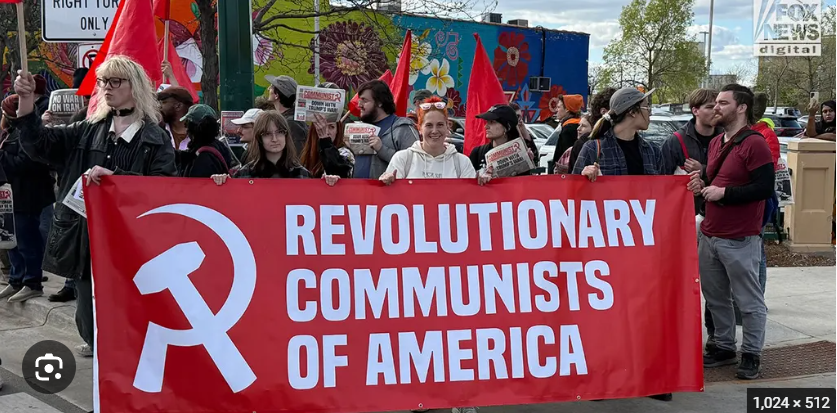
A common fundamental mistake is defining capitalism as a system of power. It isn't. Capitalism is mainly a system of freedom: the freedom to own, build, save, invest, trade, take risks, succeed, fail, and try again. Its central question isn't “Who has the power?” It's “Are you free to build?”...or does some other entity control your future?
The trite phrase: “wealth begets wealth” isn't really axiomatic. Otherwise, everyone would be billionaires. Wealth, actually in real life, begets consumption, not wealth, remarkably easily. For wealth to become productive capital, someone generally has to make a personal choice devoid of external compulsion to delay gratification: to consume less than they could today, to save the difference, to invest it, to accept risk, to wait for a return, and frequently develop a habit to reinvest that return rather than consume it in a fit of class signaling. Only by living this way repeatedly for years can "wealth beget wealth." But the compounding isn't some magical privilege bestowed upon someone merely because they possess money. Kids flush inheritances down the toilet as the norm. The willingness to sacrifice consumption today for greater productive capacity tomorrow is precisely one of the behaviors capitalism rewards with prosperity. It's an incentive structure for those willing to sacrifice, and the reward is much more than monetary wealth, it's a sense of worldly purpose, of participating in divine growth. If the ultimate purpose of life is to evolve, grow, and pass on to the next generation, no other economic system allows a person to embrace this natural urge. Wealth doesn't beget wealth. Wealth weeds out the immoral.
The Walmart example doesn't contradict this; Walmart exists because generations of capital were accumulated and reinvested into stores, warehouses, trucks, inventory, logistics, technology, and distribution rather than simply consumed. That scale now gives Walmart bargaining advantages today, certainly. But DoubleR is describing the result of accumulated investment as though the accumulation required no sacrifice, risk, competition, or restraint to create. More importantly, Walmart is NOT authoritarian. It makes offers. Suppliers make choices. Consumers make choices. Competitors remain free to build something better. Capitalism protects that freedom, not Walmart's wealth. In fact, wealth untended will always decay due to simple entropy. It was never, and can never be, a zero-sum concept in a world of natural entropy. This concept of wealth not being zero-sum goes far beyond the trite teach a man to fish, give a man a fish framework. It's more like giving a man a live fish and telling him that the fish has a set zero-sum value, and not to raise the fish for roe and offspring because his urge to gratify himself is the highest virtue.
His house example actually demonstrates the same principle. The cash buyer who offers $270,000 acquired the ability to make that offer because somebody already possesses $270,000 that they have chosen not to consume. The homeowner, meanwhile, owns the house and remains free to reject the offer. If he accepts less money in exchange for immediate payment and certainty, both parties have exercised their freedom over property they own. That's a free exchange, not subjugation OR exploitation. What actually IS exploitation is the government making this kind of transaction near impossible.
Shifting the words wealth and power to say that “power is largely zero-sum” reveals the deeper error. Political power is zero-sum. If I acquire legal authority to control you, I've gained something at the expense of your freedom. Prosperity isn't. A farmer who saves for a tractor can produce more food. A carpenter who buys better equipment can produce more furniture. An entrepreneur who reinvests profits can build another factory. Their increased wealth doesn't require an equivalent subtraction from somebody else's wealth. They created productive capacity that didn't previously exist, and they TOOK IT FROM NOBODY. That is NOT zero-sum.
If zero-sum theory was a universal reality, we would all still be living in caves with zero growth.
That's why I will NEVER see inequality as evidence that capitalism has failed. Inequality is the measure of freedom. People can choose to decay and embrace entropy. People can thrive and grow and rage, rage against the dying of the light, as Dylan Thomas penned in his famous poem. If two people are equally free and one consistently consumes today while another consistently sacrifices today, saves, invests, risks and reinvests, eventually their wealth WILL become radically unequal. Preventing that inequality would mean preventing one of them from fully enjoying the consequences of his choices. At some point, supposedly correcting “power” becomes restricting freedom. In the end, to pursue equality would entail fierce authoritarianism to take humans and turn them into robots with no agency.
Fine, I will concede that government has a legitimate role in protecting that system: enforce contracts, punish fraud and theft, protect property, and prevent people from replacing voluntary exchange with coercion. But government possesses the awful taint of actual coercive power and monopoly on justified force. Giving it ever-increasing authority to determine how much prosperity someone is permitted to retain really just concentrates a different and much more literal kind of it. And it naturally creates a class where the only justified wealth holders are the ones managing wealth levels in the government when the system is "might makes right"
So when I hear “wealth begets wealth,” I don't hear an indictment of capitalism. I hear a resounding description of one of its most important incentives:
Delay gratification. Save instead of consuming everything. Build instead of merely possessing. Risk what you've saved. Reinvest what succeeds. Do it long enough, and prosperity compounds. That is freedom rewarding the moral behavior that creates more tomorrow than it consumes today. Matthew 25:29