SatanLucy

Right now, there is lots of snow in Bosnia, and power went out like 6 times, and I keep losing responses in middle of writing them.


In summary of my lost comment:

  1. Less Americans own homes now, due to higher price of house
  2. Rent is more expensive than home long term, causing an even worse situation economically
  3. Any american who earns less than 13$ per hour is poorer than poor American in 1980 earning 3.1$ minimum wage.
  4. Land likewise increased in price far higher than minimum, median or average wage did. So even a same empty land costs more.
SatanLucy

You can use this inflation calculator if we are going to talk specifically about your way of measuring prices.


https://www.usinflationcalculator.com/


Per this calculator, minimum wage in 1980 (3.1 $) would today be worth almost 13 dollars.


So even when we accept your way of price, today person would have to earn 13 dollars per hour to earn same as person earning minimum wage in 1980, and people earning 7.5 $ minimum wage earn almost 2x less than person in 1980 earning 3.1 $.

SatanLucy
But the minimum wage doesn't really measure it either, because poor people can make more without the minimum wage increasing.


Minimum wage is a guaranteed income, which is 2x to 5x higher today than it was in 1979, depending on state. And yes, a lot of people work for minimum wage. However, any wage under 20 dollars per hour is still not 7 times greater than minimum wage in 1979, to cover for inflation of basic necessities. So anyone who works for under 20$ per hour is by logical necessity poorer than person working for 3 dollars in 1980.

SatanLucy
Why are you looking at those items specifically instead of the Consumer Price Index?


those prices show that now poor people are less able to afford house, college, car or bread.


And at minimum wage instead of the median wage


Poor people dont receive median wage by definition. Why would I use median wage for people who earn less than that?


Also, it's not really a fair comparison, because the value of houses and college education is changing. Houses today are bigger than in the past.


Value of land also increased a lot. So not only that house is more expensive, but also, land on it is too. Now, as for houses being bigger or colleges being better, it is not of great importance to poor person who cant afford them. But also, you could build a small house in 1980, and it would likely cost 10 times less than house today, not 2x less (as minimum wage 2x increase) or 6x less (median wage increase 6x) or 7x less (average wage 7x increase).

SatanLucy
Yeah but that's cherry picking as well. You can cherry pick people who are doing better as well


We are talking about poor people, which median has nothing to do with. Median by definition just means half of people earn less than that amount.

SatanLucy
Homes aren't the only thing people buy


Per homes inflation, median wages decreased, and minimum wages decreased even more.


But we could use other prices too. Price of college increased over 10 times. Price of car increased 10 times.


In 2010, consumers making minimum wage spent 41% of one hour’s wage on a pound of bread, which is the largest percent over the time span shown. The relative cost of a loaf of bread was quite low through the 1970s, 80s, and 90s, but looking at the percent increase of the cost of bread in the last three decades and comparing it with the percent increase in the minimum wage, we can see that the cost of bread was rising more quickly than the federal minimum wage.


https://tasks.illustrativemathematics.org/content-standards/tasks/1330


SatanLucy

https://www.visualcapitalist.com/charted-american-income-vs-home-prices-1985-2025/


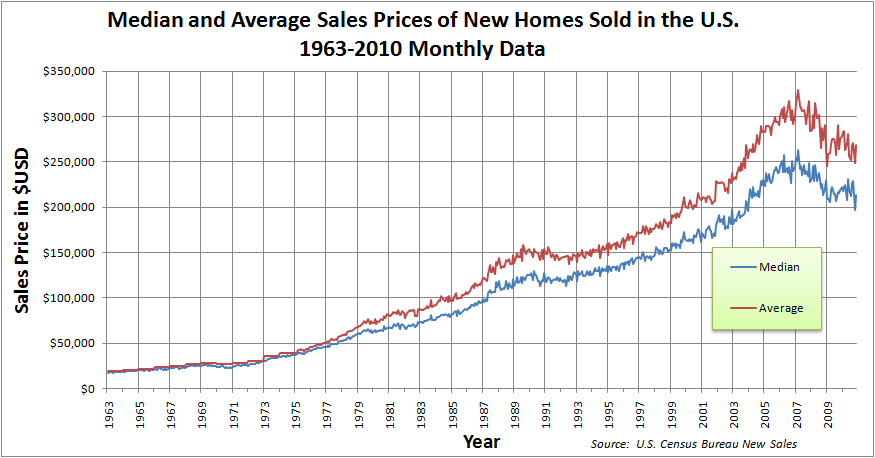
Different sources show different numbers, but all agree that both median and average worker wage can buy less houses today than it could before. And poor people who receive minimum wage or close to minimum are in worse position, because minimum wage didnt increase much, max increase is 5x in some states, but usually about 2x since 1980. Price of house, tho, is usually 8x to 40x higher, depending on the source (some sources measure only new houses price).


The latest U.S. Census Bureau data from March 2025 put the average price of a new home at $497,700. Meanwhile, the National Association of Home Builders reported a much larger number — $665,298 — based on its 2024 survey of builders.

SatanLucy

Lets look at this:


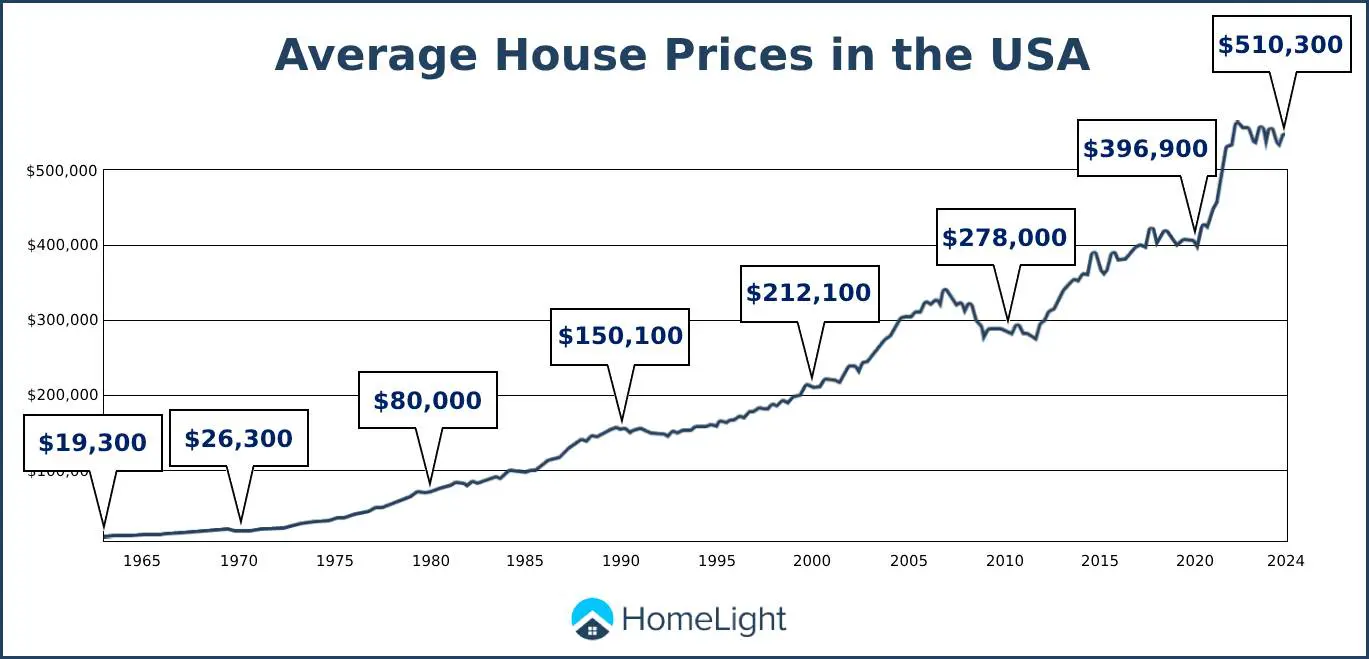
Median house was around 10k to 20k and rose to almost 400k by 2025. By 2000, it was about 150k, and now it is over 400k by some sources.


that is an increase by 20 to 40 times.


https://finance.yahoo.com/news/the-median-home-in-the-us-costs-415000-heres-what-that-will-buy-around-the-country-110043525.html


Many studies which were done show that income to house price ratio reduced over time, and this means, in simple terms, earnings today can buy less houses than they could in 1979.

SatanLucy
Most people earn above the minimum wage.


there are also those who dont, or those who earn close to minimum wage.


Maybe, but then inflation doesn't punish the poor as much as it punishes the uneducated


Poor is more often uneducated and careless with money.


who hasn't heard of index funds?


there are people in America who cant point to Britain on map, and who think native Americans should "leave USA and go back to where they came from". So it wouldnt surprise me that poor people choose lottery and betting over index funds, and it wouldnt surprise me they never heard of index funds or dont know benefits.


Inflation also guards against deflation


Deflation would imply growth in value of money, and some countries, such as Switzerland, have that when compared to other currencies. So small tiny deflation would do no harm. Small tiny inflation would do very little harm. But we are not talking about small tiny inflation here. We are talking about house going from 10k to over 150k in price in a not so long period of time.

SatanLucy

Pleasure to be part of this series.


As I said, I am universal expert, and I am happy to talk about this.


S.L. , how are you?


Most excellent.


S.L. will tell you where to view this code and counter code in action and perhaps post screenshots.


While I did post a lot on modern day debate, basically using logic to make atheists cry, I am afraid I didnt take many screen shots. But I could gather some to post.


Now in relation to atheism, first off what is an atheist?


there is a difference on what atheist is, and what atheist says he is. Atheist is person who hopes God doesnt exist, because if God turns out real, atheist turns out not correct while religious people turn out correct.


Are atheists , atheists because of primarily emotional experiences ?


Yes, atheism is based on emotions, mostly anger.


Now in relation to atheism, emotions and holidays, are holidays like secular religions for the atheists?


Atheism has many religions, such as holidays, secular morality, and arbitrary goals in life.


What do you think some deconversion tactics are from atheists and how do the holidays play into that?


Atheists are the ones trying to convert people to atheism, usually by exposing flaws of religion and religious people. this shows atheism is a religion. Communist atheists had many holidays based on some achievements in history.


Atheists fight for separation of church/religion and state and there really is no such thing, but holiday religions are in schools, at the workplace where people are non believers, are the atheists hypocritical?


Atheists dont exactly fight for reparation of religion and state. they fight for separation of non-atheist religion from state. Religion cannot logically be separated from state. Atheists want their religion to be followed by state. they want for the state to act as if God didnt exist and as if atheists were correct.


And yes, atheists are hypocritical regarding holidays.


Why do you think atheist make the false equivalency of Santa Claus with a God of theism?


Atheists attempt to present religious people as people who should logically believe in santa, which isnt really true. You can believe in God and not in santa.


By them making this equivalency, haven't the atheists thus declared that the Santa Claus holiday is a religion to them?


Atheists have many religions, mainly of worshiping themselves, of worshiping pleasure which santa claus is a source of.


They have declared a holiday religion, thus as we can experience will presume you participate in receiving and sending holiday cards, gifts and greetings but yet there's supposed to be a separation of church and state.
So in schools, in the workplace, operated under law, why not separate, why is this the exception?


Atheists make exception for their religion.


Is this the exception because it has all the emotional indulgence and no stake of eternal punishment?


You could say that. Atheists worship pleasure, chase pleasure. their religion is just pleasure they can find.


This is an ongoing war on atheism, now how does a theist according to counter-argumentation code, in your book, what are the counterpoints to the false equivalencies?


the best counter to a false equivalence is a real equivalence. So when atheists say I dont have evidence for God, I say there is no evidence for anything, which is true by Munchausen trillema. You could be living in a simulation, and then imagination would be as real as reality you see, so even imagined God is as real as everything else.


Atheists that don't protest teaching children Santa Claus but will protest the teaching of hell, what is the atheist ulterior motive?


Atheist is anti-theist.


Atheist argue based on logic that they have, should theists reframe from arguing their faith out of logic in return?


Atheists argue based on their logic, not universal logic. theist can of course choose to argue using logic, but not atheist logic because that is just path to atheism.


SatanLucy


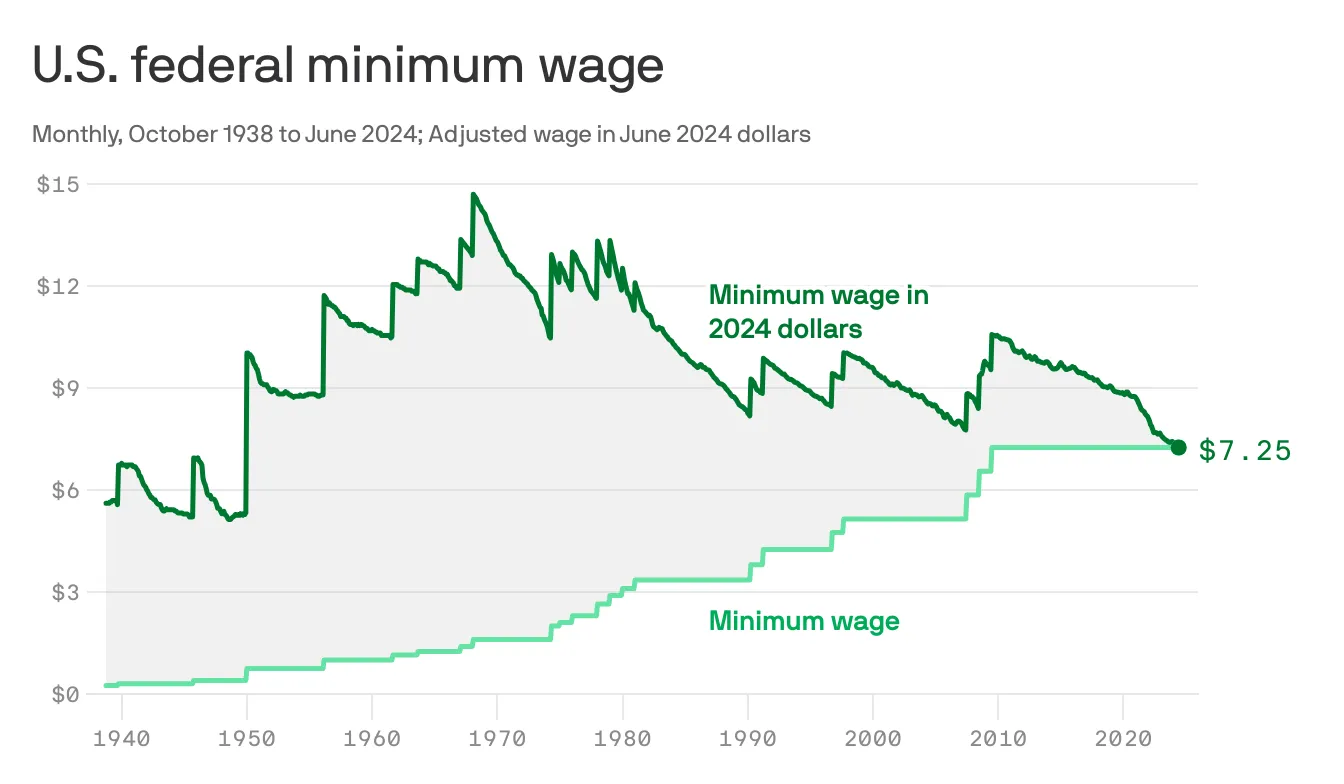
the two lines show minimum wage, and minimum wage adjusted for inflation.


today, minimum wage is on level where it was in 1950 when adjusted for inflation, and this gets even worse when we take into account inflation of necessities, such as house (40x price increase in past 46 years).

SatanLucy

And lets say we accept that what you are saying is true, regarding median wage graph.


How much is the increase?


1979: 335

2000: 334

2025: 376


that is basically an increase of just 41$ after 46 years,


or about 12%.


So even if we were to take that graph as accurate, all it would show is a very small increase in wealth, increase which had to be waited for for 35 years because it only started in 2015.


But inflation increases nominal wealth of rich people by at least 50x over 46 years, where nominal wage of US worker sure as hell didnt increase 50x in past 46 years.


And again, this is when we take graph as true, which it realistically isnt.

SatanLucy
Just invest in an index fund.


You could say the same about any low risk investment. Just invest in gold. Just invest in land. the problem is that poor people usually lack education to do that. And in a lot of countries, options for investments are even lower in number. Not every country is US.


But a good deal of the wage increase is due to inflation in the first place.


Still, same amount of money will always be lower in value when inflation happens.


Real wages actually went up in the period from 1980 to 2014 if you look at the graph.


Your graph starts with 335 wage in 1979 and then shows 330 wage in 2014.


Whole time from 1980 to 2000, wage was lower than in 1979, and for about half the time from 2000 to 2014, wage was lower than in 1979.


that means at least 25 years of lower wage than 335. For someone who worked since 1979 to 2020, that basically means lower overall wage than in 1979.


But here, you used median wages adjusted for general inflation, which isnt how standard of life for poorest workers is even measured. those who work for minimum wage didnt see anything close to what you are showing. Minimum wage increased about 7x since 1979, and prices increased 40x, so you do the math.

SatanLucy

I used to read Hitler's books, and I think he was corrupt before getting power.


I mean, he said a lot of things in his books which were clearly pro-genocide even before he got power.


He praised Sparta for killing children with disabilities, saying "they were doing those children a favor", and "it was more merciful than what countries do now".


And also, he said "I dont see why man shouldnt be as cruel as nature".


But people in 1933 werent smart and they thought he was making a joke when he said those things.

SatanLucy

Also, minimum wage didnt actually keep up with inflation long term, even in USA.


As for median wage, that depends what you are comparing it with.


Price of house increased over 40 times since 1960. Minimum wage didnt, and people in 1960 for sure as hell didnt work for 100$ a month, so we can say for sure that median wage didnt increase in nominal value 40 times since 1960, while price of house in nominal value increased over 40 times. Minimum wage barely increased 7 times, which is a lot lower than inflation.


Also, your own link shows that actual value of wage was lower for much longer time than it was higher. Only if you pick first and last point would you see a small increase. Everything from 1980 to 2014 is basically mostly decrease in value of wage, even by those measurements which fail to account for a lot of things.

SatanLucy
Only if he has a bunch of money stuffed away in a mattress or something


Or in a saving account on bank, which is more often the case. Such a classical mistake poor people make, because those saving accounts rarely beat inflation, and in most countries you actually need 10 millions on saving account to create 1000$ monthly income.


in which case they could just invest in stocks


It takes a certain education to be good at that. You actually can lose money in investments easily if you dont know what you are doing.


Median wages have generally outpaced inflation, so if they're living paycheck to paycheck it's not as big of an effect since their pay keeps going up.


this topic isnt about inflation vs. wage over time, it is just about inflation itself. Even if you increase the wage, inflation still doesnt benefit the poor but reduces his increased wage.

SatanLucy
To the CIA rape dungeon you go.


Every US prison is technically a rape dungeon.


No Escape: Male Rape in U.S. Prisons


"A Florida prisoner whom we will identify only as P.R. was beaten, suffered a serious eye injury, and assaulted by an inmate armed with a knife, all due to his refusal to submit to anal sex. After six months of repeated threats and attacks by other inmates, at the end of his emotional endurance, he tried to commit suicide by slashing his wrists with a razor. In a letter to Human Rights Watch, he chronicled his unsuccessful efforts to induce prison authorities to protect him from abuse. Summing up these experiences, he wrote: "The opposite of compassion is not hatred, it's indifference."

P.R.'s bleak outlook is not unjustified. Judging by the popular media, rape is accepted as a commonplace of imprisonment, so much so that when the topic of prison arises, a joking reference to rape seems almost obligatory. Few members of the public would be surprised by the assertion that men are frequently raped in prison, given rape's established place in the mythology of prison life. Yet serious, sustained, and constructive attention to the subject remains rare. As Stephen Donaldson, the late president of the organization Stop Prisoner Rape, once said: "the rape of males is a taboo subject for public discussion . . . . If ever there was a crime hidden by a curtain of silence, it is male rape."

Without question, the hard facts about inmate-on-inmate sexual abuse are little known. No conclusive national data exist regarding the prevalence of prisoner-on-prisoner rape and other sexual abuse in the United States. Indeed, few commentators have even ventured to speculate on the national incidence of rape in prison, although some, extrapolating from small-scale studies, have come up with rough estimates as to its prevalence. With the staggering growth of the prison population over the past two decades, such ignorance is more unjustifiable than ever.

Prison authorities, unsurprisingly, generally claim that prisoner-on-prisoner sexual abuse is an exceptional occurrence rather than a systemic problem. Prison officials in New Mexico, for example, responding to our 1997 request for information regarding "the 'problem' of male inmate-on-inmate rape and sexual abuse" (the internal quotation marks are theirs), said that they had "no recorded incidents over the past few years." The Nebraska Department of Correctional Services informed Human Rights Watch that such incidents were "minimal." Only Texas, Ohio, Florida, and the Federal Bureau of Prisons said that they had more than fifty reported incidents in a given year, numbers which, because of the large size of their prison systems, still translate into extremely low rates of victimization.

Yet prison authorities' claims are belied by independent research on the topic. Indeed, the most recent academic studies of the issue have found shockingly high rates of sexual abuse, including forced oral and anal intercourse. In December 2000, the Prison Journal published a study based on a survey of inmates in seven men's prison facilities in four states. The results showed that 21 percent of the inmates had experienced at least one episode of pressured or forced sexual contact since being incarcerated, and at least 7 percent had been raped in their facility. A 1996 study of the Nebraska prison system produced similar findings, with 22 percent of male inmates reporting that they had been pressured or forced to have sexual contact against their will while incarcerated. Of these, over 50 percent had submitted to forced anal sex at least once. Extrapolating these findings to the national level gives a total of at least 140,000 inmates who have been raped.

An internal departmental survey of corrections officers in a southern state (provided to Human Rights Watch on the condition that the state not be identified) found that line officers -- those charged with the direct supervision of inmates -- estimated that roughly one-fifth of all prisoners were being coerced into participation in inmate-on-inmate sex. Interestingly, higher-ranking officials -- those at the supervisory level -- tended to give lower estimates of the frequency of abuse, while inmates themselves gave much higher estimates: the two groups cited victimization rates of roughly one-eighth and one-third, respectively. Although the author of the survey was careful to note that it was not conducted in accordance with scientific standards, and thus its findings may not be perfectly reliable, the basic conclusions are still striking. Even taking only the lowest of the three estimates of coerced sexual activity -- and even framing that one conservatively -- more than one in ten inmates in the prisons surveyed was subject to sexual abuse.

It is evident that certain prisoners are targeted for sexual assault the moment they enter a penal facility: their age, looks, sexual orientation, and other characteristics mark them as candidates for abuse. Human Rights Watch's research has revealed a broad range of factors that correlate with increased vulnerability to rape. These include youth, small size, and physical weakness; being white, gay, or a first offender; possessing "feminine" characteristics such as long hair or a high voice; being unassertive, unaggressive, shy, intellectual, not street-smart, or "passive"; or having been convicted of a sexual offense against a minor. Prisoners with any one of these characteristics typically face an increased risk of sexual abuse, while prisoners with several overlapping characteristics are much more likely than other inmates to be targeted for abuse. Yet it would be a mistake to think that only a minority of extremely vulnerable individuals face sexual abuse. In the wrong circumstances, it should be emphasized, almost any prisoner may become a victim."


https://www.hrw.org/reports/2001/prison/report1.html



SatanLucy

Free market is technically flawed because it almost always benefits wealthier over poorer. If you inherit 1 million dollars from parents, its very easy to turn it into 10 million. You just need 10x return. But person who inherits only 10k would need 100x returns to make million dollars.


Now, the only way to make money without having starting wealth is by skill. Having some skill which people are willing to pay lots of money for. But that is almost impossible, because even among most educated people, only few actually earn lots of money by skill alone to be able to earn millions.


Now, poor people love lottery, because its their 1 in a million chance to become millionaires, and poor people would rather attempt 1:1000000 odds than actual safe investments for their money.


But there are people who won millions on lottery, and then wasted it all and became poor again. If person doesnt know how to handle money, having money is useless for that person.


this is why rich people teach their kids how to make money from money, and poor people teach their kids honest work will make them rich.


Honest work never made anyone rich. You could work in a factory for 40 years and you would never become rich, but factory owner would.

SatanLucy

While many poor people complain about inflation, inflation is rich man's best friend.


But first we have to understand why.


You see, inflation basically results in rise in prices of things compared to money.


Poor person, who is a wage slave, earns money. His money loses value when inflation happens, so he can buy less.


However, with rich person, opposite happens.


You see, rich person doesnt hold most of his wealth in money.


Rich person owns land, gold, silver, crypto, houses, investments, buisnesses...ect.


When inflation happens, and rich person owns gold, rich person doesnt lose money at all.


We know that in long run, gold beats general inflation. So rich person who holds his wealth in gold would actually have more money each time inflation happens, because inflation increases value of gold more than of other products.


So rich person, who invests in things which see biggest price rise over time compared to other things, benefits from inflation.


Inflation hates the poor, and loves the rich.


SatanLucy

If I live for another 40 to 60 years, I will be a millionaire, assuming my investments achieve 100x returns over 40 to 60 years, which they should given historical growth.


https://www.macrotrends.net/1333/historical-gold-prices-100-year-chart


While this data might not be of great accuracy, it is true that gold in 1965 had 100x lower price than it does now.


this means that if someone invested 10k dollars in gold in 1965, today he would have over million dollars.


And this is even before we account for micro trade (selling before price drops, and then buying when price drops and before price rises) which maximizes starting capital further, but takes more time and maybe is more worthy to do with silver.

SatanLucy
20 years ago, before Maduro, Venezuela was a wealthy nation


Venezuela was wealthy in 2014 too, reasonably. However, after 20 years of US sanctions (which started in 2006 and gradually increased), it got poor. And yes, first sanctions were put in place about 20 years ago.


So US first makes huge effort to make country poor, and then attacks a country because US made it poor.


"I am going to take away your food and then blame you for being hungry."

SatanLucy
This is all we did for Germany [twice], Japan, Vietnam, Iraq, and now others. Where was your complaint, then?


Well, when it comes to Germany, Japan, and Vietnam wars, I couldnt really complain because I wasnt even born then. But yeah, bombing Vietnam with agent orange to hurt nature and civilians is a great example of helping Vietnam. (this is sarcasm, for those unable to detect sarcasm).