


Yes or no, do you miss your friends from prison?
I dont see why engage in defense of circumcision videos by proxy indirect attacks.
Probably because I haven't done so
Yes or no, do you miss your friends from prison?
I dont see why engage in defense of circumcision videos by proxy indirect attacks.
Probably because I haven't done so
Chatgpt is happy to disprove that too.
That claim defeats itself unless it can be justified empirically.
The statement “empiricism is the only reliable way of knowing” is not itself established through observation, experiment, or sensory measurement. You cannot run a laboratory test proving that only empirical methods yield reliable knowledge. So the claim is either:
or
There are also several categories of knowledge that empiricism depends on but cannot itself justify:
Even science itself is partly built on non-empirical reasoning:
Empirical data alone is just raw sensation. Reason is what turns observations into knowledge.
A stronger position would be:
“Empiricism is extremely effective for studying the physical world.”
That is defensible. But saying it is the only reliable path to knowledge overreaches, because empiricism rests on foundational principles that are themselves not empirically established.
Any other claim you want chatgpt to defeat?
The claim defeats itself if taken literally.
“Empiricism is the only way we can know the world.”
That statement is not itself an empirical observation. You cannot measure it in a lab, weigh it, see it through a telescope, or derive it from sensory data alone. It is a philosophical principle about knowledge. So if the statement is true, then the statement itself cannot be known to be true.
That is a classic self-referential problem with strict empiricism.
A stronger version of empiricism usually retreats to something softer, like:
“Empirical methods are the most reliable for discovering physical facts.”
That is much harder to attack. But it is very different from saying empiricism is the only source of knowledge.
There are several categories of knowledge that are not derived purely from empirical observation:
Basic logical truths are not learned through experimentation.
For example:
A \lor \neg A
The law of excluded middle (“A or not A”) is not something discovered by observing many objects in nature. It is a structural principle of reasoning itself.
Likewise:
A \land \neg A
cannot both be true simultaneously in classical logic.
No empirical experiment proves logic without already presupposing logic. Every experiment already assumes inference rules, identity, non-contradiction, validity of reasoning, etc.
Empiricism therefore depends on non-empirical foundations.
You do not need to perform physical experiments to know:
2+2=4
or:
genui{"math_block_widget_always_prefetch_v2":{"content":"a^2+b^2=c^2"}}
for right triangles.
You can verify examples empirically, but the truth itself is not contingent on measurement. If every physical triangle vanished from existence, the theorem would still hold.
Empirical observation may inspire mathematics, but mathematical necessity is not established by sensory observation alone.
Science relies heavily on induction:
But this principle itself cannot be empirically proven without circularity.
David Hume pointed this out centuries ago:
So empiricism relies on a non-empirical assumption: that inference from past to future is rational.
The statement:
“something caused the universe”
already goes beyond raw sensory data.
What we observe are sequences and correlations. “Cause” is an inferred metaphysical relation.
Hume again argued that causation is not literally seen; we observe events followed by events.
So even basic scientific reasoning already contains conceptual structures beyond direct empiricism.
Claims like:
are not measurable in the same way mass or temperature are.
You can measure human reactions to morality, but not morality itself through empirical instruments alone.
Yet most people still treat at least some moral truths as meaningful knowledge.
Your awareness of your own consciousness is immediate, not inferred from observation.
You do not run an experiment to know:
Descartes’ point survives here:
awareness of thinking is more certain than sensory knowledge, because senses can deceive.
Science presupposes:
None of these are established purely empirically without circularity.
Science works extraordinarily well, but its foundations are not themselves derived entirely from empirical testing.
The original statement also overstates what “empirical” means.
Inference is not the same thing as observation.
Once someone says:
“we infer larger conclusions from empirical evidence”
they have already admitted that reason contributes something beyond raw sensory input.
Evidence alone never mechanically interprets itself. Interpretation requires:
So empiricism alone is insufficient even for science itself.
A more defensible position would be:
“Empirical evidence is the best tool for investigating physical reality, but reason, logic, mathematics, and philosophical assumptions are also necessary for knowledge.”
That avoids the self-refutation problem while preserving the strength of science.
Nobody thinks you actually circumcise infants, what is creepy is that you want to fuck infants.
Who told you that? Same God who told you to circumcise infants to alter their sexual function because he accidentally created foreskin when he didnt mean to?
Apparently, we were made in God's image, except the foreskin.
I dont see why engage in defense of circumcision videos by proxy indirect attacks.
Probably because I haven't done so

No, what I've been saying all along is that you are a sick fuck for thinking of infants as sex objects
No, I dont circumcise infants to alter their sexual functions for religious or arbitrary purposes.
The claim is not obviously true, because it quietly assumes that all knowledge about reality must ultimately come from sensory observation. But that assumption itself is not established empirically. It is a philosophical principle.
A strong counterargument is that some truths about reality appear knowable prior to observation:
If someone says “only empirical evidence counts about reality,” that statement is not itself an empirical discovery. No experiment measures that principle. It is a philosophical rule imposed a priori. So the position risks self-reference problems.
You can structure the disproof several ways.
Empirical science already presupposes non-empirical principles:
None of these are directly observed as raw sensory data.
For example, no microscope detects the law of non-contradiction. Yet without it, interpreting evidence becomes impossible.
So purely philosophical reasoning cannot be dismissed as “non-evidence,” because empirical reasoning itself stands on philosophical foundations.
Experience only gives finite observations.
Suppose you observe 10,000 falling objects. Empirically, you only know:
“These observed objects fell.”
You do not directly observe the universal rule:
“All unsupported objects fall.”
The jump from finite cases to universal law requires induction — a philosophical principle.
\forall x,(Observed(x) \rightarrow Falls(x)) \not\Rightarrow \forall x,(Falls(x))
So empirical evidence alone cannot justify many scientific conclusions without additional a priori reasoning.
Consider:
“A square circle cannot exist.”
This is not learned by surveying the universe for square circles.
It is known through conceptual analysis alone. The contradiction is intrinsic.
Likewise:
These are not weaker because they are non-empirical. In fact, they are often treated as more certain than sensory observations, since observations can be mistaken.
A mirage can deceive perception.
A contradiction cannot become true through better instrumentation.
Raw sensations are not self-explanatory.
Two people can observe identical data and reach different conclusions because interpretation depends on prior conceptual frameworks.
Example:
Therefore philosophy is not merely “optional decoration” around empiricism; it partly determines what empiricism even means.
If something is:
then demanding empirical observation may be category error.
For example:
Yet these clearly affect reasoning about reality.
The statement:
“Purely a priori arguments should not count as evidence about reality unless tied to observation.”
is itself:
It is a philosophical epistemic rule.
So if the rule were true, it undermines its own justification.
There are cases where reasoning preceded observation:
This shows a priori reasoning can genuinely track reality rather than merely reorganize observations afterward.
A weaker version of empiricism is much harder to disprove:
“Empirical evidence is usually more reliable for claims about contingent physical facts.”
That is more defensible.
But the stronger claim —
that purely philosophical arguments are not evidence about reality at all unless empirically tied —
fails because:
All three of my sons were circumcised
So much for "wah wah wah".


Being fat is a choice, and Americans aren't exactly famous for making good choices.
My chicken farm never got 1 cent from government in my country. But it's a vegetarian farm, so no meat production at all. Just eggs.
Do you support the ritual circumcision of infants?
That is a too difficult question for Sidewalker to answer. If he answers "no", he is agreeing with me, which is impermissible. If he says "yes", he is agreeing with sexual abuse of infants, which is also impermissible.
Why don't you just stop whacking off to circumcision videos.
Actually, I am a victim of circumcision myself. tho my circumcision was worse because it gone wrong and left me with bent dick.
I would want to beat the shit out of any person doing that “sexual infant thing”
I dont advocate for violence against circumcisers. Circumcision just needs to be made illegal.
Positive curvature sides triangle

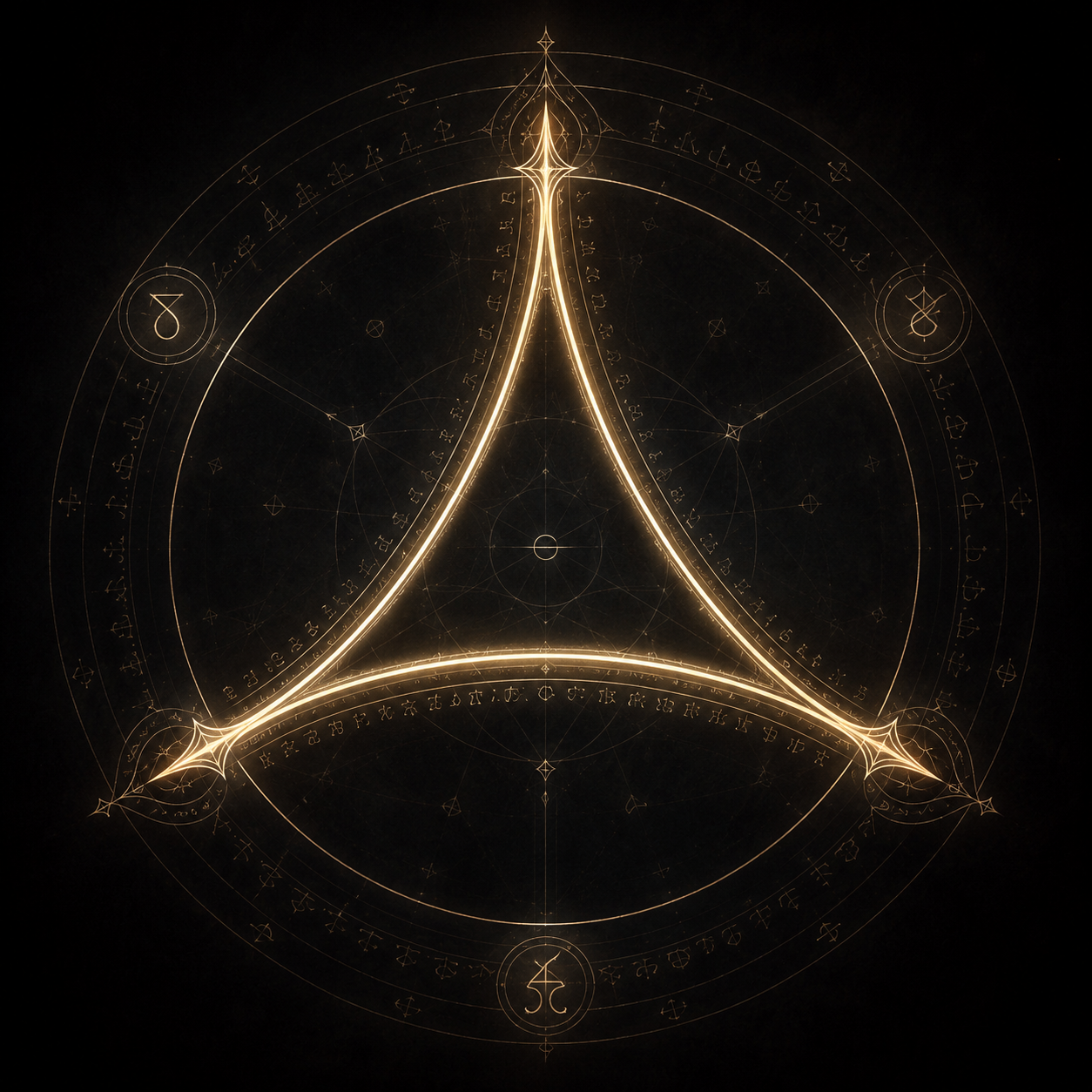
triangle with negative curvature of 3 sides.
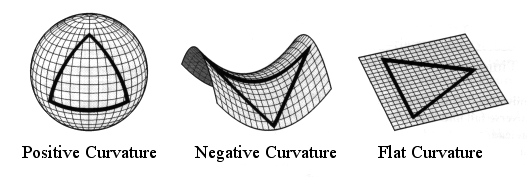
Curvature describes how the geometry of a shape, surface, or space deviates from a perfectly flat plane. There are three main types: positive, negative, and flat (zero) curvature.
Positive Curvature: The surface curves in on itself, like a sphere or a dome.
Negative Curvature: The surface curves away in opposite directions, like a saddle or a Pringle's chip.
Flat Curvature: The surface is completely straight and uniform, like a flat sheet of paper.
In USA, an 8 year old can be put on trial as adult.
So even tho an 8 year old doesn't have same legal rights as adult, on trial, he is considered adult.
This legal inconsistency is basically what allowed 8 year olds to be put on sex offender registry in USA.
Because law is an arbitrary whim of people who can't decide if 8 year old is clueless child or informed adult.
Though your reticence can only lead one to conclude that you do actually support the right of adults to perform sexually motivated acts of ritual abuse on minors...Such
I really don't understand people who support infant circumcision. They are worse than child spankers, who also apply sexual abuse by spanking child's butt, which is actually a sexual action in the same way grabbing girl's butt without consent is sexual harassment. One really needs to go a long way to justify doing to children what would be a huge crime if done to adults. Apparently, what is illegal to do to adult is entirely fine if done to child. So why is something which would be seen as terrible and harmful to do to adult seen as "okie dokie" if done to child? Does child have some immunity to harm which adult doesn't?
Ok, it seems to work. I have 3 voting badges and 3 topic badges. That seems to be enough.
This is just time it takes brain to register. When it comes to reaction time itself, driver driving at 128 miles per hour is effectively unresponsive to any changes happening in next 40 meters. Should a car appear in next 40 meters out of nowhere, he wouldn't even be able to make a reaction before hitting it.
Even if we were to take a very quick response time, 0.7 seconds, that is still car traveling about 40 meters before driver can react.
Drunk driver tho, with reaction time of 1.5+, can travel 40 meters in 1.5 to 2 seconds when driving 50 miles per hour. So drunk driver is effectively unresponsive for next 40 meters even when driving at 50 miles per hour.
Alcohol can delay reaction time by over 1 second, and in one second, car can travel 20 to 30 meters.
Even car moving merely 5 meters per second makes drunk driver effectively unresponsive on next 10 meters.
It's one reason why fast driving is extremely dangerous. You can travel 4 to 8 meters without registering it with your eyes in a speeding car. Because the delay in observation means you are at current point but your eyes have only registered movement before previous 4 to 8 meters. You literally "don't know whats there". It's why human reaction time of a driver can never be under 0.14 seconds.
Traveling at 128 miles per hour in a car means human eyes are late behind present moment for about 8 meters. So the driver is effectively blind for each next 8 meters.
Would you say Heisenberg's principle dictates that all evidence must exist in the past and never in the present?
Are you talking about time difference of object moving and human eyes registering it?
Cuz that time difference is 0.1 to 0.14 seconds.
So yeah, whatever you think you see right now happened 0.14 seconds ago.
Then why did you say you jack off to circumcision videos?
I didnt.
Is that the one where you said you like to jack off to circumcision videos?
No, and I dont "like to jack off to circumcision videos".
the science accepts that there is "controller" determinant which determines what happens and what doesnt, otherwise everything would happen or nothing would.
the debate is about:
There is absolutely6 no up-side advantage to smoking. There are much safer ways to deal with anxiety rather than be the cause/recipient of living in a smoke cloud.
Smoking is free dopamine in head. Well, not free. Pack costs usually 2 to 4 dollars.
Boolean logic is merely mathematical translation of a philosophy.
Boolean logic is fun, tho its a computer logic. All functions are made from "true false" combinations.
It uses different operators.
For example, true or false = true, because "or" in Boolean logic isnt same as in standard language. "or" there simply means "one of these is true".
In Boolean logic, what we consider "or" in standard language, is xor in boolean.
So when someone says "choose between A or B", in Boolean language, that would be A XOR B.
"That was the topic, now you've made me the topic"
Who made who the topic?
Check post 8.
Probably because I haven't done so
It's pedophilia I'm disapproving of,
topic is circumcision, so make up your mind where you stand on that topic.